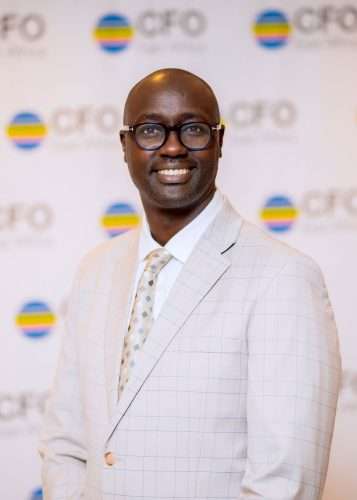
Everyone brings the hard numbers to the finance chief. Erstwhile CFO Jay Atara asks where CFOs take their own, explaining why the answer matters to every balance sheet in East Africa.
I wanted to be a chief financial officer for years before I became one. It was the marker of arrival I measured myself against. When the title finally came, I mistook it for who I was.
I rose from graduate trainee to CFO through the telecoms crash, the global financial crisis and the pandemic. I was the person others came to when the numbers didn’t add up. I was good at it.
Then, in late 2022, I broke down.
On paper, nothing was wrong, as targets were met and reports were clean. But some days I was simply broken and didn’t say so. I was in the room, but not really there. The anger I would never show a board landed at home instead. My body finally said what my mind had been refusing to hear.
I share this because I’m not unusual. I have since sat with many finance leaders carrying the same weight, and most of them are carrying it alone.
The CFO sees the truth first
A lot of leadership talk assumes culture comes from what leaders say. Twenty-five years in finance and treasury taught me otherwise. Culture comes from what leaders reward, tolerate, ignore and repeat. Pay is simply the part that gets written down.
That puts the CFO in an unusual seat. We see the bonus pool before anyone else. We see which targets are rewarded and which values are only printed on the wall. When a company says it puts people first, the finance function can tell you whether the numbers agree.
A CFO’s first loyalty is to the facts, even when that means standing against the CEO, the shareholders or the number the market has already priced in.
That loyalty has a price. In my own career it meant refusing a bonus that had been settled without a proper review. When one company cut pay across the workforce and cash flow later recovered, it meant arguing that the lowest paid should be restored first. From the finance seat I could see the arithmetic of their lives; the owners’ position had insulated them from it.
The cost of incoherence
Consider a potato left too long in the store. From the outside it’s firm, the skin intact, the weight right in your hand. Cut it open and the centre is already hollow and dark. Organisations can look exactly like this, performing at the quarterly review and then hollowing out between one review and the next.
So can leaders. I only found a word for it later . Who I was, what I believed and what I decided had drifted apart. When I was caught up in the system, I was incoherent. When I was myself, I wasn’t. It took me a long time to see it that simply.
For a CFO, incoherence shows up in the conversation that gets deferred. One UK retailer was sold for a nominal sum with a pension deficit of more than £500 million, after years in which dividends were never weighed against the pension position. The finance function had the information, but nobody had the conversation.
Sooner or later the reckoning comes, and what matters is whether it comes early enough to manage. The CFO who tells the truth early is the one the organisation will need most when it does. But it takes a steadiness that’s hard to find when you’re running on empty. There’s an art to it and no qualification teaches you that.
The question no one asks the CFO
I’m one of the founding counsellors of the African Speaker Bureau Executive Council, and during its launch in November, one question ran through the evening, first put to us by a chief executive: who do you go to when you don’t know? Everyone assumes you know, but no one can know everything.
Few roles feel that question more sharply than the CFO’s. The CEO brings you the strategy. The board brings you the risk. The team brings you the gaps. Who do you bring your own doubts to? Not the CEO, whose plan you must test. Not the board, whose confidence you must keep. Not your team, who need you steady. Often not even your family, who already get what’s left of you.
So we carry it alone, and we tell ourselves that’s what the title requires.
When I broke down, the people who held me were the ones closest to me. My wife saw something in me I couldn’t see myself. Slowly, I stopped looking outward for answers and asked myself the questions I had avoided for most of my adult life. Who am I? Who am I behind the title?
What I learnt is that a leader rarely needs a new life. Sometimes they need a new way of seeing the one they already have. That’s hard to do alone. One voice, however wise, sees from one place. A leader facing a hard decision is better served by several people who have sat in other chairs, in other countries, and got things wrong in other ways. That’s what the leaders who work with me bring.
The second chair
There’s another weight finance leaders rarely name in public. It comes up again and again in my conversations with CFOs. A chief executive who isn’t there for them at the board or when it counts, and a finance leader who ends up doing the CEO’s job, sometimes with the CEO sitting in the room.
It’s usually finance that gets sent into the hardest rooms to deliver bad news to staff, sit across the table from the unions, face fellow directors who don’t like what the numbers say or tell the bank a covenant is at risk. One finance chief told me they find it strange that the CFO ends up in these meetings at all. Partly we’re there because we hold the numbers, and a number is harder to argue with than an opinion. Partly it’s because people see us as neutral, with no product to sell and no team to protect. Sometimes, if we’re honest, it’s because the CEO would rather keep their own relationships intact.
Although many CFOs carry parts of the chief executive’s job, nobody usually notices. It’s frustrating, and lonely in its own way.
When a CFO is doing the CEO’s work without the CEO’s backing, that’s a governance problem as much as a personal one, and the board should know who is really holding the line.
But it also asks something of us. When I was caught in the system, I needed the title, the pay, the recognition and the next marker of arrival to feel I was enough. Recognition never filled the gap; there was always another target. In the end, people didn’t start noticing. I stopped needing them to. A coherent CFO can be at peace with making the whole thing work from the second chair, and still tell the CEO and the board plainly what support the role needs. Part of that is knowing where the role ends. Sometimes the bad news isn’t yours to deliver, and saying so is part of the job.
Six questions for this week
Here are six questions any finance leader in Nairobi, Dar es Salaam, Kampala or Kigali can ask before Friday.
- When our values and our rewards disagree, which one is telling the truth? Look at what your incentive scheme actually pays for. That is your culture.
- What share of our rewards measures what will outlast this year? Short-term bonuses quietly buy long-term liabilities: human, relational and natural, not only financial.
- Which conversation am I deferring? Every CFO has one. The longer it waits, the more it costs.
- Who did I last say “I don’t know” to? If you cannot name anyone, you are carrying it alone.
- Does my CEO back me in the rooms where it matters, and have I said what I need? Silence about the relationship is a deferred conversation too.
- Who am I behind the title? If I left tomorrow, my role would be replaced. What would remain of me? Leadership begins there.
These are questions for the decision in front of you, asked again each time a hard one comes.
The number no report shows
East Africa’s businesses are growing fast, and so is the pressure on the people who keep the books honest. Regulators, lenders and investors are asking for more. Boards want certainty in a world that offers very little. The finance function is being asked to carry more than ever.
That makes the person in the CFO’s chair matter more. Pressure shows you the character that was already there.
The balance sheet will never show whether the person behind it is whole. But every number on it depends on that person telling the truth, early, when it costs something. That takes coherence, and coherence is easier to keep when you aren’t keeping it alone.