
As businesses look for ways to protect margins, Joseph Sitati argues that cutting headcount can leave companies without the people they need to deliver on their recovery plans. Speaking during the 2026 Finance Indaba at the Sandton Convention Centre in Johannesburg, the CFO for the Health Operations Cluster at Harleys Group shared lessons from a manufacturing business that found savings by listening to its workers.
When businesses come under pressure to reduce costs, employees are often among the first casualties. As Joseph Sitati, CFO for the Health Operations Cluster at Harleys Group, sees it, this presents a dilemma for finance leaders who must protect margins while ensuring the business retains the capacity to recover.
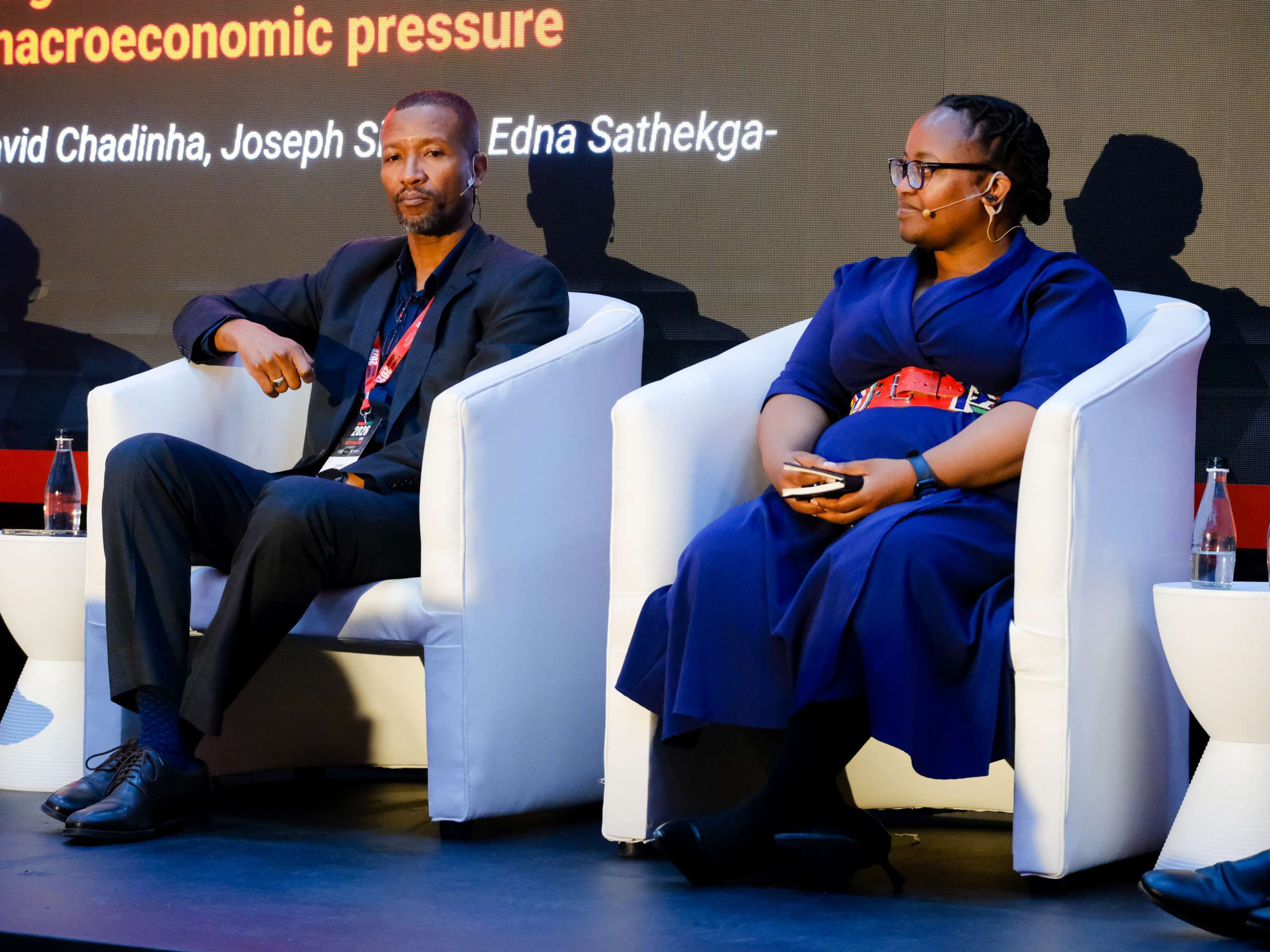
Speaking during a panel discussion at the Finance Indaba 2026, Joseph observed that labour costs are an obvious target when companies need to improve their financial position. However, he cautioned that the decision to reduce headcount can have consequences that extend beyond the immediate savings on the income statement.
“When you look at any OPEX structure, 60 to 65 percent of your cost is people. It is always the easiest place to start, and that is the sad thing,” he said.
Joseph recalled an experience early in his career as a second-year auditor at a bottling company where the board had decided to retrench about a third of the workforce. The head of finance at the time returned with an alternative proposal, suggesting that affected employees take two-thirds of their salaries rather than lose their jobs entirely.
The proposal also required management to share the burden. Half of the management team agreed to defer part of their pay until the business recovered, while the factory workers and drivers accepted reduced salaries.
“These teams worked together over a period of six months, and in six months' time, no one had left. But at the same time, they had started to bring people's salaries back to where they were supposed to be,” Joseph said.
A win-win solution
The experience also revealed opportunities to reduce costs that had little to do with cutting the workforce. By speaking to factory workers and supervisors, management discovered ways to reduce water consumption during cleaning processes and prevent bottles from breaking during repeated washing.
Some of these savings came from questioning standard operating procedures that prescribed the same cleaning process regardless of the product being handled. Experienced workers understood where adjustments could be made without compromising the process, knowledge that had not been captured in the procedures themselves.
“They discovered all the different parts of waste that were in the processes because they did not ask the line people,” Joseph said.
Drivers proposed a truck ownership arrangement under which the company gradually transferred ownership to them through annual bonuses. After ten years, the driver would own the truck and could lease it back to the company, while potentially creating employment for another driver from the family.
The arrangement gave drivers an incentive to maintain their vehicles carefully while allowing the company to lease trucks at below-market rates. Joseph described the outcome as beneficial to the company and the truck owners, as well as the new drivers who could find employment through the arrangement.
“When you look at the collective ecosystem, it is a win-win for the company, for the truck owner, and for the new driver who comes on board,” he said.
What remains possible
For finance leaders, the examples illustrate the value of looking beyond the most visible expenses when reviewing operating costs. Employees who work closest to production and distribution may understand inefficiencies that are difficult to identify from financial reports alone.
Yet Joseph acknowledged that labour remains an especially difficult cost to manage because workforce reductions can undermine the very business plans that finance leaders are expected to deliver. Companies borrowing to fund expansion or technology investments make commitments to lenders based on their ability to execute those plans, which depend on retaining the necessary skills and people.
When employees leave following restructuring, the business may struggle to deliver on its commitments. The resulting risk complicates the decision to cut jobs, particularly when a company is trying to restore profitability.
“But when you are talking about people, when you are giving people as collateral, we also know that people are the easiest guys to stand up and leave you standing,” Joseph said.
Where retrenchment cannot be avoided, he urged finance leaders to consider what support they could still offer departing employees. In one case, he persuaded his company to extend medical cover for three months because the annual insurance premium had already been paid. He also proposed using existing partners to provide subsidised training for employees preparing to move into new roles or start businesses.
For Joseph, the responsibility is to consider what remains possible even after a difficult decision has been made. He believes finance leaders must also be honest with employees about the reasons for the decision and demonstrate that they have considered its consequences.
The challenge, however, is that a company must remain credible to its investors while making decisions about its workforce. Joseph cautioned against presenting financial projections that cannot be supported simply to secure funding or reassure stakeholders.
“You are also not going to sell an implausible story to an investor, and that is why I think, unfortunately, human beings, being who we are, become the low-hanging fruit that is sacrificed first,” he said.