MTN Uganda recently announced strong half-year results with data revenue up 31 percent and fintech up 19 percent, despite a one-off tax settlement that reduced profit after tax by 9.7 percent.
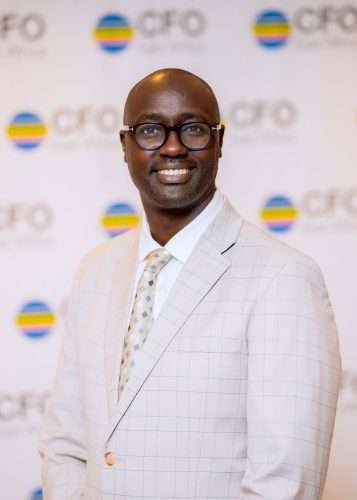
In this conversation with CFO East Africa, CFO Andrew Bugembe reveals the focus for H2 is driving further growth through digital services and continued network investment.
The Ush 110.9 billion tax settlement cut profit after tax by 9.7 percent. How will this influence future tax provisioning and the predictability of obligations?
The real profit after tax growth year on year (YoY) was 27.8 percent if one excludes the once off tax settlement without prejudice, that was an amicable agreed position to resolve a 12-year transfer pricing review by the tax authorities. To ensure 2025 and the future is certain, we made an “advance pricing agreement” application which is allowed under regulation 9 (1) of the Transfer Pricing Regulations to the Uganda Revenue Authority to align on future treatment regarding intercompany charges and are awaiting feedback from the tax authorities.
Data revenue rose 31 percent and fintech 19 percent, while voice was flat. How are you shifting investment to higher-margin digital services to optimise return on invested capital?
We’re super happy with the current data growth given the capex LTE investment we’ve made over the years and moved 4G population coverage to over 88 percent. We have also increased the fibre footprint connecting existing network sites for better experience to handle increased data traffic and accelerated fibre to the home. To ensure increased smart phone penetration, we've accelerated the device financing programme and also continue to support the same externally off our balance sheet with various device partners. We also continue with focus on various customer value propositions while frequently reviewing our existing offerings to align with the ever-changing customer preferences.
It’s important to note that under our capital allocation programme we prioritise capex deployment in areas that offer higher returns whilst also increasing coverage in areas we’re not to ensure we connect the unconnected for the first time and also give every customer an opportunity to enjoy a digital experience. The flat voice growth was impacted by the drop of the mobile termination rates (MTR) from 45 to 26 last year in September 2024, but if you exclude interconnect revenues, outgoing voice revenue was up 4.7 percent YoY. Under fintech, focus is on the advanced revenues that offer better margins, but we must also continue to invest in the eco system to continue to optimise the distribution and grow our merchant base.
Capex rose 0.3 percent yet you added 355 sites and expanded 4G/5G. What drove this efficiency, and how will it shape medium-term capex plans?
Uganda has a great macro environment with the best performing currency in Africa today, we have a scenario where our currency, the Uganda Shilling, has appreciated YoY against the USD and when you further add the renegotiated capex savings due to synergies we benefit from our group sourcing company in Dubai, the result is a lower capex intensity even when volumes have increased.
With net debt/Ebitda at 0.7×, how will you use balance-sheet capacity to fund the fintech spin-off while staying flexible?
MTN Uganda has a strong balance sheet and a couple of undrawn facilities as at half year June 2025, partly due to the timing of our H1 Capex programme, but also improved working capital initiatives. There’s no need to fund the current fintech re-organisation, focus will be to scale our network investments in areas with increased capacity demands, without coverage and home fibre footprint that our connectivity (GSM) balance sheet can comfortably accommodate even after the reorganisation.
How will the MoMo separation affect investment priorities, valuation and funding for each entity?
The mobile money reorganisation will not affect our investment or funding priorities and for both companies, at the recent EGM we shared with our shareholders the proposed structure which was overwhelmingly approved and will wait for the formal regulatory approvals to execute. In line with our Ambition 2025 as the MTN Group looks beyond, the focus is to streamline into three platforms of connectivity, fintech and digital infrastructure, to capture value from the various growth opportunities from financial inclusion and reducing the digital divide.
With an interim dividend of Ush 10 per share, how do you balance payouts with reinvestment in digital infrastructure?
It’s always an interesting challenge and a form of an ambidexterity situation that public telecom companies like MTN Uganda experience when one needs to balance investment for future growth, return value to shareholders through dividend payments and also continue to fund the day-to-day operational demands. At the end of the day, it’s always a balance. The key is how one prioritises either but you can’t concentrate on one area as in the business were are in, if you stop investing, you will definitely struggle ahead as night comes before day, so the key is with the right capital allocation strategy that will maximise the return on investments made and continuous focus on improved free cashflows year after year.