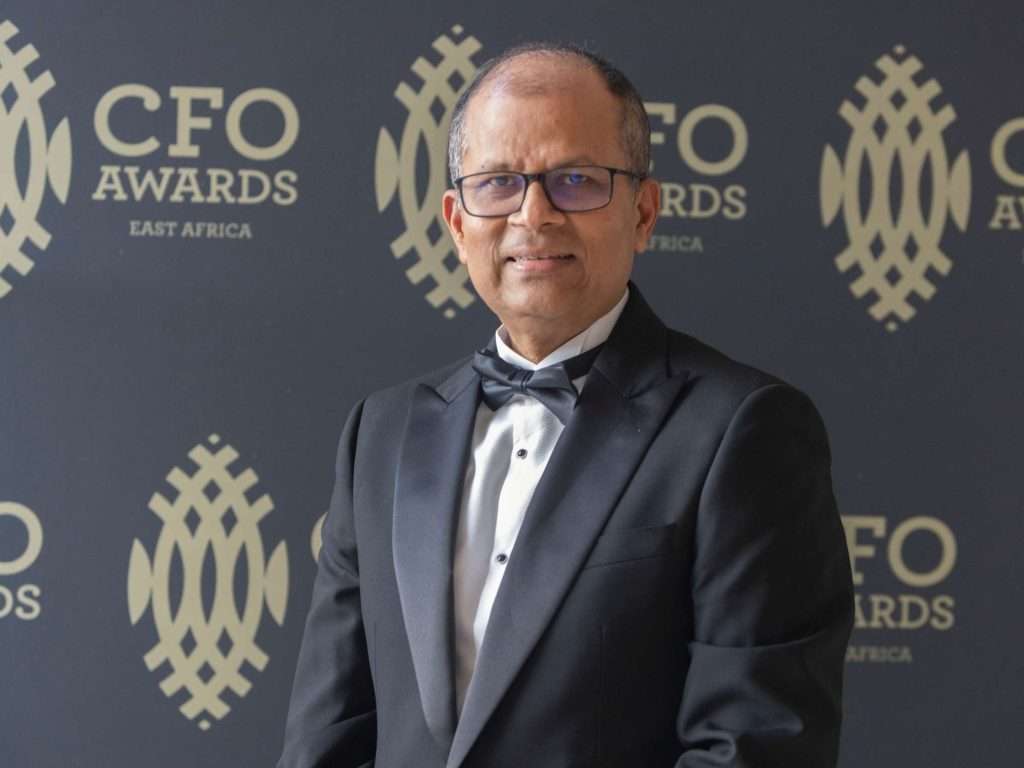
Safaricom has become the first Kenyan company to post a net profit above KSh 100 billion. During the announcement, group CFO and 2025 CFO of the Year Dilip Pal explained the financial decisions that made it possible.
Safaricom’s group net income reached KSh 100 billion, growing 67.3 percent year on year, with Kenya alone posting KSh 119 billion. For group CFO Dilip Pal, the number is the outcome of a set of deliberate financial decisions that had been building for several years. The company delivered double-digit growth across all key metrics in Kenya for the third consecutive year, while simultaneously halving Ethiopia's startup losses and issuing a record dividend.
"In our silver jubilee year, we delivered strong customer growth across all segments, a reflection of trust and loyalty we have built over 25 years. Indeed, we have delivered exceptional results in FY26," Dilip said.
The company delivered double-digit growth across all key metrics in Kenya for the third consecutive year, while simultaneously halving Ethiopia's startup losses and issuing a record dividend.
Customer numbers in Kenya grew strongly across all segments, and at group level the combined base, including Ethiopia, crossed 71 million. Service revenue in Kenya crossed KSh 400 billion for the third consecutive year of double-digit growth, with momentum strengthening as the year progressed.
"Service revenue recorded its highest ever absolute year-on-year growth, increasing by KSh 36 billion. EBITDA and EBIT margins expanded by 2.8 percentage points and 2.7 percentage points compared to the previous year, closing at an EBITDA margin of 56.8 percent and an EBIT margin of 44.2 percent respectively," he said.
Part of what drove those margins was a decision made the year before. In FY25, Safaricom cut the price of its mobile lending products to make them more accessible to more customers. Although this decision weighed on short-term returns, it worked. By FY26, the number of people using mobile credit had more than doubled, the loan book had grown strongly and the provisions that had pushed costs up the prior year came back down.
Mobile money is no longer one business
"The M-Pesa business remains robust, supported by the investments you have been making and also the ecosystem that we have built. The contribution from traditional revenue has declined from a peak of 67 percent to 61 percent in five years, with the contribution from withdrawal revenue declining from 38 percent to 20 percent. Financial services continue to scale, growing 19.1 percent year on year, the fastest growth that we have seen in the last three years," Dilip explained.
The change reflects how deliberately the mobile money business has been rebuilt. What was once largely a platform for sending money and making withdrawals now earns a growing share of its revenue from savings, investments and insurance. The consumer and business super apps together contributed a quarter of all incremental mobile money revenue in the year, a sign of how much customer behaviour has moved toward managing money on a phone.
On costs, operating expenses were driven largely by the weakening of the Kenya shilling against the Euro and advertising spend around the company's 25th anniversary and M-Pesa's 18th.
"If you exclude the forex impact, the operating cost grew by 7.7 percent year on year. Overall, our costs are well managed and have supported delivery of a strong bottom line," he said.
Cash generated from the business grew strongly during the year. The cost of servicing the group's debt also fell, the result of owing less and borrowing at lower rates. Some of that improvement came from a decision to lock in long-term funding early, including a KSh 20 billion green bond raised in December 2025, which reduced the group's exposure to rising borrowing costs.
Building a sustainable Ethiopia
Ethiopia is where Safaricom's long-term investment is playing out most visibly. The group has put significant capital into the operation over three and a half years, and the returns are becoming tangible. The customer base has grown significantly, mobile money has gained real traction and the business is now contributing meaningfully to group revenue growth.
"Ethiopia demonstrated a stronger performance in the second half relative to the first half of the year in all key financial metrics. EBITDA loss reduced significantly in the second half, with a loss of KSh 2.7 billion compared to a loss of KSh 12.4 billion in the first half. Startup losses declined by 41.2 percent to KSh 21.2 billion. The pathway to EBITDA breakeven and profitability is definitely taking shape, and we are committed to staying the course," Dilip went on.
During the year the group also moved more of its borrowing onto longer repayment terms, with the majority of group debt now long-term. That reduces the pressure of having to refinance frequently and gives the business more predictability in what it pays to borrow. Capital expenditure also came down as Ethiopia's network rollout reached a more efficient phase.
A record dividend and the year ahead
The financial discipline across both markets created the conditions for a record dividend of KSh 2 per share, totalling KSh 80 billion, the highest payout since before the Ethiopia investment began. A final dividend of KSh 1.15 per share is subject to approval at the AGM in July.
"Last but not least, the group operating free cash flow grew significantly by 39.7 percent year on year, supported majorly by increased EBITDA , improvement in losses in Ethiopia, and of course the lower group Capex. As the Ethiopia business is gaining scale, the overall positive impact to the group performance is visible. So it is not future. It is already present," he explained.
For the year ahead, Dilip told investors to expect continued strong profit growth in Kenya, with Ethiopia's losses expected to halve again.
"We now move into the second year of our vision 2030 strategy with a commitment to carry on our execution momentum," he said.