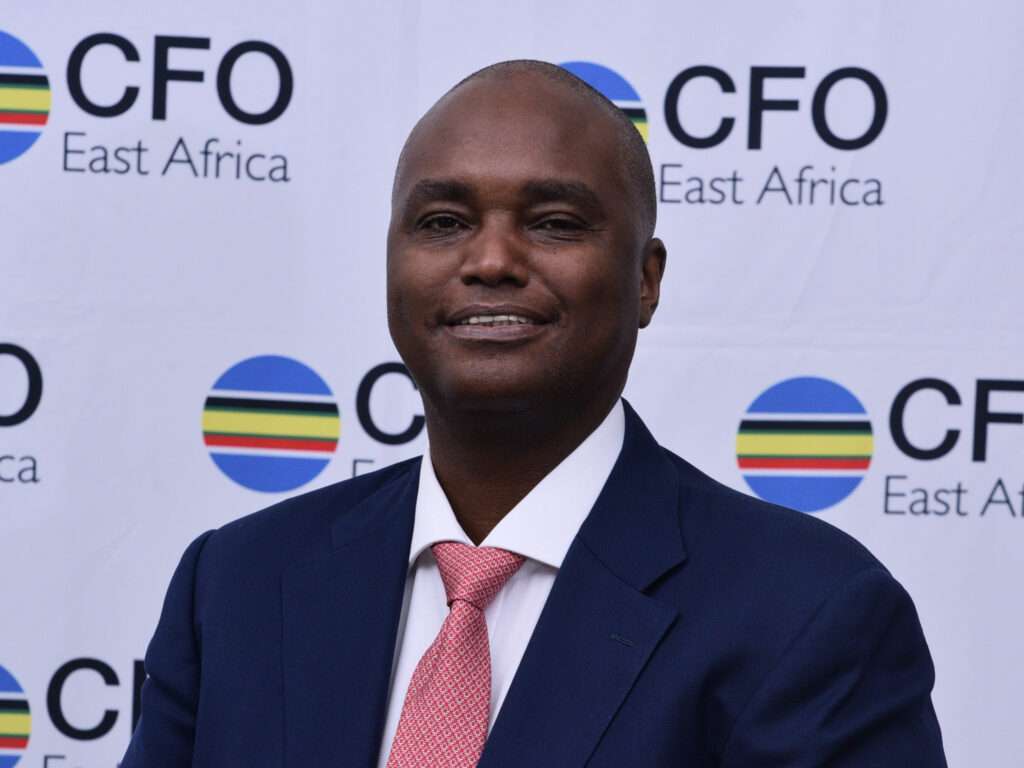
Speaking at the CFO East Africa Uganda launch summit, Patrick Mweheire, the regional CEO of Standard Bank Group in East Africa, outlined a vision for the future of financial leadership in the region.
Patrick began his presentation, titled Setting the Agenda for the East African CFO Community, by highlighting East Africa’s economic dynamism, noting that the region is home to five of the seven fastest-growing economies in Sub-Saharan Africa.
“East Africa is not just the fastest-growing region in Africa, but it’s also the most integrated,” Patrick said, emphasising the increased trade flows between countries like Kenya, Tanzania, and Uganda, which have grown from $3.1 billion in 2018 to $5.4 billion in 2022.
He credited this growth to regional integration, improved infrastructure, and rising demand for goods and services. According to Patrick, the fundamentals for growth in East Africa remain strong.
“With a combined GDP of approximately $521 billion and a population of over 410 million, the region offers substantial opportunities for businesses and investors,” he stated.
The region’s economic outlook is bolstered by favourable demographics, including a young and growing population, and an average GDP per capita growth rate higher than many other parts of Africa, he pointed out.
Navigating a VUCA world
Despite these positive trends, Patrick acknowledged that East Africa, like the rest of the world, faces significant uncertainties. He referred to the current global business environment as VUCA, an acronym for volatility, uncertainty, complexity, and ambiguity.
“We are dealing with geopolitical crises, such as the Russia-Ukraine conflict, the lingering effects of Covid-19, climate change risks, and rising social unrest,” he noted.
Patrick emphasised that these challenges require CFOs to adopt a more adaptive and proactive approach to leadership. He argued that past economic success does not guarantee future prosperity.
“The business landscape is shifting rapidly, and what worked before may not necessarily work now. This is why adaptability and agility are crucial traits for today’s CFOs,” he stressed.
Patrick spoke extensively about the evolving role of CFOs, moving beyond traditional financial stewardship to becoming strategic partners to CEOs and key drivers of organisational value.
“CFOs today are no longer just number crunchers. They are strategic advisors who help shape organisational goals and create value for stakeholders,” he said.
This shift in role is essential for maximising long-term financial performance and leveraging technology to gain a competitive edge.
He outlined several key shifts in leadership necessary for modern CFOs to move from:
- Strategy to culture: Patrick emphasised the importance of organisational culture in driving strategic success. “There is a myth that getting strategy right will automatically lead to success. However, culture eats strategy for breakfast,” he quoted, stressing that a culture of agility, resilience, and strategic thinking is essential. He urged organisations to reward strategic thinking and discourage complacent approaches.
- Technical to adaptive thinking: Addressing the need for CFOs to move from a purely technical mindset to adaptive thinking, Patrick highlighted that not all challenges have clear-cut solutions. “In a VUCA world, the temptation is to treat adaptive challenges as technical ones, but this approach will not suffice,” he explained. He encouraged CFOs to adopt a learning mindset, asking probing questions to uncover underlying issues and foster innovative solutions.
- Certainty to curiosity: Patrick underscored the value of curiosity in leadership. “Certainty is in short supply today. We must embrace the grey areas and understand that detailed planning often needs to be adaptable,” he advised. He advocated for a focus on questions and ideas rather than rigid answers, promoting a culture of continuous exploration and adaptation.
Leadership and innovation
In closing, Patrick laid out the attributes that make an effective CFO. He described an effective CFO as one who shapes strategy by being dynamic and responsive to market shifts, builds trust with the CEO and other stakeholders, and communicates effectively by telling compelling future stories rather than just reporting past events.
“An effective CFO is one who can simplify complex information to suit specific audiences, whether it’s the board, investors, or staff,” Patrick noted.
He also emphasised the importance of driving capital allocation and holding teams accountable for managing value.
“An effective CFO is not afraid to kill bad ideas early,” Patrick said, underscoring the need for a disciplined approach to investment and resource management.
With his emphasis on culture, adaptive thinking, and curiosity, Patrick’s vision challenged CFOs to rethink their roles and embrace a future-ready mindset.
As he aptly put it, “In today’s world, it’s not just about managing numbers; it’s about managing minds.”