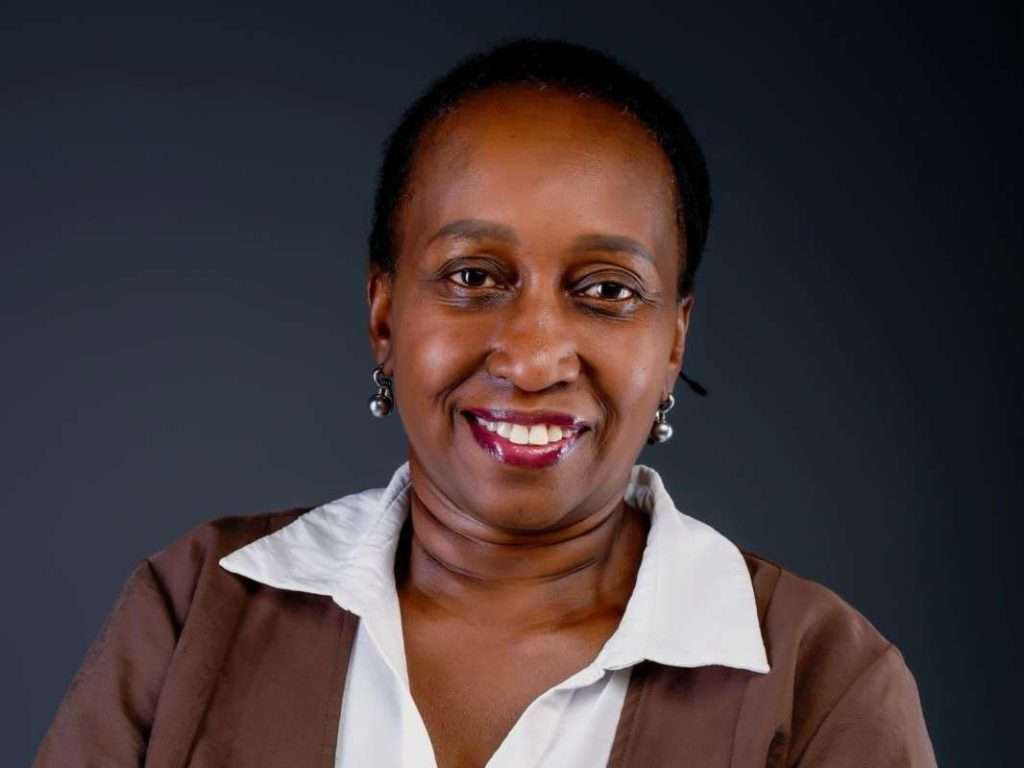
2026 CFO Awards judge Kinya Kimotho reveals why modern finance leaders must evolve from traditional bean counters to trusted business advisors.
Kinya is the regional director at The Alpha Group International, an executive coach, and the former finance director partner for emerging markets at Diageo. She shares why mastering leadership and business acumen is critical for aspiring executives.
What made you want to be a judge for this year’s awards?
In this case, what I like is two things. First, this is very useful for the finalists themselves. What is it that people saw in your work that they felt you deserved to be recognised?. You may do a lot of things, but there’s normally one particular thing that people saw. Secondly, for the wider community, there’s a feeling of fairness. It’s a transparent process with a criteria that anybody can buy into. When that person gets the award, you realise this is somebody you could learn from and have a conversation with. For me, I want to learn from seeing what people have done. Participating in a solid process provides a service to other CFOs.
You mentioned that every CFO has one thing that stands out about them. Tell me about the qualities that distinguish truly exceptional CFOs from competent ones and the core competencies you’ll be looking at as you evaluate candidates regardless of sector.
The CFO is a trusted business advisor. First, they understand the business irrespective of the sector they’re in, and offer solid financial advice. Their leadership stands out because the CFO is normally the de facto number two in the business. No one will ever come and tell you you’re the number two. But it’s a position you work your way into where the CEO gets to the point where they realise they don’t want to breathe without the CFO at their right hand. The business has come to realise that your input, knowledge, and leadership adds such value that they do not want to make any serious business decision without your input. What are you able to put on the table to say this is how I showed up and this has been the result?.
What gaps do you see in how we’re training finance professionals in the region, and what should aspiring CFOs focus on beyond the technical?
For most good CFOs, it’s because of investment by the employer. For aspiring CFOs, you may be working in a firm that offers deliberate training, or for a business without resources. So what can aspiring CFOs do?. Everybody owns their career and learning. It should never be outsourced to your employer. How does one lead teams?. Those leadership skills are very important, and remember that is not taught in the profession. It is taught in the workplace, via practice, getting a mentor, coaching, or doing a leadership course. So one needs to invest in themselves.
Another priority is growing business acumen. It is impossible to be a business advisor if you do not understand the business. Finally, you must be the bridge between the CEO’s strategic lens and bringing those plans to life for the rest of the business. The transition from accountant to CFO can be tricky if you’re used to being in the weeds with the numbers. If you cannot let go of that to see the forest for the trees, you will not be effective.
What do you think is going to define a successful CFO in the next five years?
When I started, the CFO was a bean counter. Finance managers did not necessarily want to stray beyond that remit. Now, you really do not want to be in a business where the CFO is not in almost every single conversation. Finance professionals realised they could add value beyond providing numbers, and businesses realised the finance leader needed to be an integral part of forming strategy and translating it into business performance. Today, you can run a business without an in-house finance professional and still get a decent set of books using existing software. A lot of software now, especially with the advent of AI, is written in language anyone can understand. What people are going to be looking for is the real value add. So the call out to CFOs is they need to keep learning, understanding, and growing.
Why is translating numbers into a compelling narrative increasingly important for CFOs?
One of the things the profession has evolved from was that we would say the number is the number. It is almost like wrap your head around the number and move on. But I started realising that if people do not understand the numbers, it makes it very difficult for them to buy into what you’re selling from a strategic perspective. I always tell aspiring CFOs: do not be the person who sits in your finance office all day. Get out there, talk to people, have lunch with different people in different departments, walk on the shop floor, and visit all areas of the business. Understanding how those balls are kept running will help you be a more effective CFO.