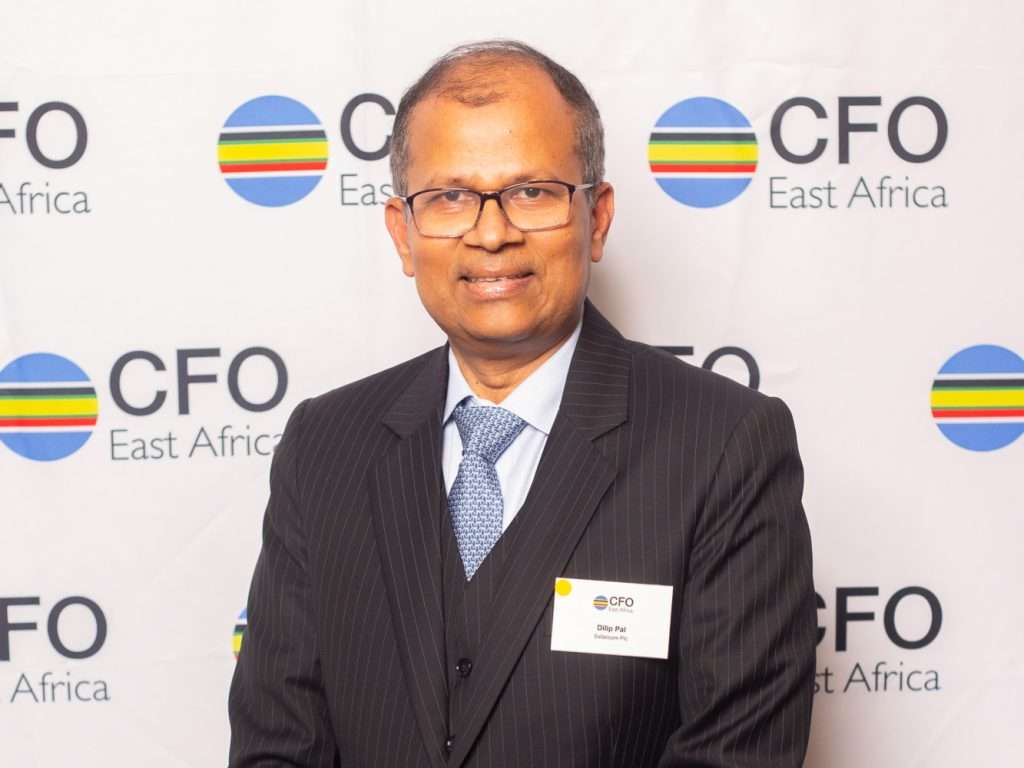
Safaricom CFO Dilip Pal delves into the company’s strategies for managing foreign exchange risks, diversifying revenue, balancing major investments, and delivering customer value.
CFO East Africa caught up with Dilip shortly after the release of Safaricom’s half-year results on 7 November, which reported a 21.7 percent increase in net earnings and a 14 percent rise in service revenue to reach a half-year record of Sh181.4 billion.
How has your financial strategy adapted to mitigate the impact of foreign exchange risks?
In Kenya, we have adopted a multi-layered approach to mitigate foreign exchange risk. First, we successfully repaid all foreign currency loans to minimise the foreign exchange exposure on our balance sheet. On the procurement side, we onboarded more local suppliers and transitioned to local currency settlements. This shift to local suppliers not only reduces foreign exchange risk but also strengthens our local supply chain.
The recent foreign exchange reform in Ethiopia is a step in the right direction. The reform introduced a competitive market-based determination of the exchange rate to address a long-standing distortion within the Ethiopian economy. In the long term, this is beneficial for Ethiopia, but we must consider the financial impact in the short term. However, we have taken certain measures to mitigate the impact. Some of these measures include renegotiation of foreign currency-denominated contracts, onboarding local suppliers, reduction of the expatriate employee base, and price review. This is something we started earlier in the year as we anticipated this to happen sooner rather than later.
How do you plan to diversify your revenue streams to ensure financial stability and continued growth?
Safaricom has been in existence for 24 years. It began as a telecommunications company and has evolved to provide financial services and fixed connectivity among other services. The business has transitioned from over 95 percent of revenue coming from the Connectivity Business to the business now contributing 50.5 percent to revenue. Financial services now contribute 43.5 percent of service revenue, with the Fixed Business contributing 5percent. We have been transitioning from a traditional telecom with a vision to become Africa's leading purpose-led technology company by 2030.
Over the years, Safaricom has diversified its portfolio by introducing innovative products and service offerings to its customers. We embarked on a journey to elevate our Content offerings through multiple partnerships. In the Enterprise segment, we are focusing on IoT and ICT services. Each of these areas helps ensure that we are building a more resilient and diverse revenue base for sustainable growth.
How do you balance the financial pressure of investments, such as its operations in Ethiopia, with the need to maintain profitability and shareholder value?
Safaricom’s investment in Ethiopia represents a greenfield venture with immense potential. As Africa's second-most populous country, Ethiopia boasts a predominantly young population, making it a highly promising market. In just two years since our launch, we have attracted over six million customers and established 3,008 sites—approximately half the footprint of our well-established network in Kenya. Data consumption per customer is about 1.5 times higher than in Kenya, with an average of 6.6 GB per month, indicating a distinct growth trajectory and the significant opportunities Ethiopia offers.
As anticipated in any large-scale startup, we expected a short-term impact on profitability due to the substantial investments required in the initial years. Together with our consortium partners, we planned for this front-loaded investment phase, understanding that it would support substantial contributions to our mid- to long-term growth. Encouragingly, in just two years, Ethiopia has already contributed ten percent of our Group Service revenue growth, signalling the value we expect over time.
In Kenya, we have consistently delivered strong financial results, as evidenced by the double-digit growth in both topline and bottomline. This robust performance in Kenya also cushions the short-term pressure from startup losses in Ethiopia. As a Group, we remain very optimistic about the long-term value creation opportunities for all our stakeholders, including shareholders.
To keep shareholders informed, we provide regular updates on Ethiopia’s progress, including a dedicated Investor Forum for market immersion in February, which was very well-received. This transparency ensures stakeholders understand the long-term potential and alignment with our broader strategic goals.
What new initiatives do you have in the pipeline to enhance value for money for your customers?
Safaricom is continually working to optimise pricing and deliver greater value for money to our customers, focusing on affordability, accessibility, and enhanced experiences. Over recent years, we’ve reduced connectivity costs by up to 60 percent and cut prices on financial services by up to 50 percent, ensuring our products remain affordable amidst broader economic challenges.
To further tailor our offerings, we’re using AI to provide personalised packages, helping each customer enjoy products that best suit their unique needs. Additionally, we are offering bundled packages and enabling our customers to make their own bundle packages across our connectivity services, allowing over 35 million customers to benefit from integrated solutions that enhance their overall experience.
In our fixed business, we’re delivering higher speeds at no additional cost, aiming to improve customer satisfaction and provide consistent value. For M-Pesa, we’re enhancing reliability and scalability, with capacity to handle over 4,000 transactions per second and 99.9 percent uptime to ensure a seamless, always-on experience.
Through partnerships in the open market, we also provide affordable device options, enhancing customer experience. With these initiatives, we are dedicated to delivering enhanced value for money, improving both the affordability and quality of our services for customers across the markets we serve.
How do you assess whether your investments are translating into improved customer satisfaction and engagement?
At Safaricom, all our investments are designed to drive customer satisfaction and engagement, aligning with our vision to transform lives and our mission to become Africa's leading purpose-led technology company by 2030. We focus on identifying customer pain points, developing solutions that address these needs.
To evaluate the success of our investments, we use measurable performance indicators for both customer satisfaction and engagement. For satisfaction, we rely on Net Promoter Score (NPS) surveys conducted on-the-spot or monthly to gauge how well we are addressing customer needs. Additionally, internal quality KPIs on key applications help us track service performance and assess the impact of our investments on customer experience.
On customer engagement, we measure growth in overall customer numbers and specific product categories. Increased usage and uptake of additional services signal that our products are meeting essential needs. For instance, we’ve recently seen a 16.3 percent increase in mobile data usage, a 17.6 percent rise in voice usage, and a 30.6 percent growth in M-Pesa transaction volumes. Our customer base has also grown by six percent year-over-year, showing that more people find value in our offerings and are choosing Safaricom to meet their connectivity and financial services needs.
Externally, we gather insights through customer care interactions and regular surveys, essential for hearing the voice of our customers. This feedback has directly informed the development of tailored products, ensuring our investments continuously reflect customer needs and preferences.