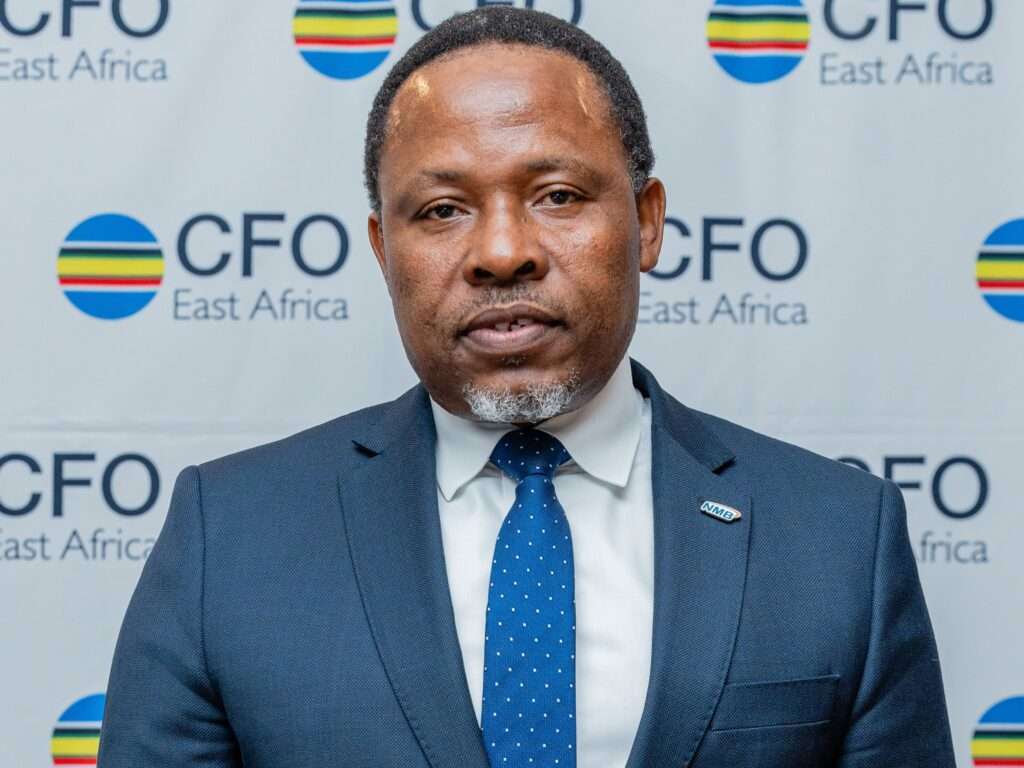
Tanzania’s NMB Bank recently partnered with the International Finance Corporation (IFC) and Mastercard to launch the 'Banking on Women Advisory Project', which aims to enhance its Jasiri Proposition to attract, retain, and grow women-led businesses in Tanzania. Under the Jasiri Proposition, NMB issued the first social bond, whose proceeds have financed more than 3,000 women. CFO East Africa caught up with NMB Bank CFO Juma Kimori, who spoke in detail about how the bank is expanding its initiatives to empower women-led businesses in Tanzania.
How does NMB Bank plan to leverage data and customer research in shaping financial solutions tailored specifically for women-led businesses?
Gender inclusion especially among women in Tanzania is a significant issue. According to the World Bank's Global Findex Database, in 2017, about 22 percent of women in Tanzania had a bank account, compared to 29 percent of men. This gender gap indicates that women are less likely to have access to formal financial services. Women entrepreneurs in Tanzania also face significant barriers in accessing credit. Only about 5 percent of women-owned businesses have access to bank credit, compared to 15 percent for male-owned businesses (IFC). Societal norms and cultural barriers further exacerbate financial exclusion. Women may face restrictions on property ownership and decision-making, limiting their ability to access financial resources.
This partnership is therefore a unique testament to our commitment to financial inclusion, gender equality, and sustainable economic growth. It marks a pivotal moment in our efforts to drive gender economic empowerment. IFC brings invaluable expertise and resources that complement our mission, helping us scale our impact.
By leveraging on parties’ unique strengths, under the umbrella of this partnership, we will be able to develop a holistic customer value proposition that meets the financial and non-financial needs of women and women-led businesses in Tanzania. We will also be able to identify insights and use cases beyond to drive even greater impact and experience for our end-customers. The partnership also enables us to gather gender-disaggregated data ensuring that interventions are based on solid evidence.
Which capacity-building initiatives will NMB Bank implement for its staff to better serve women-led businesses, and how will these improve the overall customer experience?
With over 4,000 staff spread across 240 branches and serving over 8 million customers, NMB recognises the importance of investing in staff empowerment to achieve its strategic objectives. Specifically, for initiatives aimed at enhancing the experience of women and overall customer satisfaction, we are implementing and planning to expand on capacity building by creating future leaders to ensure a sustained focus on offering the best solution to women and driving empowerment. Regular, standardised training and awareness sessions on gender biases and the business case for banking women and women-led enterprises has been done to some extent, but a robust plan is to be rolled out. NMB Bank will also ensure clear communication and articulation of objectives and key focus areas for the women’s segment to all bank staff.
We will also provide our staff with work tools designed to align with women’s needs and tailored solutions such as persona packs, which link different women personas with likely solutions. NMB Bank also plans to introduce staff reward and recognition programmes for achieving key milestones in the women’s proposition. In addition, we will demonstrate our commitment through active endorsement and leadership from the executive committee (exco) in championing this agenda.
By implementing these programmes, I believe we will be able to create a more inclusive financial ecosystem that supports the growth of women-led businesses and contributes to broader economic development- further accelerating NMB’s gender inclusion strategy in Tanzania. This is only possible if we have the right people at the right places to drive this prominent agenda.
What impact does NMB Bank aim to achieve with this partnership over the next four years, particularly in increasing access to banking services for women in rural areas?
At NMB, we believe that this partnership will greatly contribute to and accelerate the achievement of social impact and community engagement through financial literacy and community development. We have set a target on the number of women who will be reached through our financial literacy programmes, with follow-up assessments on improved financial behaviours. We also hope to make contributions to the broader community as we believe that supporting women contributes to social development. In addition, this move is expected to increase the number of women-owned accounts opened and retained through our different channels and increase access to finance for women-led or owned businesses in Tanzania, including personal loans. Lastly, the partnership will impact NMB’s market positioning and brand equity, allowing it to retain brand perception as a market leader in women’s banking.