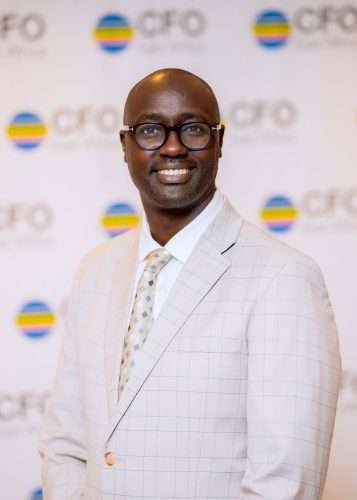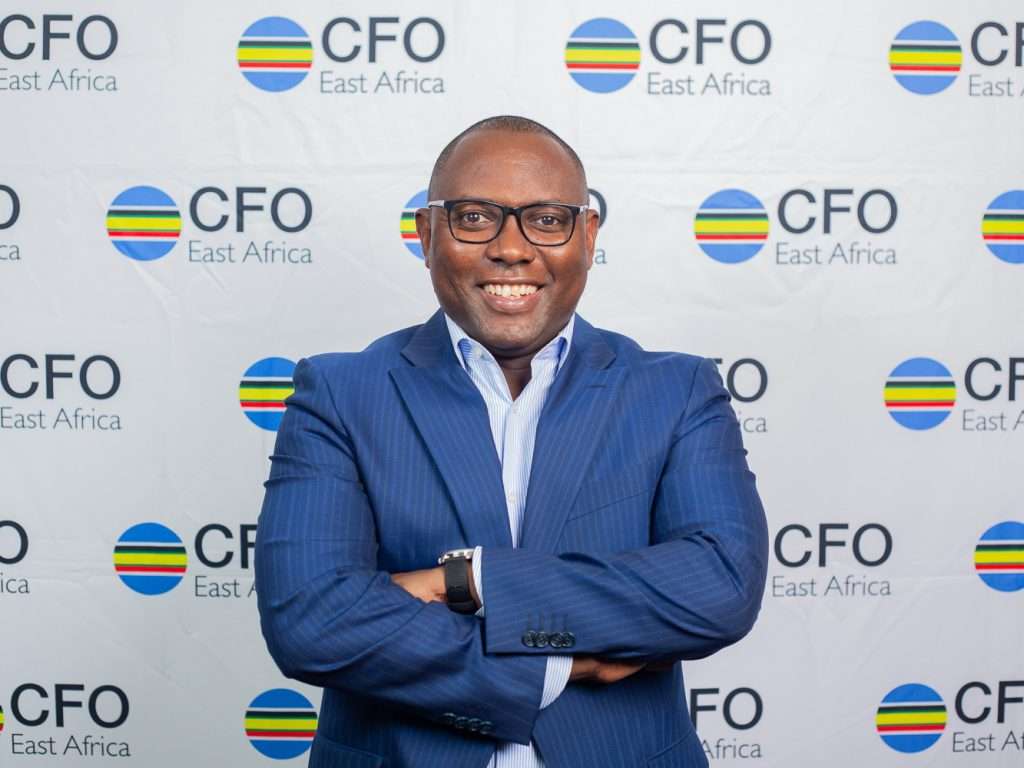
Four years after joining Pearl Bank Uganda, CFO Peter Ssenyange leads one of the country’s most respected finance teams. Peter shares how empathy and a drastic shift in culture helped restore performance and pride in the institution.
The first thing Peter Ssenyange did after becoming CFO of Pearl Bank Uganda (then PostBank Uganda) was put an old newspaper cutout of the Financial Reporting (FiRe) Awards on the wall. At the time, the idea of the bank appearing on that stage seemed far-fetched. But Peter had seen enough turnarounds to know that boldness was the first step. The real challenge would be convincing the team to believe they could win.
“I told them the losing stops today. So I started working on my team’s skill set. By the way, they were all qualified. They just weren’t working on themselves,” he said.
Beyond the technical, the transformation would require a change in the organisation’s culture. Peter had inherited a finance team that lacked leadership and drive, trapped in a public-sector mindset where performance was based on tenure. Within the organisation, morale was low. The bank itself had recently undergone a governance overhaul following serious concerns raised by its shareholder, the Ministry of Finance.
“We massively improved the integrity of our published financial information. Initially, the bank used to send accounts to the Central Bank at midnight on the deadline. And then they would have all sorts of adjustments. So the number you see after it’s audited has changed like 150 percent. In four years, our un-audited numbers are exactly the same as or close to audited ones,” he said.
Beyond credibility, Peter was chasing excellence. He had joined the bank on the strength of a conversation with the CEO, a man whose vision was so ambitious that even industry insiders dismissed it. PostBank was not on Peter’s radar when the opportunity came up. But the clarity and confidence of the CEO’s mission convinced him to take the risk.
“I bought into a vision. I said, let’s do it. My family later found out and were incensed,” he added.
A drastic turnround
At the time, the bank was so overlooked that jobs had to be advertised multiple times before attracting applicants. Today, Peter says, people are scrambling to join. He credits this shift to the performance culture he helped build, one that lauds ownership and high standards. The bank’s finance team has since won multiple awards and was recently selected by the Bank of Uganda to induct new central bank recruits.
“The central bank wrote us a letter and said, ‘we want a selected group of our people to come and train with the PostBank finance team’. We asked them what criteria they used. They said we only pick the best finance teams in the market. That was at the start of this year,” he revealed.
In the beginning, Peter was fully focused on outcomes. But today, he understands that lasting change depends on how people are brought along. He believes transformation is less about pushing people out of a burning house than building a house that will not catch fire in the first place.
“When you’re leading people, you reach a point where you’re not leading people anymore. You’re leading leaders who then lead the people. That was important. I think it’s the area where I’ve grown the most on the empathy side. But our profession doesn’t teach us empathy,” he said.
He remembers the early days vividly. The team’s work was consistently late, and the finance function was seen as a liability rather than a strategic partner. But Peter set high standards and made it clear they were not optional. He began by diagnosing the skill gaps and then addressing them through deliberate training and coaching.
“There’s only one thing on my office wall. It’s that newspaper cutout. I pointed them to a target and I said to them ‘we will know that we’re a good team when we actually win the FiRe award’,” he said.

On a winning streak
The results speak for themselves. For two years in a row, Pearl Bank Uganda has won the Bronze Award for Integrated Report of the Year at the FiRe awards. In the same period, Peter himself was named first runner-up at the ACCA Uganda CFO Awards as well as inaugural winner of the ACCA Uganda Leadership award. The following year, he received the Compliance and Governance award. In 2025, Peter won the Public Impact CFO of the Year Award at the 2025 CFO Awards for East Africa. He also took home the CFO of the Year and Sustainability Awards at the 9th annual Uganda CFO Awards. This recognition points to his understanding of finance as a strategic tool.
Peter’s own path into finance was unconventional. He chose the sciences in his A-Levels but quickly realised his interests lay elsewhere. He was drawn to financial news even when he didn’t fully understand it. Eventually, he enrolled for the ACCA certification and fell in love with what finance could do.
“I don’t like accounting. But I like what accounting does for business. Accounting is the language for business. I like when you sit across from a business executive and explain what the results show, and you see them light up,” he said.
Peter’s perspective was shaped by the years he spent in various roles at Stanbic Bank and a four-year stint at UBA, where he was exposed to business partnering from early on. Through these experiences, he learnt how to present financial information in ways that executives could use to make real-time decisions.
“My job was to help executives make decisions. I observed and learnt for a long time. Imagine if you sat across from Elon Musk and you’re his numbers guy. You’re going to learn 18 years’ worth of experience in a single conversation,” he said.
What makes people tick
He is now keen to understand people and present data differently depending on who he is speaking to. As he sees it, communication is as important as technical skill.
“You have to learn cues. How does your CEO receive information? How are they under pressure? What do they want to achieve? That’s very important,” he explained.
Despite the gains at Pearl Bank, Peter’s challenges transcended operations and finance. He struggled with self-doubt in the beginning and feared that the industry’s low expectations would turn into a self-fulfilling prophecy.
“First, you know, to have the whole industry betting against you, was heard. I had a friend, a very nice gentleman in public, but his jokes are very funny. He expected to see me anytime being grilled before Parliament,” he said.
Instead, Peter delivered a finance transformation built on resilience and faith in his team’s potential. He now sees the turnaround as both an institutional and personal rebirth. Along the way, he became more reflective and learnt to temper his natural boldness with humility and patience.
“When you have your own capabilities, they’ll never go away. God created that. But you’re meant to use them to serve. There’s someone there who can’t do what you do. And they’ll only get there if you take them with you.”