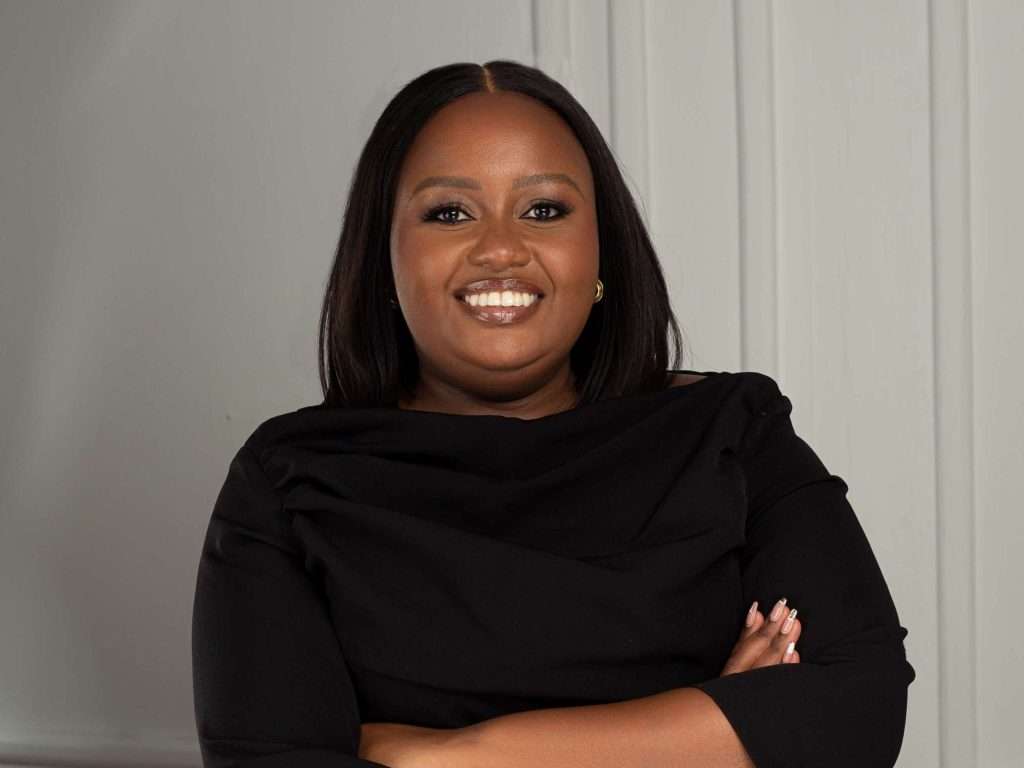
The payment operations entrepreneur speaks about the glass ceiling she refused to stay under and why Africa needs imaginative solutions built by Africans.
At the age of 27, Clara Wanjiku Odero looked at her salary in renewable energy and did the math. From the numbers, she concluded that she would never own a house or reach the level of financial security she had set her sights on. She also worried that she would never break through to senior leadership in a sector where race determined who rose above the glass ceiling.
"I had an existential quarter-life crisis at 27 when I was working in renewable energy and realised the maths was just not adding up. I was never going to make the money I needed to make. Money was the number one reason I made any pivot. It was security I was looking for, and I had to make a plan. That is just not the life I wanted to live. I knew I had to work really hard because I was starting from zero with zero knowledge of payments. I did not have time to start at the bottom and work my way up," she says.
Although the work Clara had done in the development sector felt meaningful and offered a clear trajectory, the journey felt alien. When her plan was finally in place, she began to interview for roles in the payments space, and her pivot began to take shape.
"I wanted to become a consultant, so I wanted to go to business school. I had this whole plan. I was going to do a one-year MBA and I had started case prep. Then I got the chance to go work for a payments company in Nigeria. I had gone to Nigeria before for my renewable energy role and I really enjoyed it. I got the chance to spend a couple of weeks consulting for a company there. I ended up loving it and that is actually how I got into payments,” she says.
She taught herself payments on the job and moved quickly from consulting into expansion work, helping one company build its African network across more than 30 countries. But burn out set in quickly, so she took four months off. When she was ready to return, a former customer called. She barely remembered them, but they remembered her because she had been the one who followed up on their problem and made sure things got done. They were building a payments company out of Israel and wanted her involved.
"I was on interview number five for a bigger payments company and I knew I was moving to London for this role. Someone was offering me a free trip to Tel Aviv and I thought, who am I to say no. They had assembled a team of the best minds in payments, from PayPal, from Grab, and so on. By evening two, I emailed that much larger payments company and told them I was dropping out," she says.
Solving the reconciliations headache
Credrails, which Clara co-founded with a partner who had been COO at a payments company, started as an open banking play. The original plan was to connect all the different payment methods across Africa into a single API and become the infrastructure layer that other companies built on. But there were not enough companies being built to justify that positioning. So they asked themselves a different question: if all of this infrastructure existed, what business would sit on top of it? The answer was reconciliation.
"A lot of CFOs have a team that does reconciliation but they can never know what their cash position is at a moment's notice. What happens with other reconciliation tools is that you have to manipulate the bank statement to fit theirs. There is so much room for shady business to happen when that is happening. If you are manipulating the columns, nothing stops you from manipulating the numbers," she says.

The product Credrails built is what Clara calls “format agnostic”. A client can submit a PDF, an Excel file or a scan, after which the system extracts what it needs and runs the reconciliation. Finance teams get a dashboard they can purpose-build to show exactly what they need to see. The most recent client signed operates across fourteen markets, with a group CFO pushing for consolidated reconciliation across all of them and fourteen subsidiary CFOs feeding into it. Clara describes it as exactly the use case the product was designed for.
"Currently a lot of CFOs have a team that does this, but they can never know what their cash position is at a moment's notice. Someone will say, let me get back to you, let me check this spreadsheet. What we are offering them is the ability to have your cash position at hand, to have all of these payment methods aggregated in one place, reconciled in one place, and you have a dashboard where you can quickly tell what your position is for cash flow planning, she explains.
Imagination and the future of finance
Through the Africa Leadership Initiative, Clara is an Archbishop Tutu fellow, a credential that sits alongside her payments background and pushes in a different direction. The fellowship has changed how she thinks about what building a business in Africa means and what it asks of her beyond the company itself.
"Doing that last year really made me think about what my role on the continent is, over and above what I do. I am very passionate about building a business that works for Africans, employs Africans and has Africans at the helm. But the question is what that looks like when it comes to policy, and what am I doing with the much that is expected," she says.
An ardent wine lover, Clara is studying to become a sommelier and has been collecting contemporary African art for nine years. She enjoys reading fiction, saying non-fiction, especially about business, is not where she goes when she wants to think.
"Real life is stressful enough as it is. I think a lot of the problems that exist in the world exist because we have a lack of imagination and a lack of bravery. Fiction is one of the things that helps you with both of those. We need imaginative solutions to the problems that we have, and we need the bravery to act," she says.
For finance professionals, Clara has a specific view of what the next few years will ask of them. Reconciliation tools like the one she has built will absorb a significant portion of what junior finance teams currently spend their days doing. The question is not whether that happens but what each person does about it.
"A lot of these skills are going to be taken up by technology and the people you saw as skilled accountants are going to find their jobs getting automated. There are people who are so scared that AI or technology is coming to take their job. But there is another viewpoint, which is that you can become a subject matter expert and therefore you cannot be replaced. You can replace routine tasks that can be done by anyone, but you cannot really replace an expert," she says.