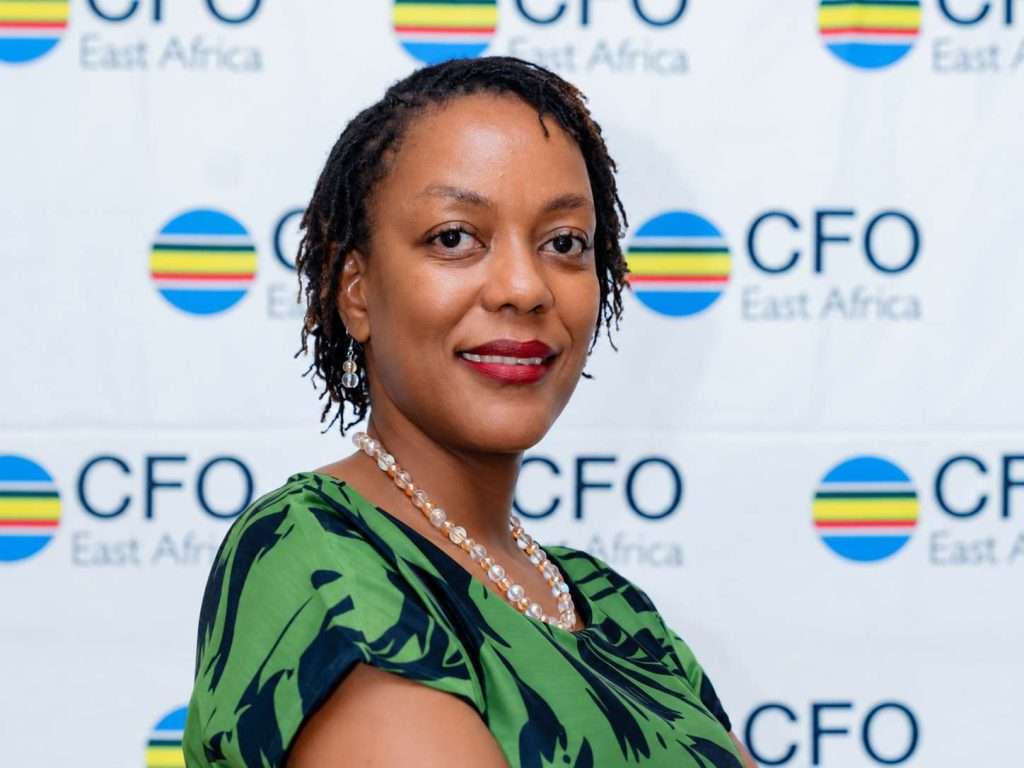
Relief Mtenga, finance director at Deloitte Consulting, shares thoughts from her experience leading finance operations in volatile environments, explaining why rigid rules fail in unpredictable contexts.
For many CFOs, financial control relies on predictable frameworks and standard documentation. But when operating in complex markets, relying strictly on conventional accounting manuals can bring operations to a sudden standstill.
According to Relief Mtenga, finance director at Deloitte Consulting Tanzania, being a leader requires the agility to adapt systems to local realities without compromising overall compliance or governance.
At the CFO Leadership Summit in Dar es Salaam on 12 June, Relief reflected on a 2018 assignment in Juba, South Sudan. She recalled arriving to support expenditure verification for international development projects. She expected standard payment vouchers complete with signatures and formal approvals but was instead confronted with documents marked by thumbprints. Because of high illiteracy rates, basic administrative standards taken for granted across East Africa did not apply.
Rather than dismissing the documentation or forcing an unworkable standard onto the local team, Relief had to adjust her approach to fit the environment.
“You cannot implement a standardised financial system in a non-standard context. What you know as basic in Tanzania, Kenya, or Uganda was not basic in Juba,” Relief said. “So you have to understand the realities in front of you, so you can design a financial system that befits the realities you are seeing.”
To check on projects in person, the team had to adapt, but travel by road was too dangerous
“All these vehicles look fancy, and on the roads we might have found rebels who would have stopped us,” she explained. “We had to board a helicopter to go verify, pick up samples, and see for real how it happens. As CFOs, we do not need to be rigid. We have to pivot.”
Navigating shocks and shifts
Finance leaders across East Africa frequently face sudden market shifts triggered by global supply chain disruptions or domestic policy changes.
As Relief noted, during a recent mid-year budget adjustment following fuel levy changes, unexpected cost surges instantly changed forecasts, pushing inflation expectations well beyond initial projections.
“You have done your budgeting and work plans in early January, and right now you are told inflation is anticipated to reach five percent when you considered three percent,” she noted. “This is the part where you go back to the drawing board and call emergency board meetings for target revisions.”
In these moments of volatility, flexibility becomes essential. Rather than treating static annual budgets as immutable laws, effective finance executives re-evaluate assumptions quickly to keep their organisations resilient.
Preparing for the CEO role
This capacity to manage uncertainty explains why finance leaders are increasingly called upon to step into the CEO role.
Relief believes this trend reflects the strategic evolution of the role. Because finance executives handle or oversee many moving parts at once , they are uniquely positioned to guide organisations through periods of transition.
Relief urged finance executives to build autonomy within their teams. By empowering staff to manage day-to-day functions independently, CFOs free up their capacity to focus on high-level strategy.
“There is a reason why 90 percent of the time, when the CEO is not present, the acting CEO is a CFO,” Relief observed. “Because we are decision enablers. When the CEO is not present, you are best placed to handle the role, because you enable them.”