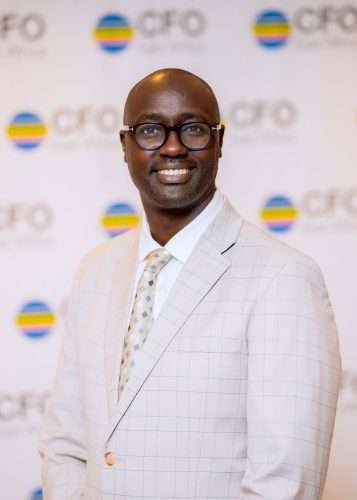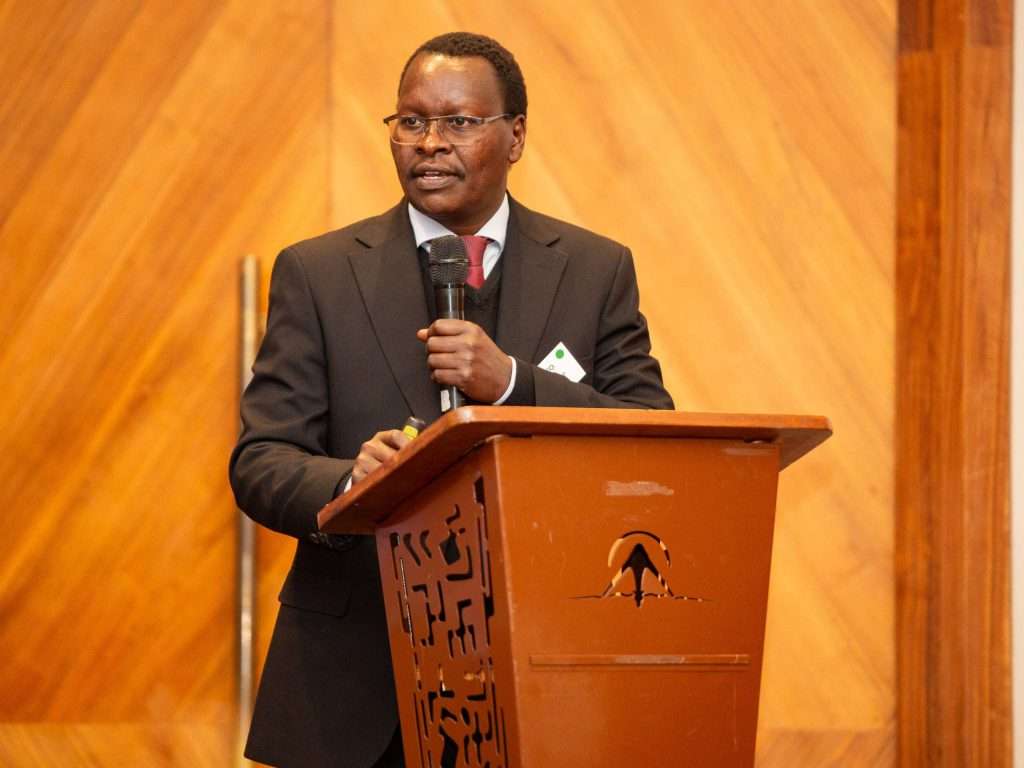
At the CFO East Africa ESG Summit on 10 July, EY associate partner Manasses Biwott delivered a clear message to finance leaders: sustainability has moved from the margins to the centre of business strategy.
Across East Africa and beyond, investors and regulators are now assessing companies on how well they integrate ESG into strategy and performance, making sustainability a core business imperative. For finance leaders, the question is how quickly they can embed it into their decisions. In his partner address at the annual CFO ESG Summit, EY’s Manasses Biwott set out what that means in practice.
“What we are seeing is ESG becoming central to how businesses operate. You can no longer ignore sustainability. At the moment, you have to look at various aspects of how the business operates, identifying risks around sustainability and putting in mitigation so that you’re able to continue sustainably. Investors are also looking at compliance and as they consider supporting businesses, the question will be, are you compliant?” he said.
As Manasses pointed out, governments and regulators are setting the pace. In Kenya and Uganda, regulators are already creating regulatory frameworks on sustainable products and mandatory disclosures. These steps, he noted, signal a regional transformation.
“For example, the Central Bank of Kenya has developed climate frameworks. In Uganda, the Bank of Uganda has issued regulations around minimum disclosures, looking at comparability of information. Largely what we are seeing is that ESG is transforming how we understand sustainability, how we implement it and how it is being regulated,” he explained.
He cautioned against treating ESG as just another compliance box to tick, saying businesses that reduce it to regulation alone would miss out on the next wave of growth opportunities. Manasses also drew a link between sustainability and financial reporting.
Changing financing criteria
“Initially, we had corporate responsibility aspects. The challenge was that they did not link to the financial statements. But at the moment, there is a lot of discussion on how sustainability aspects link to financial statements. We have a lot of qualitative information, but you need to start identifying how those aspects are linked with financials. So far, what we are seeing is very limited,” he said.
For East African firms, climate change presents a present and urgent risk. In many parts of the region, climate-related disruptions are annual events.
“When you look at strategies, you are supposed to ask how the business strategy links to net zero. What kind of time frames are you looking at? We have climate aspects that are already affecting businesses. In the case of flooding, if your operations are around Nairobi River, within the short term you might have some challenges,” he said.
At the same time, ESG is changing financing criteria, Banks and investors have begun to tighten their requirements. But the gap between companies that are ready to meet ESG demands and those still struggling remains wide.
“While large corporations can deploy teams and systems, many SMEs struggle to meet reporting and disclosure expectations. The challenge has been ensuring compliance and getting professionals to support sustainability disclosures. Some small and medium companies might not have capacity to deal with sustainability requirements. Those are challenges you need to start thinking about early. If you don’t have capacity, you need to start thinking about training,” he said.
The role of digital transformation
Manasses argued that digital systems would be critical in closing these gaps, enabling CFOs to measure and verify ESG data with confidence.
“There could be challenges in how you measure, collect data and report. Without this, you might have problems. It is important to start investing and discussing with your teams. If not, institutions or firms like EY can support these aspects,” he said.
Although not yet mandatory across all of East Africa, Manasses urged finance leaders to prepare for ESG assurance, saying it would soon become standard practice.
“Assurance is getting an audit to ensure that what you present is accurate and can be verified. The easiest way is to start with limited assurance on some aspects, not wait until you have all sustainability risks and opportunities identified. In East Africa, we are seeing a lot of evolution. There is a lot of momentum in the adoption of sustainability standards. Once some of those challenges are addressed, we should be able to unlock ESG potential,” he said.