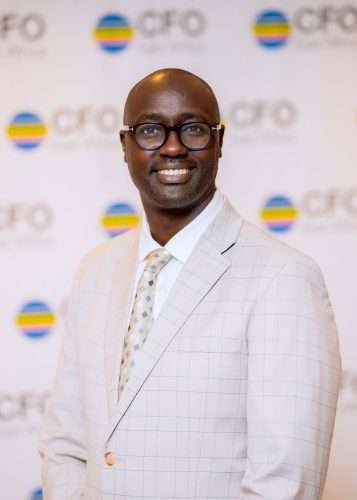
2025 CFO Awards judge Hanif Jaffer’s experience as the founder of Exim Bank Tanzania and a CPA gives him a rare vantage point on the CFO Role. He speaks to CFO East Africa about the lessons he has learned along the way, emphasising the value of staying ahead of the curve.
What attracted you to join the panel of judges for the awards?
I'm a CPA by qualification. I've also worked as an auditor. And since we started the bank, finance has been my forte. I've guided a lot of chartered accountants in my life, and when I read about this award, I was very pleased. The scale at which it is being done is very nice. I think it's nice to see different kinds of awards, not only giving awards for best CFO but also someone who is strategy driven. So, it's good to see because when you look at CFOs today, they are not only accountants. They are people who look at the business differently, who are strategists, who also prepare budgets and so many things. So, I'm so glad that you included all this as part of the awards.
How do you think the role of the CFO has evolved in recent years? And as you evaluate the different candidates, how are you going to take that into account?
When I look at the time I did my CPA and today, the CFO role has totally changed. CFOs were normally looked at people who completed and produced accounts only, but today, I think the CFO is very strategic. If I look at the organisations I am in, they also look at how the business is run strategically. They look at the five year plan and three year plan. They prepare budgets, but they're very pivotal in the strategy and decision making. If I look at any business today, the CEO and the CFO are two very important people. A lot of good CEOs have come from the background of CFOs. I always tell people that first become a good accountant and then the sky is the limit. If you look at my MD today at Exim Bank, he's a CFO who moved up to become a CEO. And he is doing an excellent job, to be honest.
What do you think distinguishes an exceptional CFO from the rest?
They can think ahead. They can look at the business three years, five years ahead. They can strategise. Today, you need CFOs who can understand businesses and find solutions also. This is very important.
Which qualities will you be looking for in the nominees during the judging process?
Education background is important. We need to see how they've climbed the ladder in their organisation. The other thing is how they have changed. I want to see how they strategise and change the business. What has helped in moving the business to the next level? If I look at any business today, particularly banking, we have cycles of five or 10 years. So, I want to see whether he or she was part of the change in the business and took it to a different level.
How do you think your journey as a founder and entrepreneur will bring a unique perspective to the judging panel?
We started very small with one branch. We were five shareholders. It has been a dream to be honest. When I sit down and think of it sometimes, it has been an amazing journey. It is not easy. When I started the bank, I was an accountant by profession, but also a businessman at the end of the day. I think that helped us push the business to a different level. We were in a sector where there were very large banks. When we started, I was going to the field. I was meeting customers and telling them, “Look, I can offer you better service. I can offer you 24 hours. You can ring me on my mobile.”
We were so aggressive in the kind of service we produced. And today, let's be honest, whether it's banking, mobile, or insurance, customer service is number one. When I would talk to my staff in those days, I would say, “what we offer is nothing else. We can only offer better service.” In those days, banking was very different. Customers had difficulty meeting bankers. I think we changed the way people looked at banking, then we started ATMs and the card business. We were the first bank to introduce a credit card in Tanzania. We started becoming more innovative. We have spent so much money upgrading our banking software. We now have a corporate and personal app. You don't need to come to the bank.
As part of the judging process, you will evaluate candidates across different categories and from different backgrounds. How do you level the playing field when reviewing the achievements of diverse candidates?
Business is business. Whether it's banking or something else, we've got the same ground rules. It's the candidate themselves and how he or she has progressed. For me, it really doesn't matter whether you come from Uganda, Kenya or Tanzania. It's the business , how you've transformed it, and how you move that business forward.
How do you think these awards contribute to the finance profession?
I think they're a good motivating factor. In my lifetime, I wish I had some awards. If a CFO gets an award, they are recognised. They can also grow. I'll be honest, if I see a good CFO, I may pick him and say, “why not appoint him as an MD somewhere?” That is how I look at it. Everyone wants to grow. And if you see a good CFO, there may be a growth opportunity for them somewhere. I think these are platforms where you can grow. It's a good platform to meet different people from a different sphere and to grow.
What advice do you have for future CFOs who would like to be recognised at an awards level?
Number one is that CFOs have to be honest to themselves. Number two is they have to grow. If they can grow, then they can be recognised. You have to know how to look at strategy. You have to look at AI today as a tool, sustainability, and other things. If you can embrace all this, then I can say you're a CFO at a different level.
Which trends or opportunities in East Africa should CFOs have their eye on in the near future?
AI for sure, definitely. Technology. If you look at any sector, the banking sector, the insurance sector, it's all about technology. If you can move with technology, I think you will move far. So as a CFO, if you can embrace technology and AI, you will do very well.