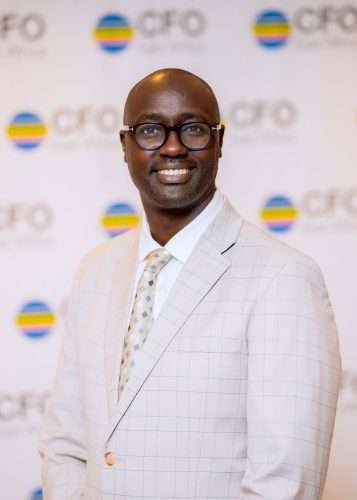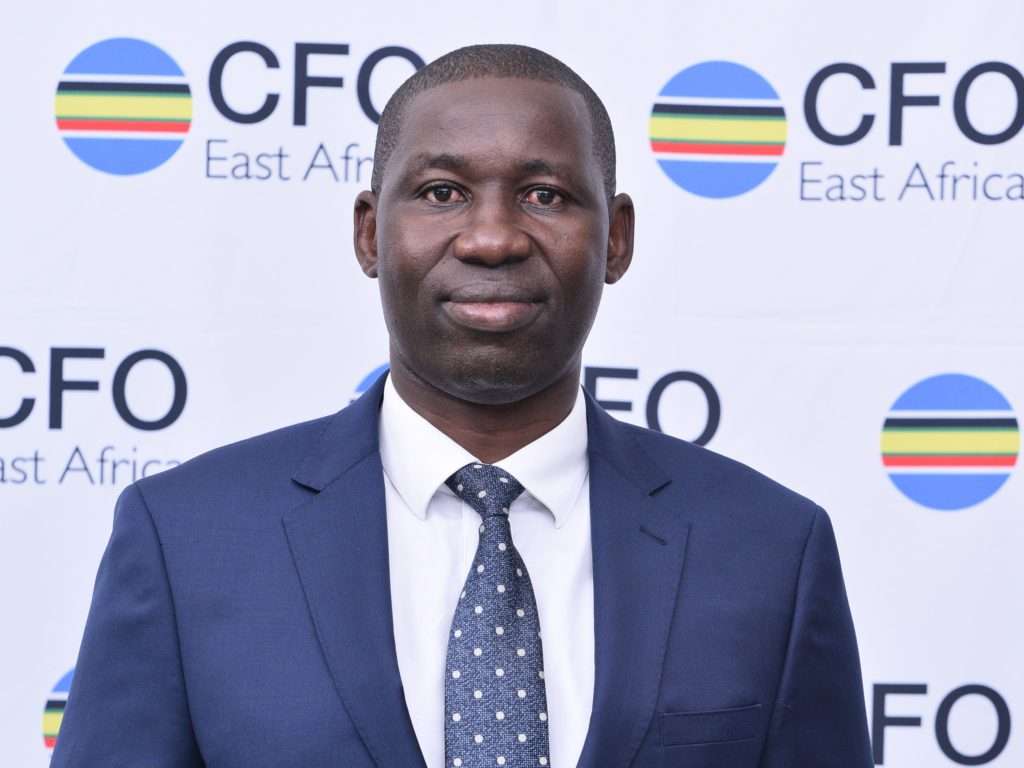
In an ever-changing business landscape, CFOs play a key role in shaping a company’s future. EY Uganda managing partner Geoffrey Byamugisha therefore sees the firm’s decision to support the CFO community in East Africa as a commitment to shaping resilient economies.
CFOs are often the first point of contact when professional services firms engage with organisations. For Geoffrey, this makes EY Uganda’s decision to back the CFO East Africa community a natural choice. He sees the community as a valuable opportunity to network and collaborate with finance leaders in the region and create opportunities for the firm. Through networking with finance leaders, he hopes to gain insights into local challenges and opportunities, which EY is keen to leverage to develop innovative services and solutions tailored to its clients.
“World over, EY contributes to the development of finance professionals who in turn become CFOs. These CFOs benefit the region's economies and also provide EY with a pool of skilled professionals to work with. EY has a strong commitment to building a better working world. When we partner with CFOs we create confidence in the capital markets and economies. The better the capital markets and economies, the better the world works,” he says.
Geoffrey began his career as an audit associate at EY in 1998, and over the last 26 years, he has witnessed an overhaul of the finance profession. What began as the routine balancing of an organisation’s financial performance and its operational needs has now morphed into the expectation to provide a vision of a digitised financial landscape. Geoffrey believes CFOs must offer forward-looking insights, inspirational and trusted leadership and adaptability to evolving scenarios. He views the position of a CFO as unique, as they give strategic financial guidance to support the organisation's goals, ensure compliance with financial regulations, and oversee financial planning, risk management, and reporting.
“CFOs are important to a company's success because their leadership and financial expertise are essential for maintaining the company's financial health and supporting its overall growth and sustainability. CFOs are central to a company's financial and strategic operations, and their expertise and leadership are vital for navigating the complexities of modern business environments. Their role directly impacts the company's ability to achieve its short-term objectives as well as the long-term success,” he says.
Growing future CFOs
Before he was admitted to partnership at the firm in July 2011, Geoffrey served as the resident director at EY Rwanda in 2010, and later as the professional practice group (PPG) coordinator responsible for the EY East Africa Cluster Practices, serving several clients across the region. The Makerere University alumnus holds a bachelor of commerce in accounting and is a fellow of the Association of Chartered Certified Accountants (FCCA), a member of the Institute of Certified Public Accountants of Uganda (ICPAU) and a member of the Institute of Certified Public Accountants of Rwanda (ICPAR). He boasts a wealth of knowledge and experience in auditing, accounting and finance and has served several sectors including financial services, the public sector, and telecoms, among others.
In his present role, which he assumed in September 2016, Geoffrey protects and enhances the EY brand in Uganda and manages the firm, providing strategic business leadership. His purpose, as he articulates it, is to develop people’s careers and make a contribution to the success of his clients. He views professional services firms such as EY as fertile ground for growing the careers of future CFOs.
“Our services help CFOs navigate complex financial landscapes, optimise their finance functions, and implement strategies that drive value creation. EY supports CFOs through the various services we offer, whether it is assurance, tax, consulting or strategy and transaction. EY also works with CFOs to identify areas for performance improvement within the finance function and across the organisation to drive efficiency and value. We share thought leadership materials and insights that provide CFOs with insights into market trends, industry benchmarks, and innovative approaches to value creation.”
Geoffrey’s role provides him with a unique perspective on the challenges today’s CFOs face. He observes that fluctuating market conditions, geopolitical tensions, and economic disruptions impede financial forecasting and planning. He describes the need to keep pace with digital advancements and integrate new technologies into financial operations as “daunting and resource-intensive”. Present-day CFOs must also manage large volumes of data and leverage it for strategic insights, a task that requires advanced tools and expertise. Geoffrey also highlights the growing risk of cyberattacks, which threaten the security of financial systems. For CFOs and professional services firms, finding skilled talent has been a shared challenge. For this reason, Geoffrey notes, EY invests heavily in funded professional training programmes, such as ACCA and CPA, for its staff.
“We offer several online courses to our staff including a fully funded tech MBA degree programme, soft skills development, and leadership courses. Our staff gain valuable experience through hands-on work on a wide range of professional engagements in various sectors which helps them understand the complexities of the business environment. EY pairs graduate trainees with more experienced staff who provide mentorship, guidance, and career coaching. We also have a global mobility programme which exposes our staff to different markets and international assignments that help them develop a broader understanding of global business practices,” he says.
Tackling pain points
To address emerging challenges, Geoffrey advises CFOs to develop flexible financial models to adapt to economic changes. He also recommends improving cybersecurity through regular assessments and staff training to prevent cyberattacks. In the face of multiple stakeholder expectations, Geoffrey advises keeping up with regulatory changes and integrating ESG principles into business strategies with clear reporting guidelines.
While the ingredients for corporate success may vary depending on the industry, Geoffrey views effective leadership as essential. He also encourages CFOs to recruit a skilled and motivated team with the ability to execute strategies and adapt to change.
“In today’s disruptive environment, leveraging technology to boost productivity, enhance customer experiences, and gain a competitive edge is crucial. Strong governance structures that uphold ethical behaviour, transparency, and accountability are also vital. Additionally, a commitment to sustainable practices that consider environmental and social impacts plays an increasingly significant role in achieving long-term corporate success,” he says.