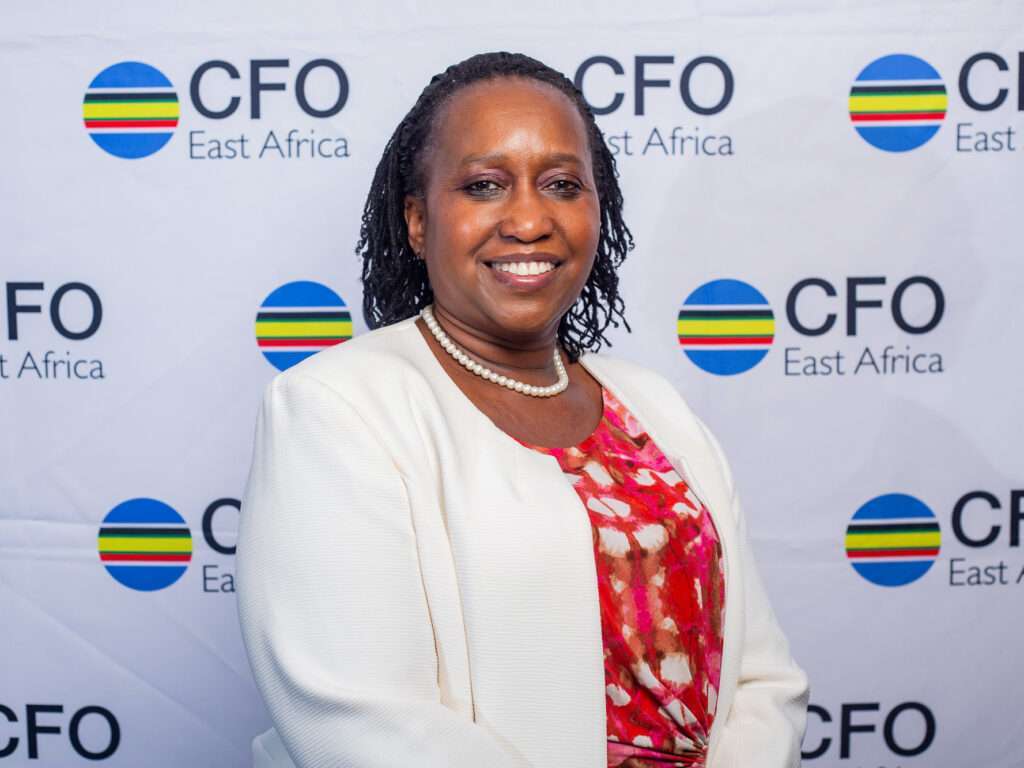
Kinya Kimotho serves as the finance director for partner emerging markets at Diageo, overseeing approximately 42 markets in Africa where Diageo does not have a physical presence. These markets range from smaller regions like Burkina Faso and Niger to larger ones such as Ethiopia. Describing herself as a "serial FD", Kinya is in her fourth finance director role.
Her journey began in audit at PwC, where she worked for four years before transitioning into industry roles. Her previous FD roles were at GlaxoSmithKline (GSK), The Nielsen Company and Kenya Breweries (KBL). Following a brief stint within Diageo as global audit and risk director for Africa and Europe, she transitioned into her current role in May 2022.
Kinya took part in the panel discussion at the CFO of the Future Summit, organised by CFO East Africa, last month where she shared her views on the changing role of finance leaders.
“I like the analogy of the CFO as a choir conductor, although I view it more as an orchestra conductor. This role of coordination is so powerful because, just like a conductor ensures that different instruments or voices blend into something harmonious, we as CFOs coordinate various aspects of the business to avoid clashes and create harmony. Furthermore, cash is king - if you’re not seeing the cash, there’s a problem, and it will catch up with you eventually. Despite all the changes we face, some basics, like ensuring cash flow and adhering to accounting principles, remain fundamental to our roles as CFOs,” she explained.
Kinya recalled a motto from her time at GSK that has stayed with her: Brilliant at the basics, and partnering in performance. She believes this encapsulates the expectations of finance professionals — excelling at the fundamentals and then focusing on partnering with the business to drive performance.
Reflecting on her 30-year career, she remembered starting in audit at PwC, where tasks like auditing cash involved manually adding figures from ledgers with a calculator, often leading to time-consuming errors. The evolution from such manual processes to today's automated systems, including AI, highlights the transformation in the finance function.
Part of every conversation
What was once a back-office, historic-focused role has now become more integrated and forward-looking, with the office setup merely a reflection of how the role has evolved.
“I used to see finance as something tucked away in the back office, often isolated from the main discussions. It felt like we were confined to our little corner, focused solely on the numbers, not really involved in anything else. But now, that's completely changed. We're part of every conversation — whether it's marketing, ESG, people or technology, the question is always: where's the finance person? That kind of involvement simply didn’t exist in the past,” she said.
“As CFOs, one of our most crucial skills is managing change, especially since it's happening so quickly. Organisations often expect us to be the ones who can interpret these changes, like explaining how new developments, such as AI, will impact reporting and metrics. The challenge is that accounting tends to attract personalities that prefer stability and consistency, yet we're now expected to be the drivers and catalysts of change. This creates a bit of internal conflict, but it's a skill we must consciously develop because the old mindset of maintaining stability no longer works,” she added.
The key takeaway for Kinya is recognising that often, one will be at the forefront of driving change within conversations and organisations. Typically, this role involves navigating through the complexities of change, which can resemble the stages of grief: denial, anger, bargaining and ultimately acceptance. She emphasised the importance of equipping oneself with the skills and training necessary to facilitate this process efficiently.
For instance, when interviewing for new staff, she suggested that hirers avoid conventional methods and rather adapt to emerging changes such as AI. This approach aligns with her broader perspective on managing change — being flexible and proactive in adapting methods to achieve desired outcomes.