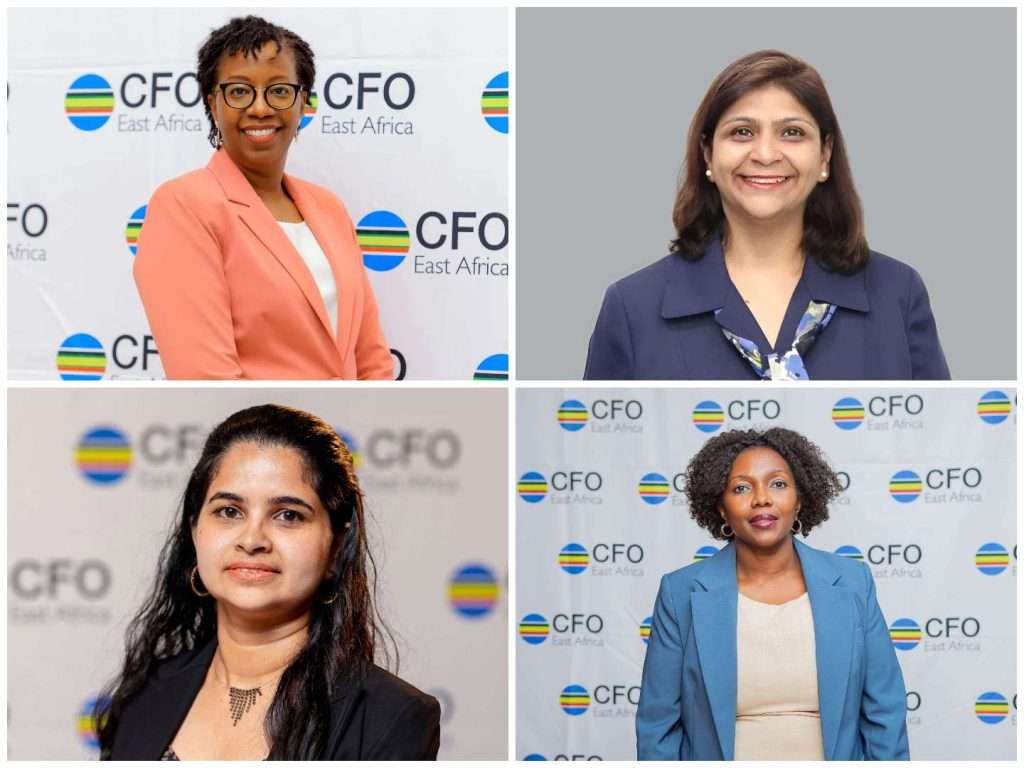
As the 2026 CFO Awards cycle gets underway, the judges tasked with evaluating East Africa's finest finance leaders reveal what they believe will define the next generation of outstanding CFOs. WPP Scangroup COO Miriam Kaggwa, Fintech Forensics founder Shereena Wilson, RSM Tanzania founding partner Lina Ratansi, and Africa Centre for Applied Digital Health co-founder Fiona Nuwamanya share their thoughts.
Miriam Kaggwa has sat on both sides of the finance table. As a COO and former CFO, she has a unique view of what separates leaders who are merely competent from those who are genuinely exceptional. In her assessment, technical expertise has become the floor, not the ceiling.
"The next generation of successful CFOs will be defined by both their depth and their breadth of expertise. A successful CFO must now be a multi-disciplinary leader, able to collaborate effectively across the organisation. Ultimately, the defining characteristic of a future-ready CFO is an insatiable curiosity and a passion for continuous learning," she says.
Miriam is particularly firm on the issue of communication. Finance leaders who can read a balance sheet but cannot translate it into a compelling narrative for non-finance audiences are, in her view, already falling short of what the role demands.
"For financial insights to have an impact, they must be communicated in a way that resonates with a non-finance audience. The goal is to move beyond the numbers to explain the 'why'. Our ability to translate numbers into a compelling narrative is directly linked to our ability to influence and drive the business forward," she says.
The systems architect
Shereena Wilson came to finance from software development. Where others see a spreadsheet problem, she sees a systems problem. The modern CFO, in her view, is not just a ‘numbers person’ but an architect of the infrastructure that generates those numbers.
"The defining shift is that a modern CFO cannot be functionally illiterate in technology. Successful CFOs will act as integrated business operators who embrace technology to build AI-driven infrastructure that eliminates departmental silos. We must engineer the systems that generate them in real time," she says.
Shereena argues that AI tools are already outperforming experienced finance professionals in analysis and model-building, which means the leaders who will remain relevant are those who move beyond surface-level digitisation.
"Exceptional CFOs actively redesign workflows to leverage predictive analytics and automation rather than just buying off-the-shelf software. The true differentiator is a leader who acts as a strategic architect, building resilient governance frameworks that allow secure scaling while inspiring their teams to embrace technology," she says.
The human side of the numbers
Three decades in taxation and assurance have given Lina Ratansi a long view of how the CFO role has shifted. The most effective finance leaders, she argues, are the most trusted.
"The CFO role has moved from authority to influence and empathy. While control and precision remain essential, they are only the starting point. Today's CFO must understand the human impact behind financial decisions, balance performance with sustainability, and navigate external uncertainty," she says.
Lina identifies a gap she sees consistently in how finance professionals are developed. While the technical grounding is strong, too many leaders arrive at seniority without the human skills that determine whether their technical ability actually translates into lasting value.
"Many are well trained in standards and compliance, but less equipped to understand the context behind the numbers, communicate clearly, and influence decisions across the business. The future CFO will be defined by the ability to connect numbers to people, and insight to action," she says.
Thinking like a founder
Fiona Nuwamanya brings the experience of building a business from nothing and watching its financial needs evolve with every stage of growth. That background has given her a clear-eyed view of what most established finance leaders are missing.
"As times change and evolve, I think we need finance leaders who think like business owners, caring about the product, the customer, culture, and long-term value, rather than just the balance sheet. A startup environment is highly solution-oriented and agile. Instead of defending a budget just because 'that is how things are done,' we test, learn, and adjust," she says.
Fiona also wants the awards to push beyond polished success stories. The CFOs she finds most compelling are those who can speak honestly about the seasons that tested them rather than just the ones that made them look good.
"I hope the awards encourage more honest and open conversations about resilience. When a company is facing difficult financial realities, the CFO often carries most of that pressure. We need to normalise discussing and reflecting on these hard times and how leaders maintain their resolve and composure when under immense pressure. We must also tell our stories when we arise out of those situations victoriously," she says.