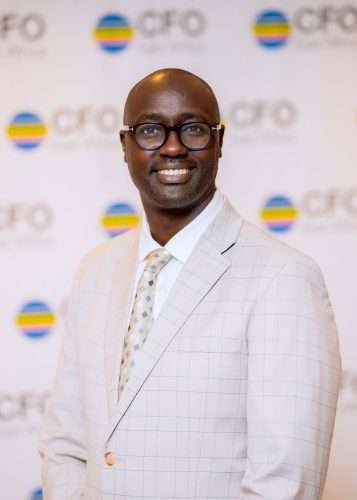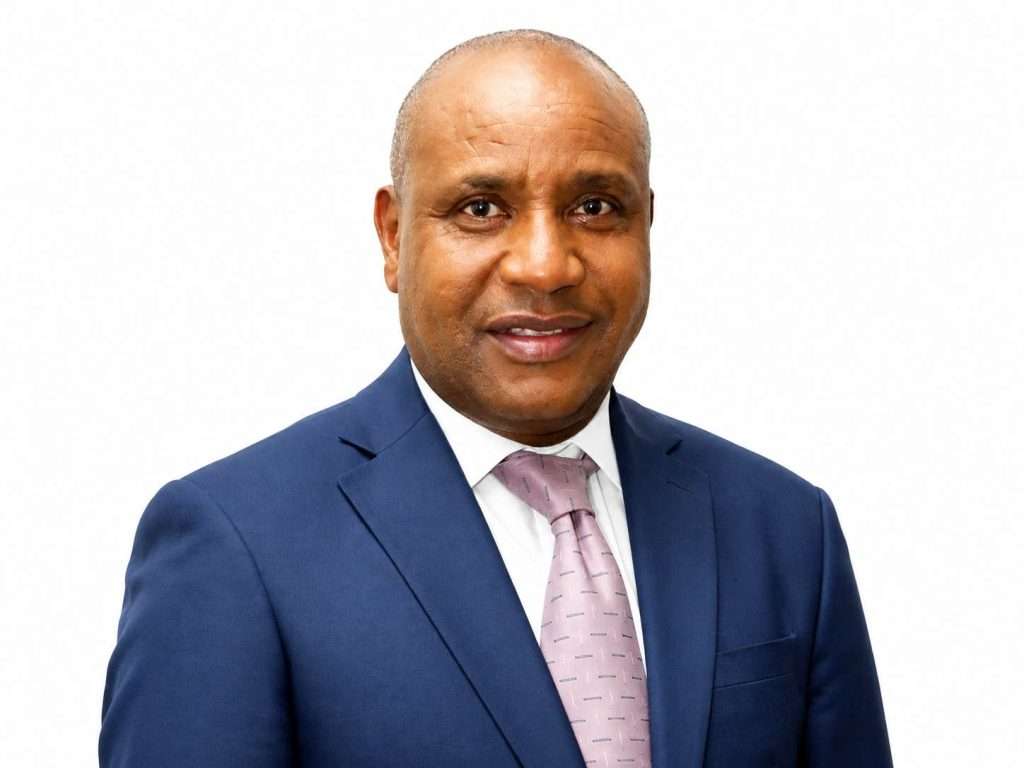
In nearly a decade at Heritage Insurance, Luke Magambo has overhauled its financial architecture and led the company through the IFRS 17 transition. He speaks about his people-first philosophy and why he maintains absolute zero tolerance for unethical behaviour.
Luke Magambo's Christian faith is the foundation of who he is. It guides his values and decisions, keeping him grounded through both difficulty and success. His faith also sets the standard for how he treats the people around him, as he is driven, above all else, by a desire to serve others.
"My Christian beliefs guide my values, decisions, and help me remain resilient. I am driven by a desire to make a positive impact and continuously learn. I delight in empowering people to become the best version of themselves," he says.
In 2025, Heritage Insurance maintained a capital adequacy ratio of 466 percent, against a regulatory requirement of 200 percent. When Luke joined the company as GM of finance and administration, the business was under strain. He moved quickly to address the issues he found, creating the foundation the current ratio now sits on.
"When I joined Heritage Insurance, the business was facing several complex operational challenges that were holding it back. My immediate priority was to address these issues by transforming the financial architecture and strengthening the control environment. Over the years, I have been privileged to lead and contribute to initiatives that have significantly improved operational efficiency and financial discipline. The opportunity to solve complex problems and contribute to the long-term success of the business continues to be both challenging and rewarding," he says.
What keeps Luke engaged now is the pace at which the insurance industry continues to shift. Regulation is evolving and technology is moving faster than most organisations can absorb. Luke's role has moved with it, evolving into keeping Heritage agile in a shifting environment.
Heritage operates in a fiercely competitive general insurance market. As Luke sees it, financial discipline and the ability to honour commitments to policyholders are complementary, and the company's capital position is the evidence.
"Business values are extremely important. While the insurance landscape is fiercely competitive, it is essential that customers and stakeholders clearly understand what you stand for and the value proposition you offer. This differentiation is what gives customers confidence and clarity about why they should choose us over our competitors. Ultimately, our goal is to balance operational efficiency with financial strength, ensuring that we remain a trusted partner to our customers regardless of market conditions," he says.
Standards under pressure
The period that tested Luke most professionally was the adoption of IFRS 17. Unlike earlier transitions, it required close collaboration across finance and actuarial teams simultaneously, alongside significant investment in systems and skills. It was a full organisational transformation. The lesson he took from it was that successful adaptation is as much about building organisational capability as it is about technical compliance.
"The adoption of IFRS 17 was particularly demanding because it required a fundamental rethink of how insurance contracts are measured and communicated. What these periods taught me is that resilience and adaptability are critical leadership qualities. Organisations that embrace change proactively are better positioned to create long-term value and maintain stakeholder confidence. Corporate governance has also evolved, raising expectations around transparency and risk management," he says.
Luke is both a CPA-K and a CPS-K, qualifications that sit on either side of the finance and governance divide. But he treats them as complementary rather than parallel. The CPA-K gives him the foundation in financial reporting and risk assessment. The CPS-K, on the other hand, adds a layer of strategic perspective that shapes how Luke interprets board expectations and regulatory demands.
"In today's business environment, financial success cannot be viewed in isolation from governance. Understanding how organisations are governed is critical in blending sound financial reporting with the expectations of shareholders and other stakeholders. These two lenses enable me to approach decisions more holistically. They help me balance business performance with governance responsibilities, ensuring that decisions are aligned with the organisation's broader purpose and stakeholder expectations," he says.
Building the next generation
With data and AI now looming large, finance at Heritage now goes well beyond traditional reporting. Luke sees organisations that are slow to adopt AI-driven capabilities as taking on a risk greater than the technology itself. Within his team, he places a strong emphasis on cross-functional exposure and continuous professional education.
"The next generation of finance professionals in Kenya will require more than traditional accounting and reporting skills. They must be agile and capable of translating financial data into strategic business insights. One of the most rewarding aspects of leadership is seeing people grow and achieve their potential. By investing in our people today, we are building a stronger finance function and creating a pipeline of capable leaders who will drive the success of our organisation in the years ahead," he says.
Luke gives his team considerable space and autonomy and is flexible in how he leads. Ethical conduct is the one area where he holds firm. In his view, integrity is the quality that has to be there from the start.
"While I am flexible in my leadership approach, I have absolutely no tolerance for unethical behaviour.Skills can be developed and mistakes can be corrected, but ethical conduct must remain at the core of everything we do. I believe the best outcomes are achieved when people are empowered to lead and innovate within a culture built on trust and strong values," he says.
Although Luke’s schedule leaves less time for golf than he would like, he has found that stepping away occasionally sharpens his thinking when he returns. He draws a parallel between the focus the game demands and the focus his work requires.
"What I particularly enjoy about the game is that it requires patience and discipline, qualities that are equally valuable in leadership and finance. It also offers an opportunity to spend time outdoors and gain a fresh perspective away from the day-to-day pressures of business. While my schedule can be demanding, I have found that taking time to disconnect occasionally helps me return with renewed energy and clarity," he says.