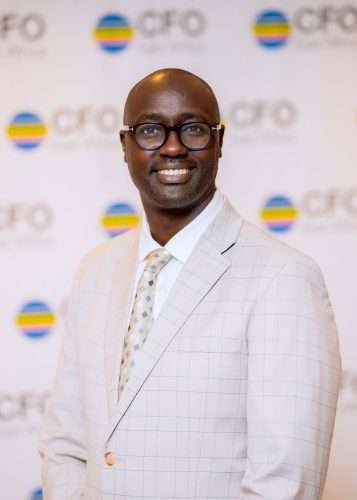
Regulation of digital assets in East Africa is still in its early stages, with countries testing different approaches that will determine whether innovation is enabled or constrained. Yellow Card senior legal counsel Edline E. Murungi explains why the rules must focus on the actors rather than the technology.
The regulation of digital assets in East Africa is starting to take shape. Kenya has published a detailed draft law while Rwanda has tabled proposals. Uganda and Tanzania, on the other hand, are experimenting with sandboxes. According to Yellow Card’s State of Digital Assets Regulation in Africa report, these frameworks are still developing, but how they shape up will define whether innovators enjoy an enabling environment. As Yellow Card senior legal counsel Edline E. Murungi warns, a lack of clarity adversely affects cross-border finance.
“The biggest challenge that you find for most engineers, entrepreneurs and people like that, is that they come up with ideas that work. So someone is sitting in their garage or in a conference and then they think of this brilliant idea. And then when they’ve come up with the idea, and they’ve even developed the product, then when they come to legal people, they ask, ‘Can I do this?’ And then we say, ‘No, you can’t do that’,” she says.
According to the report, Kenya has the most developed regulation in the region. In January 2025, the government published a draft policy and a Virtual Asset Service Providers Bill. The proposed law assigns powers of oversight to the Central Bank of Kenya and the Capital Markets Authority.
“That’s a very, very rare occurrence to have in financial law, especially with two different regulators. And the reason why that was the case is because they’ve realised that there are different players within the ecosystem. You could come up with a product, either as an investment product or as a payments product, and you would still be able to work within the country. The reason why this is particularly an opportunity for innovators is that at least there’s been recognition that digital assets take both those forms. The only challenge we foresee with that is that we hope that there won’t be overregulation of the sector,” she explains.
As indicated in the report, approaches to regulation in the region vary, with some countries enacting laws while others explore regulatory sandbox models. Edline advocates for regulating the actors in the industry rather than the technology. As blockchain systems are decentralised, she ventures, regulators could focus on preventing abuse by service providers. But Edline stresses that a lack of regulation is as harmful as overregulation, because the absence of rules allows fraud and other malpractices to go unchecked.
“If most countries can just put down basic guidelines on who should have a licence and what they should do to get a licence, that would be ideal. In that case, given that it’s a startup industry, one of the most progressive ways to do it is to do a tiered system. And by a tiered system I mean focus on small, medium and large scale. Let there not be many licences. Let’s create what you’d call a super licence, where, for example, in banking someone gets the banking licence, they can do deposit taking, they can do lending, they can do five or six things with just that one licence,” she says.
Encouraging investment
Kenya’s 2023 Finance Act imposed a levy on all digital asset transactions, making exchange operations unworkable. This was replaced in 2025 with a narrower excise duty tax. Edline says such missteps show the risk of regulating without understanding the market. She argues that governments should focus on encouraging investment while providing legitimacy.
“There are certain things that probably the regulators may want to regulate, but by the very nature of the technology, those things can’t be regulated, and if they are, then it would amount to overregulation. Things like requiring white papers for listing particular assets would become very complicated. So there needs to be a balance between the two. The rules don’t need to be in such a way that they prevent innovation or even kill the industry in the first place,” she says.
Yellow Card’s report also highlights why stablecoins are central to Africa’s financial system. Sub-Saharan Africa has the highest rate of adoption worldwide, at 9.3 percent. Stablecoins have reduced the cost and complexity of trade for many companies, offering liquidity where traditional banking channels are slow or expensive. Edline notes that companies use them for cross-border payments and to hedge against currency volatility.
“Sub-Saharan Africa has suffered too long in the cost of doing business and just how complicated it is to move money across borders. So that process has been eased by the onset of stablecoin. However, in that cross-border movement, there are still challenges, especially to do with anti-money laundering and things like that. And I think that’s where the onboarding comes in,” she explains.
For countries still drafting regulation, sandboxing could be a first step. Edline explains that this allows regulators to watch companies operate under supervision and learn before creating permanent frameworks. She warns that outright bans only drive transactions underground, reducing consumer safety and making it difficult to enforce anti-money laundering rules. Edline highlights South Africa, where crypto assets were recognised as financial products, as a working model.
“Allow for that process where you’re able to see what they’re doing. How do the transactions move? What exactly is going on? And then you’re actually able to develop laws that make sense for your country. You might pass a law from another country, and then it doesn’t work in yours, because your country works differently. After sandboxing, the country would be able to develop its own policies and rules about what works and what doesn’t work,” she says.
Edline notes that by understanding these differences, businesses can anticipate compliance risks and plan for investment with greater confidence.
“The biggest takeaway for finance leaders is knowledge. Many people have previously said this field is evolving so quickly. But this report tells you what’s happening in country X or country Y as the very basis of where to start from. The current question for businesses is ‘What is your stablecoin strategy?’ ”she says.