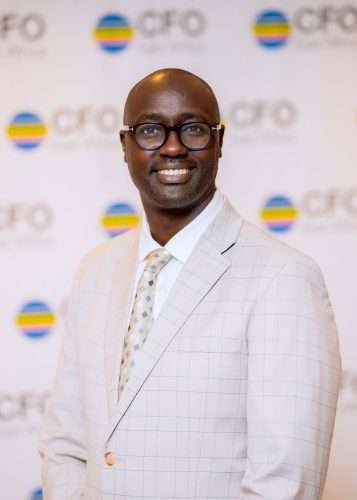
For the last two months, James Nyutu has served as group managing director at Unga Group, having transitioned from the role of group finance and ICT director.
Group managing director at Unga James Nyutu shares his leadership approach at a time when businesses are under pressure to stay efficient and resilient.
How has your finance background shaped your leadership approach during this transition, and what principles will continue to anchor your decision-making as MD?
One of our core values is building a customer-led team. This is what will continue to dictate what we do going forward, as well as aligning our culture to support our meeting of consumer needs.
With your ICT expertise, how do you plan to accelerate digital transformation across the group, and what financial or operational outcomes will you be tracking most closely?
We are continuing to relook at our systems processes and innovations around the same, in the wake of changing technological advancements and with industry 4.0 happening.
Technology is ever-evolving, as well as business requirements and therefore frequent reflection of requirements vis-à-vis available tools is a constant.
You’ve taken the helm at a time when cost pressures, currency volatility, and supply chain constraints are affecting food manufacturers across East Africa. How are you thinking about cost containment and margin resilience going forward?
Costs rarely come down. Thankfully, the local currency has remained stable from a forex and liquidity of hard currency view point in the past couple of months. Supply chain cost constraints are affected by various factors, including cost of fuel, weather and geo-political factors. Internally, operational efficiency drives cost efficiency. Localisation of production of inputs will have the long-term benefit of de-risking geo-political issues affecting the source markets
Having worked within the group for more than a decade, you bring deep institutional knowledge. What governance, reporting, or performance management practices do you intend to refine now that you lead the entire organisation?
Unga is ranked highly on governance, thanks to the great men and women that have worked diligently on the business, ahead of us.
We are on a strategic culture transformation journey. Creating an environment where good performers are recognised and poor performers are equally held accountable. We are fully cognisant of the fact that it’s our people that will deliver our strategy. We are ensuring that they have the right skills and the right attitude and mindset to deliver on our strategic goals.
As a listed company with a complex shareholder structure and cross-border operations, what is your view on financial transparency, investor engagement, and the CFO’s evolving role in supporting strategy execution at Unga?
Financial transparency is not just a regulatory obligation. It is central to our identity as a publicly listed company and a principle that underpins our credibility in the market. I don’t consider our shareholder structure complex but we recognise that clear, consistent and timely financial reporting is essential to building and maintaining trust with both local and international stakeholders.
Investor engagement is equally critical. We do prioritise proactive communication through timely disclosures and active engagements through AGMs. This ensures that our investors are not only informed but also updated on the company’s vision.
The role of the CFO is evolving in line with the growing strategic complexity of our business. Beyond the traditional focus on financial stewardship and compliance, the CFO plays an integral role in driving strategy execution, from capital allocation and risk management to digital transformation and operational efficiency, as well as a trusted partner to the CEO and board.
In summary, at Unga, we view financial transparency, strong investor engagement and a strategically engaged CFO as foundational pillars for sustainable growth and stakeholder confidence.