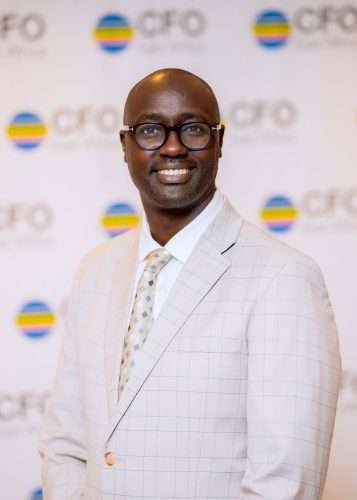
Dickson built Kora to solve a problem he experienced firsthand. Eight years later, the company operates in 10 African countries and is showing CFOs that cross-border payments do not have to be painful.
Dickson Nsofor was on a flight to Berlin when a woman tapped him on the shoulder. He did not recognise her, but she told him she had attended his free school for coding, The Curve, three or four years earlier.
“She used to be a shopkeeper, and now she was flying to Berlin, earning €3,000 monthly. That’s a lot of money in Africa. The school is humongous. It’s taking over 10,000 people from the streets into software programming. We have over 50 of them working in Kora as junior engineers, senior engineers or product managers. The impact is so crazy,” he says.
The school is one part of what Dickson is building. Kora operates in 10 African countries with over 250 employees. The vision behind it is that money should move across Africa as seamlessly as a text message.
“We have a vision to create a future void of financial service barriers. Our mission at Kora is to bring online 0.5 percent of the world’s GDP. We want to bring $360 billion of money from cash systems locked in Africa into the global economy. That’s what we want to achieve in the next five to 10 years,” he says.
The problem Kora solves
Dickson arrived at payments through a failed mobile phone trading business. He studied Information and Communication Engineering at Covenant University before completing a master’s in International Economics and Business at Nankai University in China, a period that put him inside the same trade corridor that would later expose him to the money movement problem Kora was built to solve.
He was manufacturing his own brand in China and selling into Nigeria. The business was hard, but the problem that stuck with him after it failed was the money exchange problem. Sending funds from Nigeria to China through the banks cost 3 percent and took five days. Going through informal channels was cheaper, but the money could go missing. He spent four years studying the payments industry before he built anything in it.
“The fact you were a trader for 10 years doesn’t mean you can come into payments and become big. If I’m going to go into another business tomorrow that’s not payments, I’ll probably spend another five years just working with someone and understanding that industry before I go into the business. I think that’s one thing we lack a lot in Africa. We tend to just want to go ahead and do a business without having the fundamental industry-relevant experience in a specific sector,” he says.
In the traditional banking model, a $10,000 transfer from Nigeria to China passes through a correspondent bank in New York, then to one in Hong Kong, before finally reaching its destination. The process takes five days under normal conditions. A tracing request for a misdirected wire takes between 14 and 21 days. Kora routes transactions via blockchain and stablecoin infrastructure, bringing settlement times to near-instant and costs to a fraction of the traditional rate.
“We leverage cutting-edge blockchain stablecoin infrastructure to enable our cost to be almost zero. Right now, if you were to do a cross-border transaction with Kora between Ghana and Canada, it would be a same-day transfer,” he says.
What it means for CFOs
Basically, Kora is enabling swift and smart payments globally at far less cost. Kora’s infrastructure now spans beyond five international offices, including in Toronto, London, Nairobi and Lagos. The client base has grown in step, from local SMEs to multinational corporations moving billions of dollars through the platform every month.
For a CFO operating in a single market, the Kora proposition is about speed and cost. But for one managing operations across multiple African countries, the complexity is greater still. Each market carries its own banking infrastructure, payment channels, compliance requirements, and regulators, which have the capacity to paralyse the operations of any business operating in multiple markets. Devaluation moves at different rates across the continent. Managing liquidity in that environment without a consolidated view is, in Dickson’s words, “a monster”.
“The beauty of Kora is that we bring all countries in one place for you. With a Kora dashboard, you see all 15 countries, manage your liquidity, see what volumes are up and down. You can run your operations in multiple countries using only your Kora dashboard,” he says.
As Dickson sees it, stablecoins should also be on CFOs’ radar. A stablecoin is effectively a dollar, but issued independently and transmitted without a central bank as intermediary.
“Stablecoin is the future in terms of finance. If you were going to receive your receivables in stablecoin, it’s instant across any border at a fraction of the fee of a traditional bank. The mobility of money via stablecoins is super high. It brings the power back to the CFO to make a decision where he wants to distribute his money,” he says.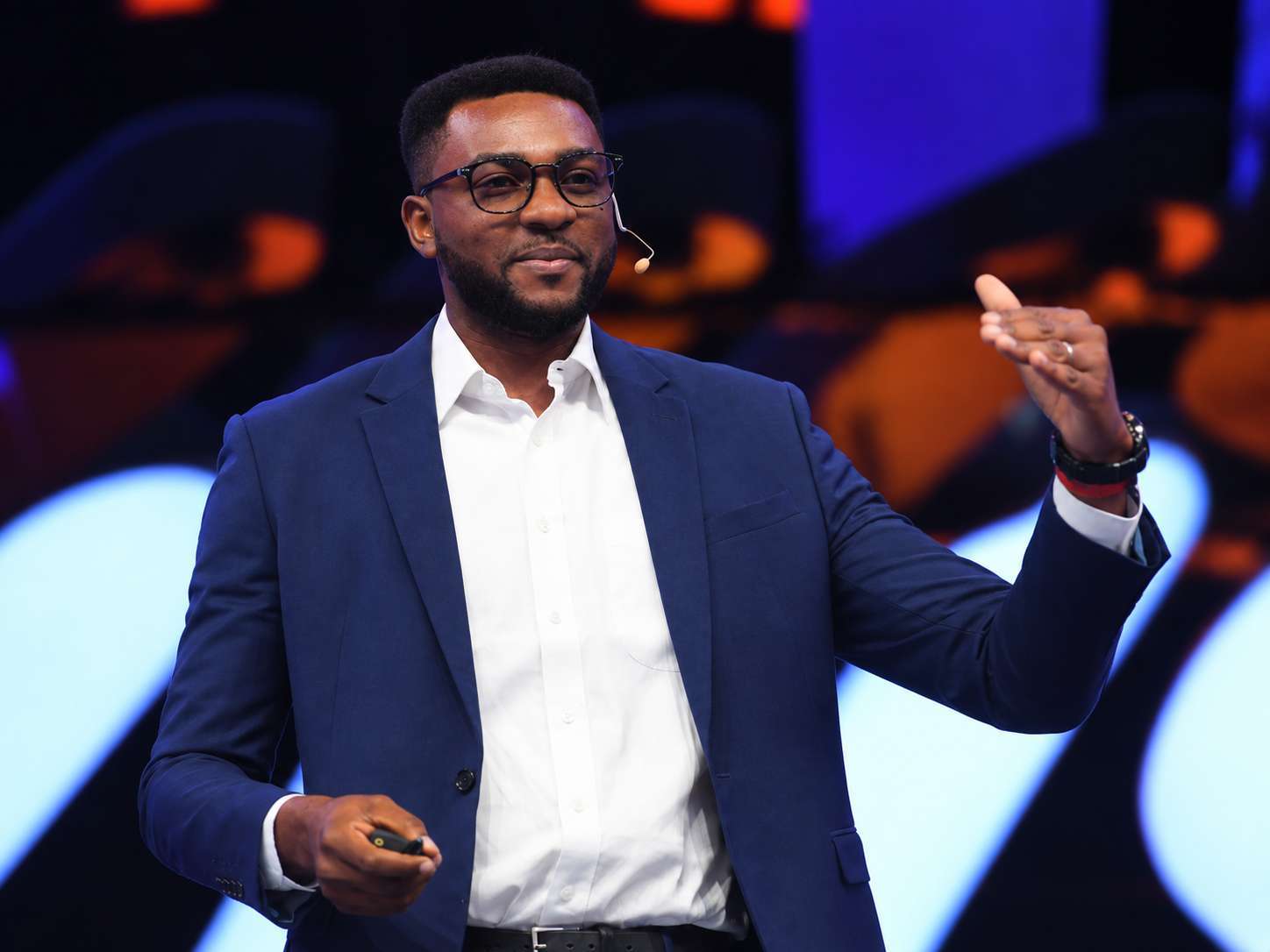
Africa first
Dickson calls himself an Africa-first capitalist. All his businesses have been on the continent, and he has built all of them, watching some fail and some soar as he keeps going. The free coding school sits alongside Kora as an expression of the conviction that the development of Africa runs through the development of its people. If he were not a founder, he reveals, he would be a full-time teacher, following in the footsteps of his mother. His understanding of leadership has also shifted in recent years, shaped by the late Myles Munroe.
“I always wondered, is it possible for every single person on earth to be a leader? From the typical concept in Africa, leadership is a position, where everybody wants to be the president or have the most significant title. I figured earlier on that was wrong and still wrong. Leadership is not a position, it’s not a status. Leadership is a state of mind, a state of being aligned to your own purpose and what you have been designed to achieve. So, to lead exceptionally as CFOs, focus on serving graciously in alignment with your purpose and role as CFOs,” he says.