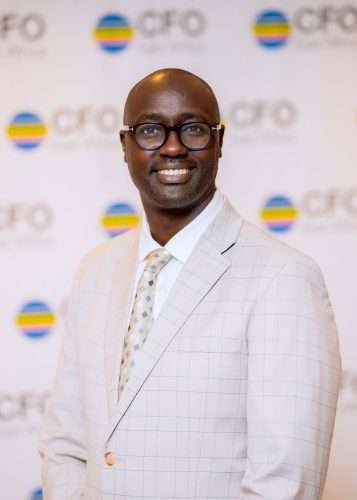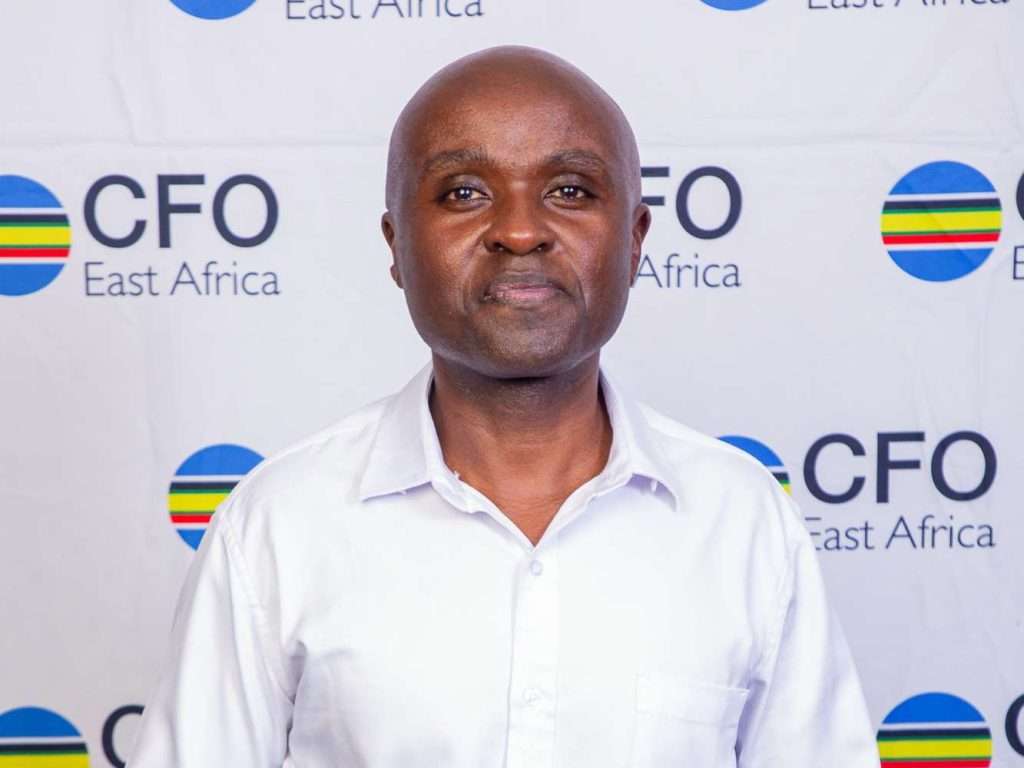
A gruelling marathon experience taught Madison Group CFO Dr Daniel Murage the critical importance of pacing. The civil engineer turned 'value architect' now applies these lessons in endurance to his financial leadership, drawing on his history of steering massive digital growth to drive progress one step at a time.
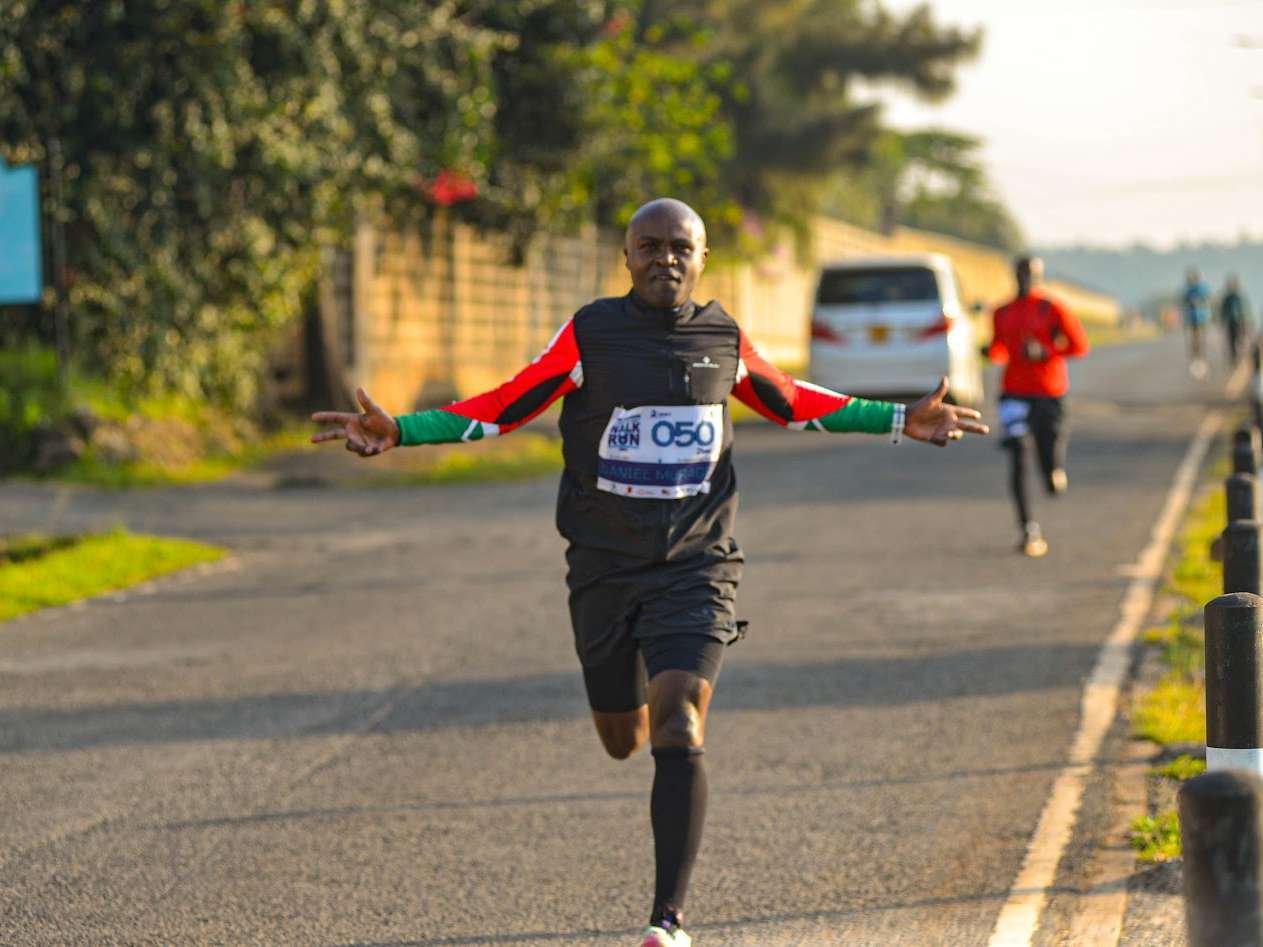
At the Standard Chartered Marathon last year, Madison Group CFO Dr Daniel Murage made a mistake he will not repeat. He showed up in brand-new road racing shoes and took off at the pace of elite athletes whom he had lined up with. The first 10 kilometres were exhilarating, but the next 11 were an uphill task. Although he finished, he ran slower than he had managed in any of the previous three years.
"It was my most memorable run because I learned from that. I learnt to never ever run with such great pace from the start for downhill but rather than to pace myself and be able to finish within my set record time," he says.

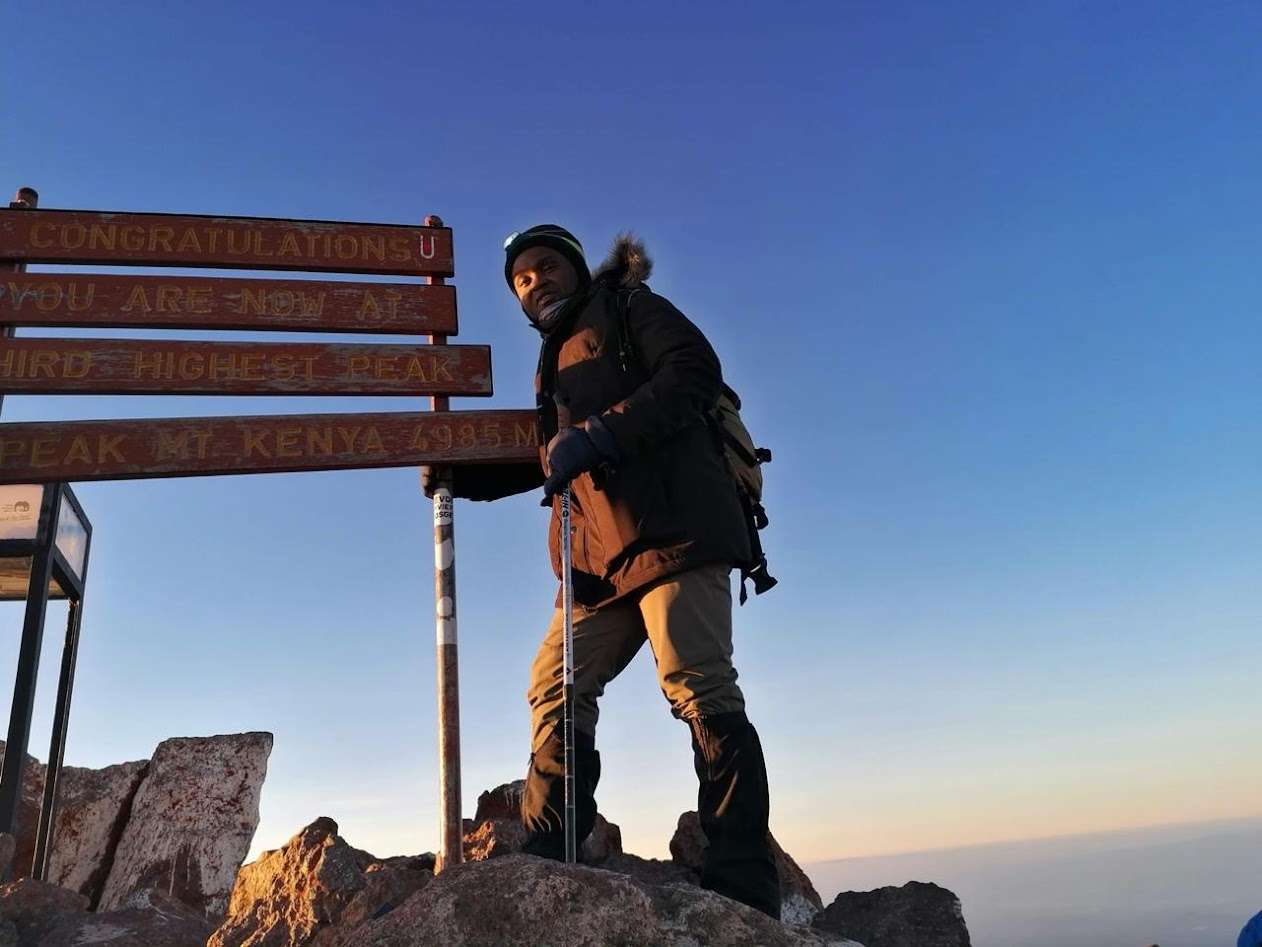
Running has been part of Daniel's life since 2016. When he was based at NCBA in Westlands, he noticed a route people used in the evenings. He started running once a week and eventually founded a running team and a hiking club the same year. He has since moved beyond the half marathon distance he once ran comfortably, completing his first full marathon this year and setting his sights on longer distances including the Comrades race in South Africa. His running and walking target for the current year is 3,000 kilometres and as of May 2026, he was at 1,500.
"For a very long time during the 10 years I was doing this, I was a specialist in 21 kilometres, the half marathon, and I'd do that comfortably. So, this year I challenged myself to go beyond, started with 30k, did 34, did 36, and ended up one of the days pushing myself to do a full marathon," he says.
Before running claimed his weekends, Daniel was a cyclist. He has ridden from Kikuyu to Namanga and back, a distance of 180 kilometres, and from Kikuyu to the dam and back at 213 kilometres. But over time, prioritising time with his family alongside a demanding schedule made it difficult to give entire days to travel.
The value architect
The CFO of Madison Group describes himself as a ‘value architect’. He studied civil engineering at the University of Nairobi, graduating in 2006, and it was a chance intake at KPMG as a graduate trainee that redirected him permanently. Auditing manufacturers, banks and public sector bodies gave him a view of how organisations were actually built, and he found it difficult to look away.
"I then got to love the numbers just from that interaction. The pivotal moment then came for me when I needed to make a decision after one year and one of the things that I needed to ask myself is do I then continue with this or do I then go back to engineering and say be a water engineer, a structural engineer or any other type of civil engineer. But at that particular point in time, I asked myself what I wanted to do," he says.
He chose finance and pushed through the ACCA qualification in two and a half years, studying in the evenings while auditing during the day. After a stint at PwC, Daniel joined Airtel as a business analyst, where he gained significant commercial acumen. When NCBA came looking in 2013 for someone with both an accounting background and telecoms experience, Daniel fitted the requirement precisely. He joined to build the finance structures for what would become the NCBA Loop digital business, and stayed long enough to watch a product grow from one market to five with 65 million customers.
"It's always a privilege to be part of something that has grown phenomenally over the period seeing what that has done in terms of impacted lives. When you think about the people who are then being targeted even today, it includes your mama mbogas who need access to credit facilities and they are able then to use that as capital to bring in more supplies and sell," he says.
Impacting lives
Afterwards, he was invited to present to the Bill and Melinda Gates Foundation in Seattle, where NCBA's experience was compared against parallel experiments in India. In Tanzania alone, a partnership brokered through that relationship doubled the number of digital wallet customers from four million to eight million within two years and grew savings balances on those wallets by about 30 percent.
"Making that presentation for me was eye-opening in terms of being able to present to people who are interested and curious. I was able to articulate the lessons in terms of what had worked, what had not then worked, and it opened up my mind to the possibilities of what a product or service can then do for the entire world," he says.
In 2021, Daniel joined UBA Kenya as CFO. Working with the managing director, he assessed the strategy, identified where the business needed to change direction and helped chart a road map that led to the bank winning multiple awards for its digital banking channel. The turnaround was a matter of months.
"I found them in a state where they were not growing, and we really needed to turn things around and change how the business works," he says.
“Every CFO, will eventually face challenging situations. No matter how things are at any one particular point in time, it's always good to seek a remedy rather than waiting for things to go horribly wrong. Being able to highlight something early enough, get support from the team or from your superiors, and walk through the journey to remedy the problem is important," he says.
One step at a time
Last year, Daniel completed a doctorate in business management, a feat given that only 13 percent of PhD candidates complete the process. He had completed an MBA in 2011 and spent the years after asking himself whether there was more to learn. The doctorate, which took three years, was also an exercise in tolerating discomfort. When his supervisor rescheduled his defence because the work was not yet ready, he went back and kept going.
"What the doctorate taught me was more than learning to apply research-based methods in day-to-day operations. It was moving from a point of mastery in terms of what I know to basically choosing to become uncomfortable again and being willing to rediscover myself to increase capacity," he says.
Recently, Daniel qualified as an executive coach, a skill he hopes his team of 34 will benefit from. He draws a distinction between coaching and mentorship, saying a mentor offers a model to follow while a coach draws out what is already there.
"My role when I go running with you is not to remove the hills. Mine is just to prepare you to find the stride as you're climbing. We bring the distance in terms of manageable segments. Whether it's work you're doing, whether it's a business you need to turn around and to help you then be able then to progress to the next level," he says.
As Daniel sees it, progress arrives in increments. The person who improves by one per cent a day will outperform the person who waits for the right conditions to push hard.
"My story is still being written. It's one consistent step at a time. What I've learned in leadership is being able to add value to people even as I grow. No matter where you are in your life, you must be able to build those structures. It's not just about the finish line. Put those structures in place," he says.