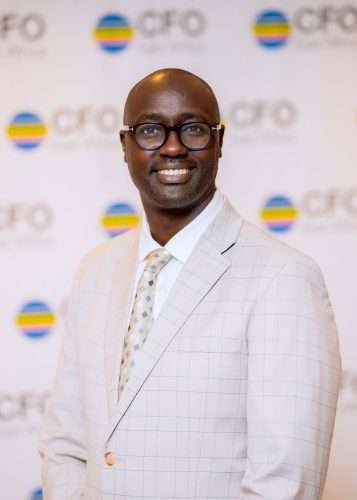
Punil is keen to close the gap between what finance teams can do and the tools they are using to do it.
In 2012, Punil Patel packed up a consulting career at Prophix Software in North America and moved to East Africa. He had spent years helping finance teams across the US and Canada overhaul the way they worked, and he expected to find the same problems here, compounded by distance from the technology. But he was pleasantly surprised.
“The sheer resilience and ingenuity of the teams here. While the teams in the US are typically a few steps ahead in terms of technology, many of the teams here are on par. But a lot of it, what I noticed, was being done manually. Heavy reliance on these models that they’ve inherited or outgrown,” he says.
Punil now serves as the head of implementation and consulting at Magnatec, the East Africa partner for Prophix, a financial planning and analytics platform built for the office of the CFO. He has been doing this work for 13 years, extending across East Africa,South Africa, UK, Europe and as far west as Australia. By his own description, he is a casual, high-tech guy who hardly wears a suit. But he is also deeply serious about the problem he has spent his career trying to solve.
“I’m passionate about this in a big way. Most teams think, my Excel models that I have, which we created, we have these massive Excel models, they’ve got these beautiful macros that they’ve created. Many Excel wizards in finance and that’s a good thing. But you know, they tend to break,” he explains.
He trained as an engineer at McMaster University and therefore thinks in systems. His engineering background is the instincts behind the way he approaches every client engagement. Before joining Magnatec, he spent years consulting with finance teams across North America, watching capable people constrained by inadequate tools. The question he usually asks is always the same: Where does the system fail, and under what conditions?
“The engineering and management degree really taught me problem solving and that’s a key thing that I’ve always taken with me no matter what situation I’m in. Whether it’s client solutions, uncovering their needs, it’s really about structured thinking, the process design and optimising systems for the requirements at hand,” he says.
Everything comes back to finance
The inherited spreadsheet is something Punil and the Magnatec team encounter often. Over time, he has found that teams maintain models passed down by people who left years ago, kept running because no one fully understands them well enough to replace them. When a new team arrives, they carry it forward without ever fully trusting it. When something breaks, nobody is entirely sure why.
The consequences are not always visible until they are costly. A shift in the external environment, for instance, may demand a response the system cannot produce fast enough. Punil describes the CFO in these moments as someone caught between the demands of the board and the limits of the tools they are using.
“Everything comes back to finance, you know, all the numbers bottled back down to them and then they are answerable in front of the board and management. So many of them are using manual methods,” he reveals.
The external environment has made the stakes sharper than they once were. On any given day, fuel costs can spike because of a conflict in a neighbouring region. For a finance team running on spreadsheets and manual consolidations, the ability to model scenarios quickly is the difference between being able to respond and not.
“Until the crisis hits, when your competition is now overtaking you, that’s a crisis. It was a nice to have right, but then they realised it’s actually essential. Now it’s ‘need to have’. If we don’t take these steps, we will not be able to understand supply chain shocks better,” he says.
Crafting the narrative
His approach to solving the problem begins before any solution is discussed. The discovery sessions he runs with new clients start with questions and a deliberate absence of product pitches. He often asks finance teams to walk him through their current processes step by step. Then, he maps the pain points, traces the data from its source and identifies who is involved at each stage. Only when he identifies where the collaboration breaks down does he make a diagnosis and begin to design a solution.
“We don’t talk about software at that point. We don’t present slides. We’re simply asking questions and uncovering their needs. And we ask finance teams to walk us through their current processes step by step,” he explains.
A large part of his work is helping CFOs take that diagnosis upward. The business case has to persuade a CEO or board who may not have spent time inside the problem. Punil builds that case around three things: the quantified pain, the return on investment and real examples from comparable organisations. He has seen this shift the room.
“We help them craft the narrative. This isn’t just a cost. It’s shifting the CFO’s function from simply a scorekeeper of the numbers to a strategic partner,” he says.
He recalls a CEO who, after implementation, could log into the system and look at the numbers themselves for the first time. Previously, they had simply been handed what the finance team produced. Now they could follow trends, pull comparisons and interrogate the data in real time. The relationship between that CEO and the finance team changed, and the change ran in both directions. The CFO, once only accountable for the numbers, became a source of strategic clarity.
Passion for impact
“He said that finally after implementing, he could rely on and have confidence in the numbers, because those same CEOs who previously were being simply fed the numbers were empowered to do these things themselves,” he says.
Punil also notes that newer capabilities like AI are beginning to significantly change how finance teams’ work. This is part and parcel of Prophix One Intelligence. Much of the repetitive work, such as compiling reports, running variance analysis, or supporting forecasts, can now be handled through AI in the background. By analysing historical patterns, the system can also highlight anomalies and help produce more reliable projections.
“The goal isn’t to replace finance professionals. It’s to remove the manual effort so teams can spend their time understanding the numbers and guiding better decisions instead of constantly managing spreadsheets. That’s the most fulfilling part. When a team finally has numbers, they can trust and act on quickly, the organisation becomes more agile and competitive," Punil explains.
After 13 years, the impact is still what drives Punil and the Magnatec team. The month-end close that shrinks from two weeks to three days, or the budget cycle that compresses from months to weeks. When the implementation is done and the numbers are finally talking to each other, Punil takes time off work to camp with his family across Kenya. He also enjoys playing golf and is involved in youth empowerment and charity work through his community. He makes no separation between those things and what he gets from the work. Both, he says, come from the same place.
“When a team cuts their month-end flows from two weeks to just three days, or is able to perform more accurate forecasts and budgets to realise their strategy, they could be realising millions of dollars on better strategic alignment. And that’s really the most fulfilling part of what I do,” he says.