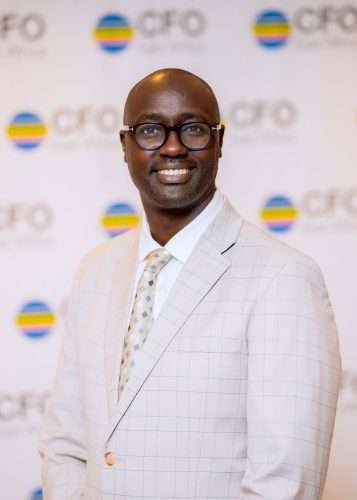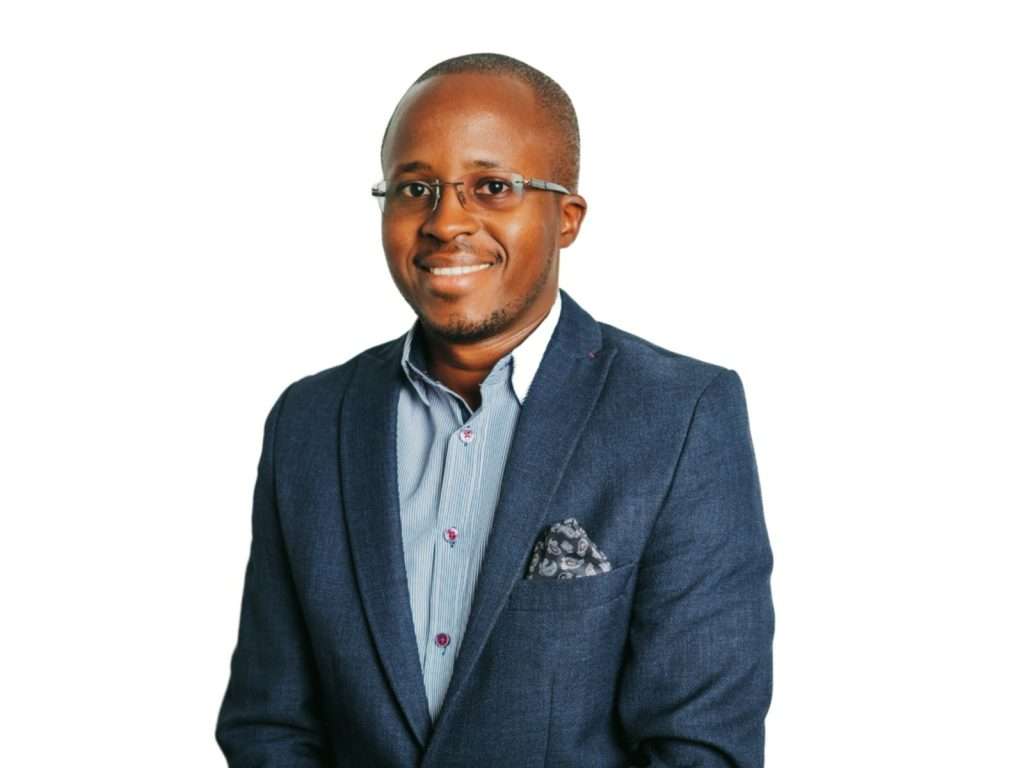
Solomon Nzomo grew up between the bustle of Eastleigh and the quiet of Sabaki, a contrast that gave him a unique lens on the world. As a CFO, he finds meaning in the stories the numbers tell.
Solomon Nzomo likes to describe himself as a fortune teller. In his eyes, the CFO is a seer gazing into a crystal ball to see the future. It is an unlikely metaphor, but one that has proven apt.
“What I do is try to paint a picture of how the future will look and translate it into numbers. Then I cut them down into actionable things that can be done every single year, which somehow translates the whole vision and strategy of the business into things that can be actioned every other day and that you are able to track,” he says.
This is what makes Solomon come alive. For 16 years, he lived in Nairobi’s Eastleigh estate, a neighbourhood teeming with high-rise buildings and enterprises. Then his parents moved the family to Sabaki, along Mombasa Road, where there were no neighbours within a kilometre radius.
“If there is ever a point in my life I was depressed, it must be that one. When I reflect on that experience, it made me stop being emotional about many things, and years later when I moved to Rwanda to restart my life, I was not afraid,” he says.
During the two-year gap after high school, the youthful executive was bored at home with little to do. When Strathmore University advertised its CPA course in the newspaper, he decided to enroll. All along, he had intended to pursue a degree in IT. But when university placements were announced, the Joint Admissions Board (now KUCCPS) had placed him at Kenyatta University to study economics and mathematics.
“Those were the series of accidents that have led me to this point,” he says.
The drudgery of audit
After university, he joined PKF East Africa and later ended up at PwC Rwanda. Although he learnt the discipline of reviewing accounts, auditing left him feeling unfulfilled. What caught his attention were the questions behind the numbers. Finance seemed to offer Solomon the answers to those questions.
“Every time I went to a new client, I would always try to understand what the business model was and what the person who invested in the business had been thinking. That curiosity led me into the investment world and to what I do now,” he explains.
Not long after leaving PwC in August 2016, Solomon took on the role of senior associate: corporate finance at Centum Investments Company. In 2019, he joined Centum Real Estate, where he started to build something from the ground up. As the residential business had yet to take shape, he spent his days raising capital and structuring deals. The most noteworthy of these was Kenya’s first publicly listed zero-coupon bond issued by a private company.
“We were doing all of this in the middle of Covid, structuring the transaction, growing the business, and managing stakeholders. The networks I made during that time have really come in handy later,” he reveals.
In those early months of the pandemic, Solomon was gripped by the fear that sales would collapse. But oddly, the movement restrictions and uncertainty in the market made people turn to real estate, triggering an unexpected boon.
“During that time, the company actually grew significantly. People have to sleep and have shelter, so we experienced the highest collections ever and the highest sales we had ever recorded. We were planning for a catastrophe, but by the second month we were shocked to see the opposite. People committed their money to real estate when they had nowhere else to put it and that allowed us to pull through with the bond,” he says.

A black swan event
The Covid-19 pandemic showed Solomon how little anyone had foreseen and changed how he views risk. He now believes the next disruption will be entirely unanticipated.
“The problem with the human mind is that it can only decipher what it has experienced. Before Covid, none of us thought such a black swan event would happen. Now we are prepared for another pandemic, but the next big thing may not look like Covid at all. I often spend time thinking about what could be the next black swan event and how businesses can build resilience to withstand it,” he says.
In 2023, Solomon was appointed as CFO at Mi Vida Homes, which was in an expansion phase. Within two years, the company’s projects and sales have multiplied nearly tenfold. Behind this was a shift from the agility startups are known for to reliable systems. His role building these frameworks earned him recognition in 2024, when Business Daily named him among its Top 40 Under 40.
“It has taken quite a toll on everyone involved in the journey so far, but it has also given us invaluable learnings. Managing larger teams, more moving parts and developing people has been quite an experience,” he says.
Over the last 10 years, he has helped companies raise more than $260 million in capital. While the figures are impressive, Solomon is more excited about what it took to achieve this.
“I look at the fundraising track record I have had and the opportunity to be involved in such quantums of transactions over the last four or five years and I look at that with a lot of pride. It goes back to my fortune telling, telling people to achieve all of this growth, this is what it means from a capital perspective. It has meant structuring deals, dealing with banks and investors, managing boards and seeing it through to fruition. Finally, drawing down the money and seeing it come in gives me a lot of pride,” he says.
Constant release
At PwC Rwanda, Solomon served under leaders who showed him the value of being calm and patient. He was thrown into assignments that stretched him beyond his training in a business culture that demanded both speed and tact. He now sees leadership differently.
“It is about giving people the opportunity and taking the time to talk to them. I like to push them out of their comfort zones, because I believe life happens at the edge. I also paint for them the bigger picture that the future holds, so that they have something to aspire towards,” he says.
Since Solomon was a child, sport has provided a constant release. During the pandemic, he took up cycling, riding nearly 200 kilometres in a single day. He is now gearing up to cycle the nearly 500 km distance from Nairobi to Mombasa.
“These days I play a lot of golf, because being outdoors clears my head and blocks everything out. In golf you have four seconds to make a decision and four seconds later you see the result, which for me is the perfect mirror of life,” he says.