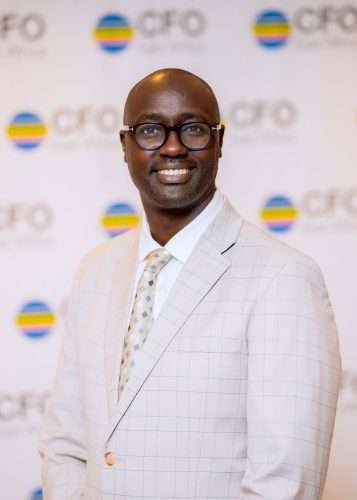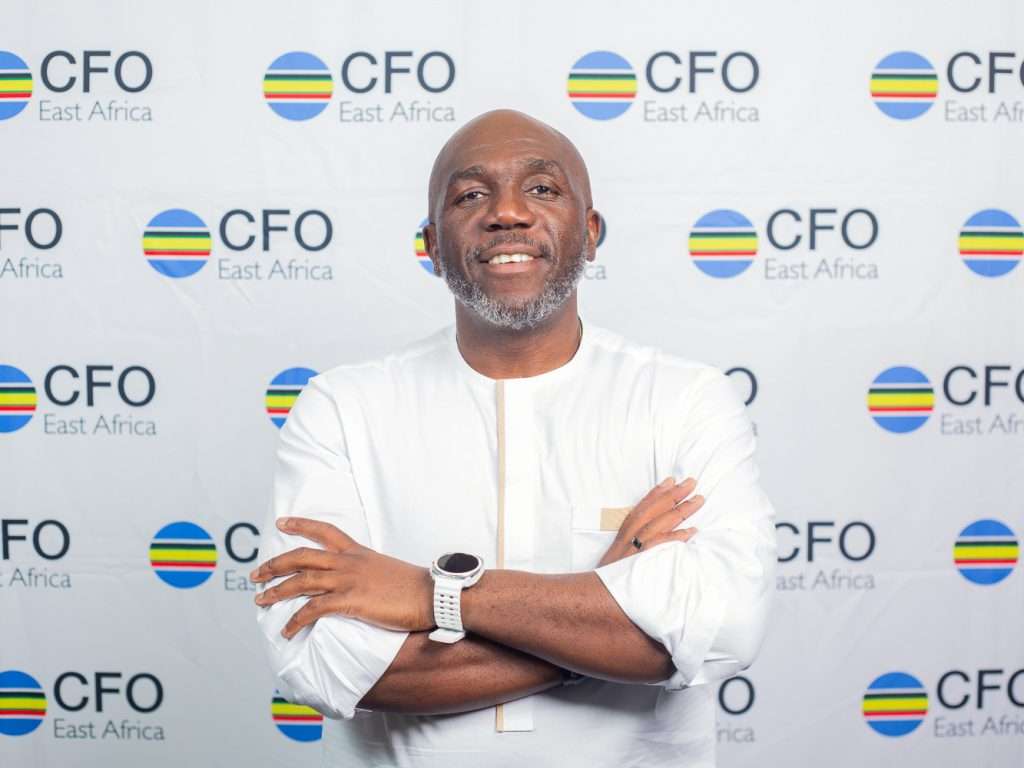
Dunstan delivered the keynote address at the 5th Finance Professionals Kenya (FpKE) anniversary dinner in Nairobi, drawing from his journey of leadership across six African and two Asian countries.
In 1996, Dunstan Ayodele Stober walked into KPMG’s Freetown office as a trainee accountant with nothing but a quiet belief that his life could be bigger than his circumstances.
By early 1997, he had opted to transfer to KPMG Nigeria to pursue his articles. A few months after leaving Freetown, Sierra Leone, civil war broke out. He recalled insurgents burning down his family home, and at one point, soldiers threatened to force his mother to choose which one of his two siblings they would toss into the flames.
While that unfortunate incident brought his family’s world to its knees, Dunstan’s career was just beginning to take shape, some 2,500 kilometres away from home.
“That contradiction shaped me. And I learned early that growth is rarely loud, linear, or fair. I thought to myself, if everyone is leaving, who will build Africa? That is why I chose to go to Nigeria, instead of the UK,” he said.
In his keynote address, titled ‘Building the courage to become,’ Dunstan unpacked five principles that have shaped his life and career across cities and leadership roles, He grouped them under the acronym BUILD: belief, utility, integrity, learning and discipline.
To begin, he opened with a parable. When you plant a bamboo tree, you water it every day for more than four years without seeing any growth. Your neighbours watch you water nothing, thinking you’ve lost your mind. Then, in the fifth year, the bamboo shoots up and grows five feet in just five weeks.
“Your bamboo is breaking through now. You are at your acceleration. It took courage to keep watering when nothing was happening,” he said.
See yourself before the world does
The first principle, belief, is non-negotiable in Dunstan’s worldview. Growing up in humble circumstances in Sierra Leone and playing football barefoot with a ball made of rags, he clung to the belief that he would somehow get out.
“All those times I was washing taxis, all those times I was doing odd jobs to save money to go to school, I had a conviction that I was going to get there no matter what. If you don’t have that belief in yourself, nobody else will,” he said.
This conviction is apparent in his book Joy, where he affirms that joy does not lie at a destination, but in the courage to keep going when things are hard.
“You can only do that when you believe in yourself. If you don’t believe in yourself, nobody else will,” he said.
Use ‘small’ roles well
While studying for his articles, Dunstan stepped out of his accounting and auditing internship to take on ‘lower’ roles. At some point, he worked as a cashier, a payroll clerk and an accounts receivable assistant. Rather than seeing these roles as setbacks, he treated them as classrooms.
“Use the small rooms well. You will never get to the big ones if you don’t excel in the small ones. It’s what you do with the small things that makes people trust you to do the bigger things,” he said.
Today, the CFO and executive director, whose career spans Vodacom Tanzania, Cell-C South Africa, Ooredoo Myanmar, and several MTN operations, says he has a deep understanding of every area of finance because he mastered small roles early in his career.
“Excellence is forged in obscurity. You don’t become excellent when you become a CFO. You need to be excellent in the small roles,” he explained.
Your real currency
One story Dunstan shared illustrated the high stakes of integrity in finance. Early in his career at a major telco, he authorised a $40,000 deposit, signed off on the paperwork, released equipment from the warehouse and then misplaced the deposit slip.
Months later, Dunstan faced the possibility of termination after an investigation. When the investigators questioned his CEO and CFO about the discrepancy, they unequivocally vouched for his innocence. What saved him was his reputation.
As Dunstan sees it, degrees ‘expire’ faster than ever in the era of AI, automation and complexity. He emphasised that continuous learning is essential to career survival.
“You have to stay relevant. These are the times when your degree might get you hired, but your learning mindset is what will keep you employed. As finance people, we need to go beyond the beans. You have to know the business. The finance professional of tomorrow is not defined by what they studied but by how fast they learn,” he said.
The quiet superpower
Dunstan revealed that he draws inspiration from his 16-year-old son, an aspiring footballer, who wakes the entire household at 5:00amfor training, sometimes in the cold of winter.
“Even though he has his dad as a role model, the one thing I have to learn from him is his discipline and consistency. He reminds me that greatness is built on ordinary days, repeated consistently. Every meaningful breakthrough that I’ve experienced has come from having the discipline to be resilient, the discipline to honour the difficult times,” he said.