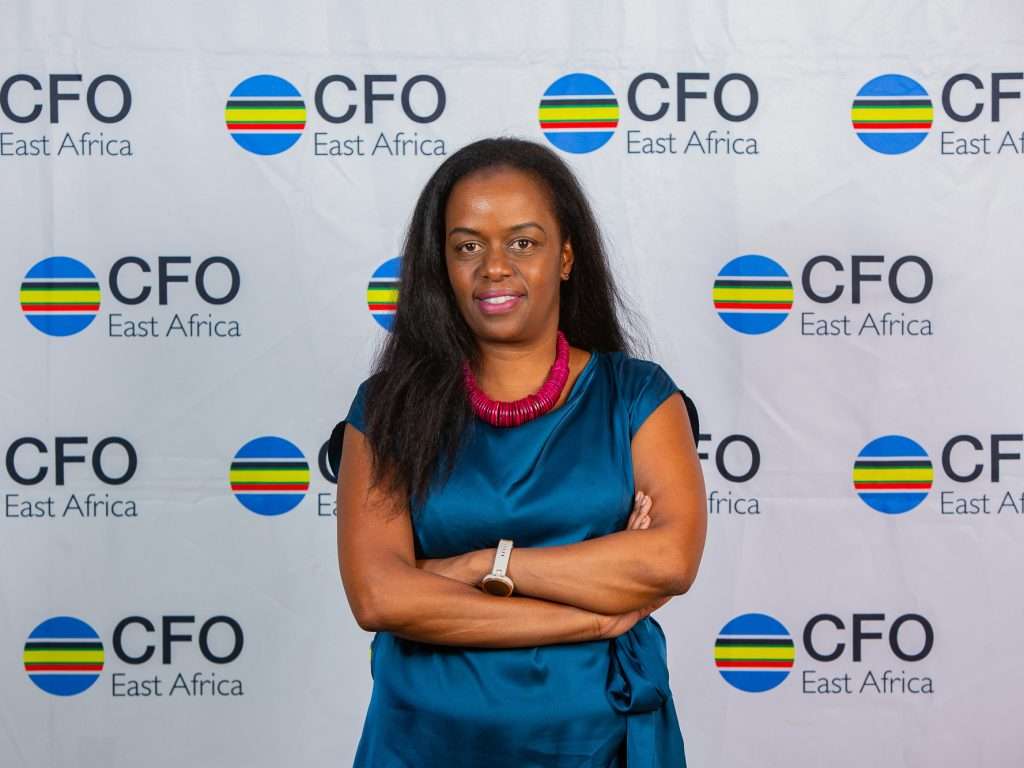
Dorothy ‘Dolly’ Sagwe, Oracle Africa’s finance director, has come to be known as the ‘start up finance manager’, helping three Fortune 500 companies establish a presence and operations in Kenya over the past 25 years. But her personal story reveals a search for meaning beyond the trappings of corporate life.
In 1998, shortly before her graduation from USIU, Dolly landed an internship at the accounts office of Procter & Gamble (P&G) in Nairobi. Her finance degree from USIU-Africa required her to complete 60 hours of work experience, which she did dutifully. But she had no intention of going into finance.
She had intended to follow in her parents’ footsteps and pursue entrepreneurship and investments instead. When she completed her internship three months later, P&G offered her a full-time position, but she turned it down and headed home to break the news to her parents.
“My mother looked at me and asked me if I was crazy. She says, ‘Do you know how many people are looking for jobs at multinationals?’ I was given what you might call a virtual slap, and, well, the next day, I was back at work.” Dolly says.
But seven years in, she had a ‘work-life crisis’ that made her reconsider her life purpose.
“I thought to myself, ‘Is this what I will do until I die? There must be more’? So, I gave my manager six months' notice. I told her I’d be supporting them through to the end of the fiscal year and leave right after. I needed to go home and think about what life really was and what wholesome success meant for me,” she says.
Nurture vs nature
Her father was a corporate worker who also ran multiple businesses, while her mother was a banker with a passion for investing. Together, they laid the groundwork for her professional pursuits, while her innate aptitude for mathematics drew her towards finance. After leaving P&G, she had played a key role in setting up HP’s operations in Kenya and eventually become the first African to lead sales, finance and the entire opex budget for the Middle East, Mediterranean and Africa regions (MEMA) at HP. Still, she yearned for more.
“At HP, we had started receiving interns at work. They had two-year contracts with HP, and I saw that as they came in, there was a need for them to go through financial education to learn how to use money after they’d earned it. As I grew up, we had these conversations almost every day at home, like how we would do Bible study. But then, when I came to the workplace, both at P&G and HP, I realised people didn't have this information,” she says.
Dolly’s search for meaning led her to start offering in-house financial literacy lessons to her colleagues, advising the interns about how to make the most of the money they earned during their two-year contracts. Word got around, and soon, the programme was adopted across HP’s Africa offices in Nigeria, Morocco, and South Africa.
As Dorothy thought about taking a sabbatical, she became increasingly certain that she would go fully into teaching financial literacy. She put together a structure for her classes and began offering them on evenings and weekends.
“When I took the sabbatical, I believe it was God’s way of preparing me for what I really needed to be doing with my life. Because I got so uncomfortable at the workplace to the point where I thought to myself, I need to go out and think. But as I was thinking, these interns who benefited from my programme had started bringing their brothers, sisters, neighbours, and cousins and telling me, ‘Show them, teach them’, “she says.
Third time’s a charm
Eight months into her sabbatical, General Electric came calling. The American multinational was establishing a presence in Kenya and was on the lookout for finance executives to groom into leaders for its Africa office. Dolly was reluctant at first.
“People started asking me, ‘Are you sure you will not regret this?’ So, I decided to go to the interview, saying to myself ‘by the time they make an offer, I will have thought it through’. There were three finance positions open in Africa, and they asked me to choose whichever one, because they had shortlisted me for all three. And I went with ‘deputy financial controller, Sub Sahara Africa’. And that marked the end of my sabbatical year because I didn't have a strong enough reason to say no to the offer,” she says.
After one and a half years as the financial controller at GE, Dolly once again put in her six-month notice. She felt she lacked the flexibility she needed to continue with her financial education classes, which were central to how she defined her all-round success. As she prepared for her exit, Oracle made its entry into Kenya and invited her for an interview. During a meeting with a senior vice president at the company, she asked a question that would seal the deal.
“I asked him, ‘will this organisation give me flexibility to do what I need to do that fulfils me outside of work, so that I can be actively engaged and energised at work? He was kind enough to tell me, ‘We’re going to stop this interview. I'll give you three people who work for us across different parts of the world. Talk to them about that. If you're satisfied, we will continue the interview process’. And so, Oracle became the third American company that I helped set up a presence in Kenya. That was 11 years ago. I'm still with Oracle,” she says.
Recently recognised as one of Business Monthly’s 25 most powerful women in finance in East Africa, Dolly now leads Oracle Women in Leadership (OWL), an employee resource group with a mission to engage and empower current and future generations of women leaders at Oracle.
Finding fulfilment
“I have found fulfilment in equipping what is now three generations of Kenyans in their twenties with self-leadership and financial literacy skills. And I’m excited to start working with Gen Alpha,” she says.
When she takes stock of her life, Dorothy is filled with gratitude. Her only regret is that she did not travel with her kids as much as she could when they were younger. Today, she enjoys travelling to beach and mountain destinations, where she plugs off and communes with nature.
“Travel completely expands the way you think. You meet people with different ways of thinking, and you see different things, and that then expands what you believe you can do. You don't need to travel out of the country. You can travel anywhere, even take online tours,” she says.