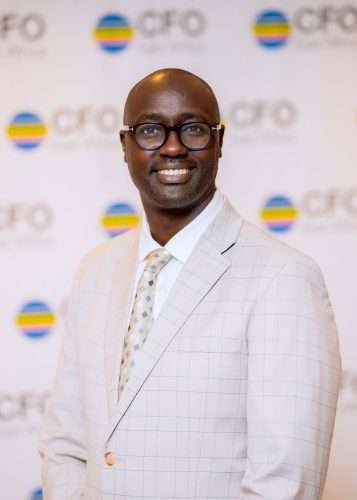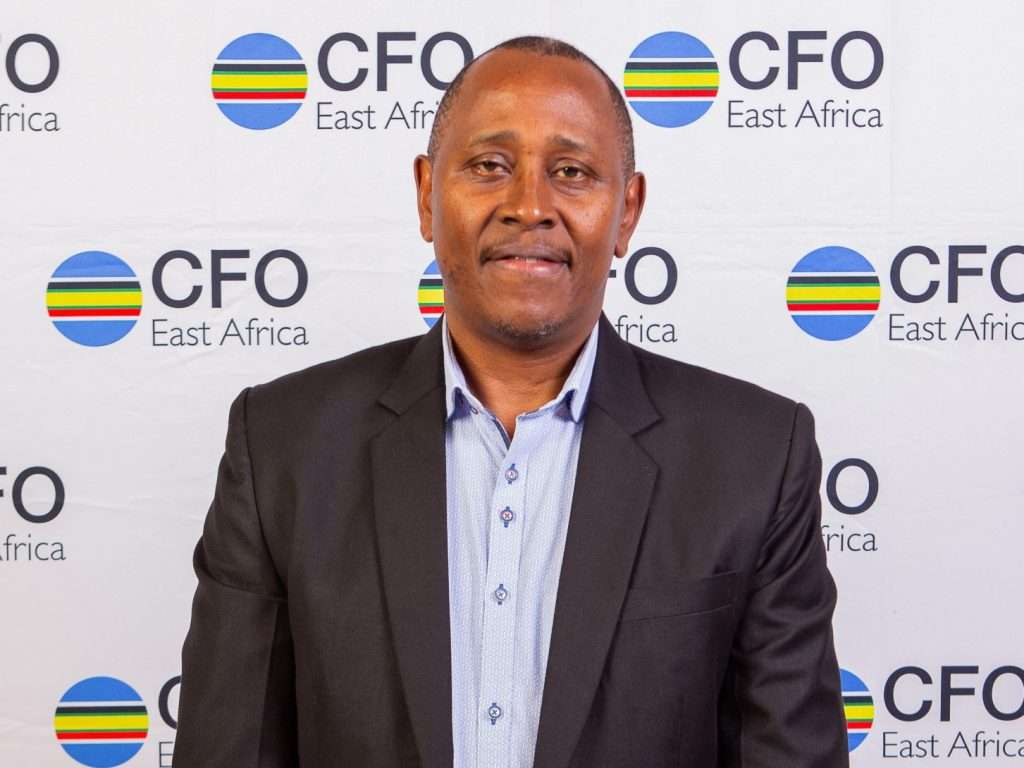
Fredrick Kahenya’s ability to enter organisations and build finance functions from the ground has helped transform several organisations into businesses prepared for sustained growth. The group CFO of Osprey Renewables sees leadership as an opportunity to shape strategy and develop people who will one day lead without him.
Fredrick Kahenya has repeatedly found himself walking into organisations that had never had a chief financial officer before. Across multinational agriculture, education and now, renewable energy, his role has been to build finance teams and systems.
“I was the first to hold the CFO position at Monsanto Africa when Africa became a separate region from EMEA. Again, when I moved to Zambia Seed Company, I was the first to hold the CFO position.” He continues, “Then I moved shortly, for about four months, to Food 4 Education. Again, the first ever CFO. For the last two and a half years, I've been with Osprey Renewables. Again, the first ever CFO. It looks like I can call myself a startup CFO.”
For him, finance is a strategic function that enables businesses to scale. His greatest source of pride is building organisations that continue thriving years later.
“To join organisations that required a lot of transformation and a lot of focus within the finance organisation and even outside the finance organisation and being able to put up structures from the ground up, raising capital so that they can be able to grow, improving operational efficiencies and partnering with the CEO and the leadership team to scale the business. That’s my pride,” he explains.
Leadership beyond hierarchy
One of the biggest influences on Fredrick’s leadership philosophy came during his fifteen years in the United States. Ironically, the move itself was never part of a carefully designed career strategy.
He recalls, “My wife always wanted to move to the United States, and she was always applying for the green card. A year after we got married, she won the green card and I had no choice but to accompany her to the US.”
That unexpected decision expanded both his professional opportunities and his understanding of leadership.
“When I was there, I was able to complete an MBA with emphasis in finance at Webster University. So, I also grew my career in finance.” He continues, “I worked for four different companies but about eight of those years were with Monsanto, where my career was accelerated with my promotion from the head of accounting to being a business partner within the marketing organisation. This was a critical role with a budget of about USD2 billion.”
But unlike in Kenya where leadership is very hierarchical, he discovered leadership in America is open and accessible. That experience changed the kind of leader he wanted to become when he eventually returned to Africa.
"What I saw that was different was the openness of the finance leadership in the US. We used to go by the first names, and most of us had open offices. There were no hierarchies. There were no protocols. It was all about achieving business goals,” he reveals.
He adds, “When I returned to Kenya, I was appointed the CFO for the Africa region in Monsanto and I noticed us leaders were treated in a special way. It was very uncomfortable. I had my small corner office in the organisation. Fortunately, because we were expanding, we had to relocate to a bigger office in Westlands, and I influenced the decision to make sure that the office we moved to had an open office plan. Including our CEO, we all had open offices, sitting next to our colleagues.”
The modern CFO
Fredrick believes the modern CFO cannot afford to think only as an accountant. The transition from technical finance to strategic leadership is one of the biggest adjustments any finance executive must make. It demands a willingness to make decisions with incomplete information and adapt when circumstances change.
"You have to be extremely agile because when you are leading a new organisation you really don't know what you're going to get. You have to be agile because you may have a plan and soon find that that plan would not work and you need to implement a different plan to succeed," he says.
Traditionally, accountants have been trained to present and explain financial results which by nature are historical. Fredrick believes today’s CFO must instead help influence long term strategy.
"As the CFO, 10 percent of what you do is historical, 90 percent is future oriented. You really need to have that foresight mindset where you must think quickly. You have to be agile.” He continues, “There's a lot of decisions you have to make from your gut. It's a totally different mindset."
That future-oriented perspective is particularly relevant in his current role within renewable energy. While financing is often assumed to be the biggest challenge facing new energy projects, he believes differently.
"Getting a good project that is bankable is the biggest challenge. This requires a lot of effort and takes time to achieve. "
Building people
Creating future leaders is what leadership means for Fredrick. It is a philosophy partly rooted in gratitude. And his leadership style reflects that conviction.
"My leadership philosophy has always been to mentor young finance professionals to take over leadership positions in future. I have been a beneficiary of mentorship. And the only way I can develop future leaders is to ensure people are free to make decisions. I’m there to provide guidance but I also hold them accountable for those decisions. I think that is the best way you can develop people because it builds confidence in them as they are able to see themselves adding value to the organisation. I avoid micromanaging as much as possible," he says
His approach to under-performance is understanding causes before judging outcomes. He believes most professionals succeed when equipped with the right tools.
Much of Fredrick’s career has been shaped by opportunities he never expected. He believes the best way to repay that is by extending the same opportunity to others. The measure of a CFO is in the organisations and leaders they leave behind. Fredrick is a builder of both businesses and people.
“I have had a very good career in finance and one of the achievements I am proud of is in people. And because I'm also a product of being mentored to take over leadership positions, I also give back the same to ensure that I'm working with people, mentoring them and developing them so that they can also take over leadership positions in future.”
Away from work, he enjoys travelling and keeping himself physically fit.
“I like the outdoors a lot,” he says. “I've hiked Mt. Kilimanjaro with my work colleagues in 2019. I try to walk about eight kilometres several times a week. I’ve gotten into marathons. Early this year I managed to run for 55 kilometres., which was my first ultramarathon and I am inspired to run more in the near future.”