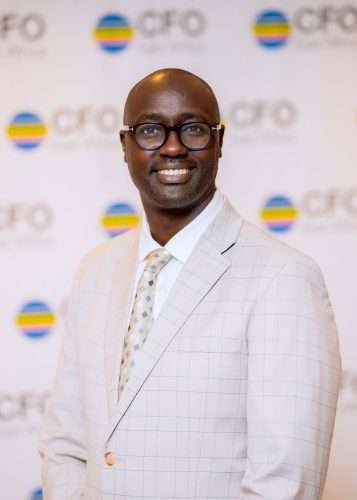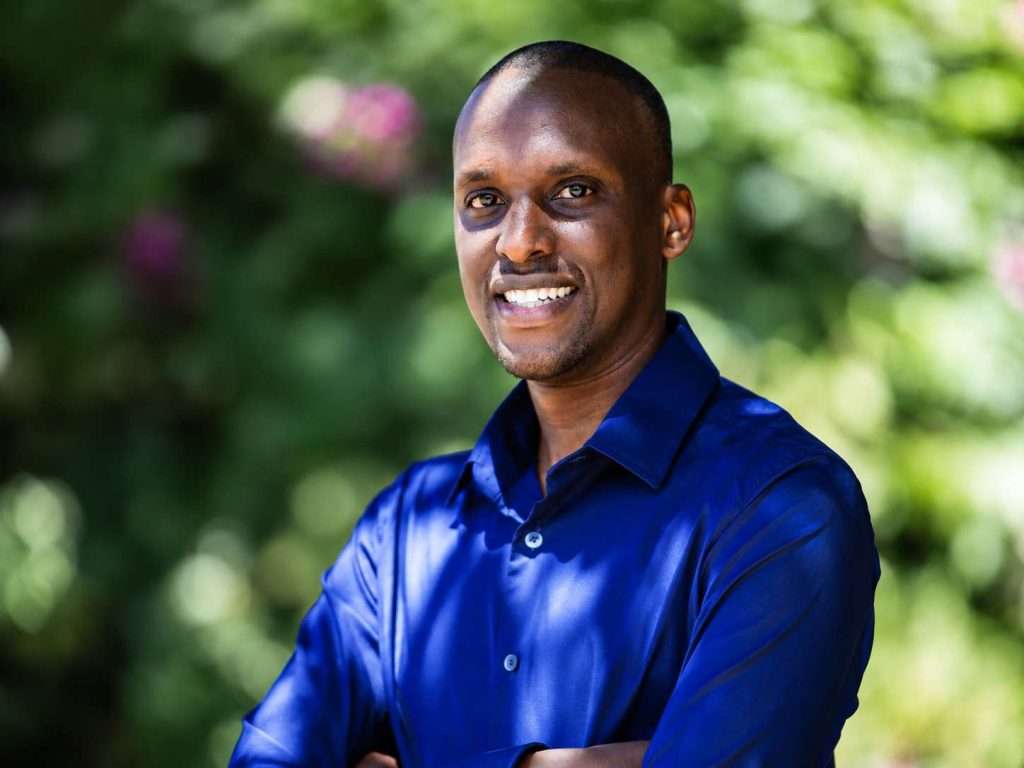
As head of finance and operations at both PHAT! Music & Entertainment and Yakwetu, James Mwenda believes that the modern CFO’s greatest asset is the quality to never stop learning and an ability to connect people through effective communication.
People in finance are often a mystery to many, and James Mwenda understands this better than most. He is changing this, as he believes that finance today is about strategy and communication rather than simply balancing books and reporting numbers.
“There's a sort of mystery in what people in finance do, and it stems from the fact that this group of professionals is usually not very good at communicating what they do. So, what makes me enjoy what I do is not so much sitting and looking at numbers, although I do enjoy that too. It's more so talking about what's happening, for example; what's happening in the balance sheet, what's the company's financial direction. I enjoy talking about what's going on and what’s supposed to happen,” he says.
Today, he serves in an unusual role of overseeing two sister companies in the creative industry. He is the head of finance and operations at both PHAT! Music & Entertainment and Yakwetu Online.
“On top of that, I am a tax expert.” He continues, “I have a Master’s degree in tax, and I get involved in tax conversations in the country a lot. You'll see me discussing the finance bill, tax law proposals and tax policy at various avenues. You'll also find my articles in a few journals here and there, and I do have a blog and a LinkedIn newsletter where all that I discuss is tax theory and policy.”
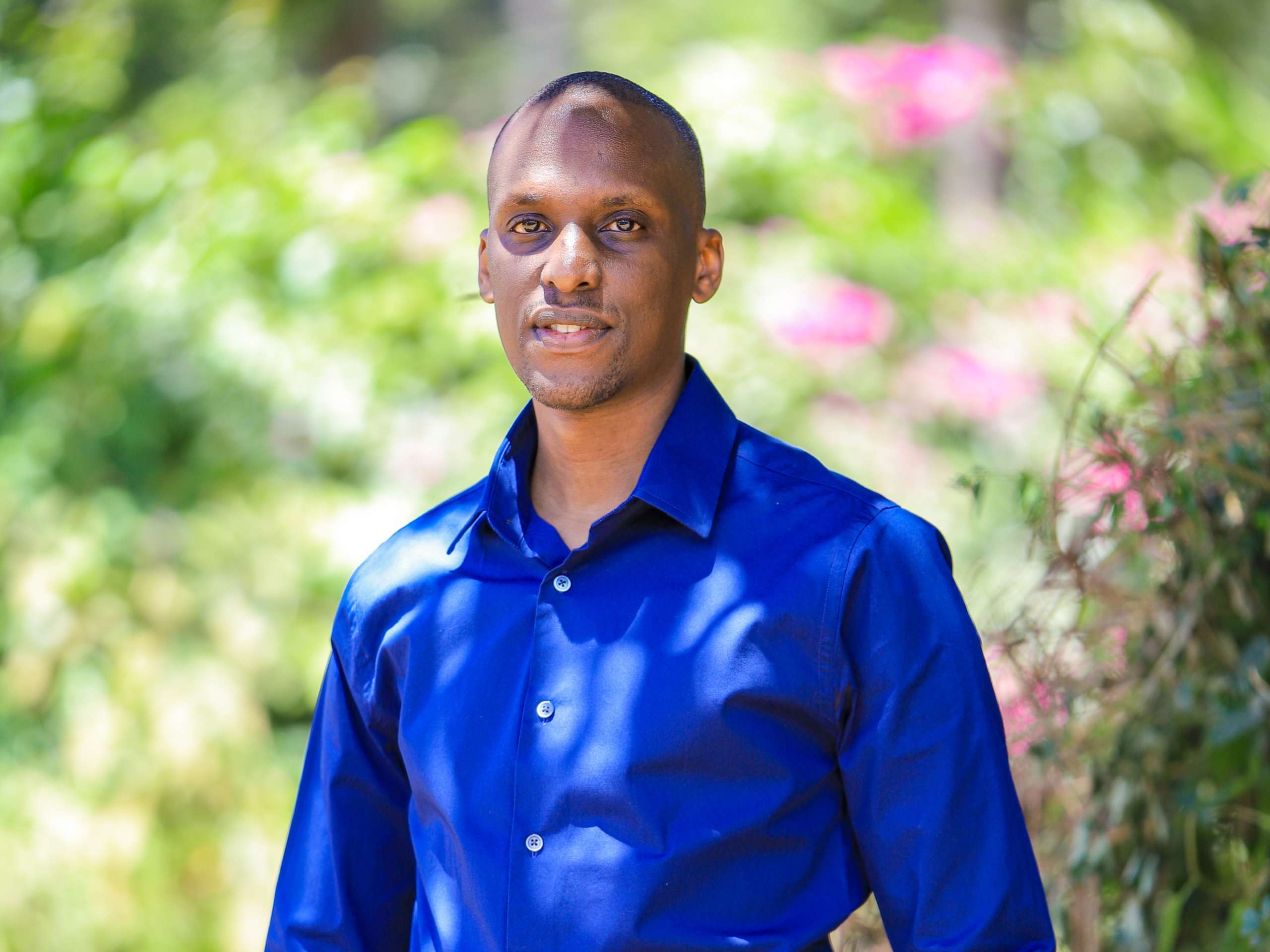
Building systems that last
While James enjoys discussing ideas, he measures success by creating lasting systems and structures. Upon joining PHAT!, one of Kenya’s longest-running entertainment companies, he built its finance department and established the systems needed to support more structured financial management and long-term growth. What he built helped PHAT! become the first company in Kenya’s creative sector to be recognised among the country’s top 100 medium-sized companies.
“The reason the Top 100 recognition is so profound to me is that, when I joined the company, there was very little structure. There was no proper financial structure or proper record-keeping; everything was scattered,” he recalls. “I streamlined the processes, introduced an ERP system for record-keeping, and backdated the company’s historical records into the system. That same year, the company underwent its first full and properly conducted external audit.”
“Getting through the Top 100 pre-selection audit was, in itself, an endorsement of the systems I had put in place. It showed that what I had built was working. I created something. It still exists and is better," he says.
A similar opportunity arose when two directors from PHAT! partnered with directors from other companies to form Yakwetu, an African content distribution platform. The business was entering a market that even the regulators were still trying to understand. James was part of the small team responsible for working through that uncertainty, going through laws, checking international practice and continuously engaging with the regulators.
"My role after registration and incorporation evolved into doing what I did at PHAT!, and that was creating a structure for the finance and administration end of Yakwetu. That was my job. I got involved in that and it kept going until I finally became the head of two related entities. Yakwetu is properly functioning, it is making revenue, and has audited records that stretch back five years. That's a proud moment," he recalls.
Communication in leadership
An encounter with a security guard forced James to reflect on how people in finance communicate with those they get into contact with. It became a defining leadership lesson, that poor communication can create distance between people, even within the same organisation.
He says, “It hit me that there was a communication challenge in the company, me included. I sat down and started reviewing my emails, the kind of responses I used to give and how I used to carry myself. Previously, I didn’t see any issue with that because in school, we were all the same. We were all not warm to each other; we all replied the same way, often not clearly. Then I came to a company and fitted into that communication culture. So, I realised there was a communication culture which was not very appealing and more so ineffective. I began working on that and working on myself.”
James also aims to create an environment in which people feel trusted to solve problems rather than simply defer to his authority.
“I like to make sure that you can look up to me, not by force or authority. If you're in a pickle, my colleagues know they can talk to me and get a solution. I believe I'm reliable,” he says.
He also gives his team room to take ownership of their work. “I let people execute tasks their own way. I allow them to study the task, map the task and do their best on that task. But they have to deliver. I make sure that I give them the freedom to learn, execute and embrace the task, not just do it out of habit. I also give a framework and a target. A red dot. There's a saying I like: ‘If you aim at everything, you will hit nothing.’”

Always learning
For James, the CFO role is no longer confined to finance. It increasingly requires an understanding of technology, policy, sustainability and leadership. He believes the defining skill of tomorrow’s CFO is simple;
“It's not a skill, it's a quality, and it is to learn. The other day we were talking about sustainability. Who thought CFOs are the people being looked up to drive sustainability in institutions? As a CFO you find yourself doing so many things. I read and review so many contracts, which has made me understand so much of law. I'm so much involved in policy discussions and they have nothing to do with financial record keeping, IFRS and all that,” he says.
His advice to future CFOs is that curiosity is very valuable. Leadership increasingly demands knowledge far beyond accounting provisions.
“The next step after CFO is CEO, a CEO knows close to everything and anything about the company that he leads and the industry that they are in” he says. “If you don't embrace a culture of learning, you won’t grow much. You have to be open to learning anything and everything beyond finance. Learn about sustainability. Learn about AI. Learn about medicine if you love it. Just be open to learning. Learn from people as well. People in finance don't like criticism; they don't take it very nicely. So, learn to listen to criticism and learn from it.”
In his free time, James reads, watches a lot of chess, follows rugby, golf, Arsenal, and runs regularly. He runs almost half marathon distances almost every weekend, though he admits that he does not particularly enjoy running.
He resists any label anyone would attach to him. His career has taken him beyond the traditional boundaries of accounting, into organisational development and leadership. For him, the modern finance leader is a translator of complexity and, above all, a lifelong learner.
He says, "I'm a different animal, not an accountant. I actually don't identify as an accountant. If I wasn’t in this profession, I would probably be a plant pathologist,” he says.