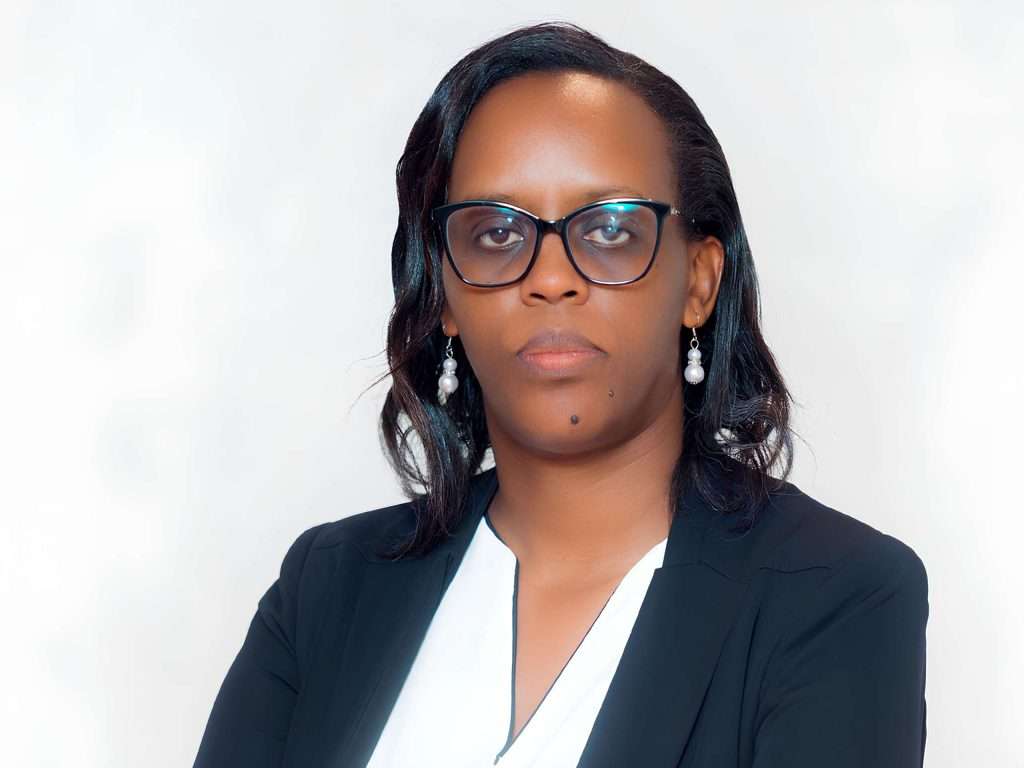
After more than two decades in tightly regulated environments, Clarisse Umutoni has learned that finance only matters if it delivers real outcomes.
The CFO of the Rwanda Agricultural and Animal Resources Development Board (RAB) speaks candidly about leading through uncertainty.
You have over two decades of experience across banking, government, and regulatory sectors. What pivotal moments or decisions shaped your path into finance, and how has your perspective evolved since joining RAB?
My journey into finance was shaped gradually through exposure to environments where integrity, discipline, and stewardship were essential. Early roles in regulated sectors taught me that finance underpins trust. A key turning point was moving into leadership positions where financial decisions directly affected institutions and people.
Since joining RAB, my perspective has evolved further toward impact. Working across different sectors has also taught me that while industries may differ, the fundamentals of good governance, sound organisational structures, and clear decision-making are universal. And those principles are highly transferable across contexts. Finance has become more about enabling agricultural transformation, food security, and long-term national resilience.
As CFO of an institution central to Rwanda’s agricultural and economic development, what excites you most about your role today?
What excites me most is seeing how finance translates into real outcomes. At RAB, financial decisions directly support farmers, research, innovation, and value chains. Knowing that sound financial stewardship can improve livelihoods and strengthen food systems makes the work deeply purposeful and energising.
Managing donor-funded projects often comes with unique challenges. Walk me through a particularly complex financial challenge you’ve navigated, and what you took away from that experience.
One particularly complex challenge involved aligning multiple donor requirements with national public financial management systems while maintaining project momentum. Each framework was sound on its own, but alignment required careful coordination. The experience reinforced the importance of early risk planning, open communication, and adaptability. It also confirmed that finance teams add the most value when they enable solutions rather than focus solely on process.
Looking back on your career, what professional achievements stand out most to you?
Strengthening financial governance within institutions stands out most, particularly helping organisations achieve stronger assurance outcomes through improved systems, controls, and financial discipline. I am especially proud of leading and developing teams that have grown in capability, confidence, and performance over time. Seeing both institutions and people become stronger and more credible is deeply rewarding. Achievements that build lasting institutional capacity and a positive performance culture are the ones that matter most to me.
Is there a life experience or turning point that significantly changed the way you approach leadership or decision-making?
Leading through periods of uncertainty and competing priorities was transformative.It taught me to remain calm, listen carefully, and make decisions that balance urgency with long-term impact. It also helped me become more comfortable leading in uncertainty, which means adapting decisions as contexts evolve rather than relying solely on fixed plans.
You’ve served in leadership roles at ICPAR and continue to mentor others. How has mentorship shaped your own growth, and how are you now giving back to the profession?
Mentorship played a vital role in my development. I learned from leaders who modelled integrity, judgement, and purpose shaped how I lead today. I now give back by mentoring young professionals, supporting women in finance and accounting, and contributing to professional institutions. Sometimes mentorship is about sharing knowledge; other times it is about offering perspective and helping someone see their own potential more clearly.
What do you think is still misunderstood about the role of a CFO in the public or development space?
There is a common misconception that CFOs are primarily budget controllers. In reality, the role is strategic. It supports leadership with risk awareness, sound judgement, and ensuring that resources deliver real public value.
What’s one personal habit or routine that helps you stay grounded in a high-stakes role?
Intentional reflection, supported by regular reading. Staying curious and being a lifelong learner helps me make sense of daily challenges, connect ideas across disciplines, and respond more thoughtfully to issues as they arise. It keeps me grounded and sharp, even in demanding situations.