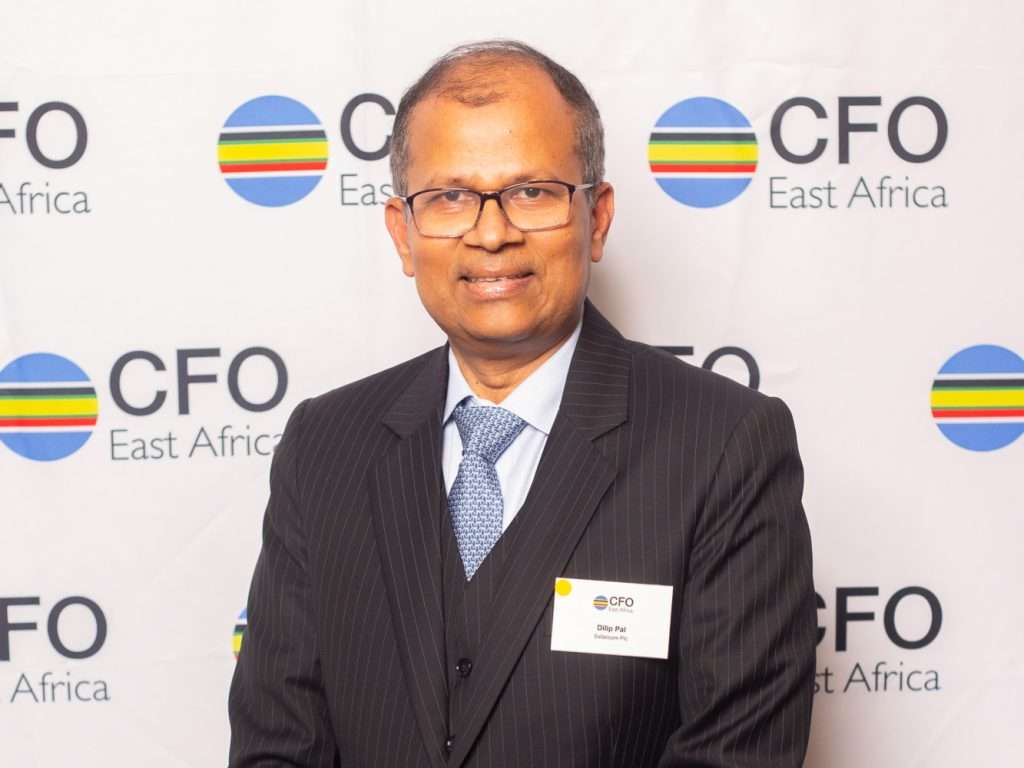
For Dilip Pal, climate investment means aligning technology with sustainability while empowering communities to build resilience, because when people and businesses thrive, so does the planet. In his remarks at the United Nations Global Leadership Summit 2024, the Safaricom CFO called for a people-centred approach to innovation for climate action.
Safaricom CFO Dilip Pal joined other business leaders at the United Nations Global Compact Leaders Summit 2024 during the 79th UN General Assembly, where he shared insights on Safaricom’s push to advance sustainability in supply chains and drive climate action.
Dilip highlighted the telco’s efforts to strike a balance between profitability and resilience by localising its supply chains, adopting solar power, and leveraging AI-powered fuel monitoring. Ahead of the 2024 United Nations Conference of Parties (COP29) in November, where governments will assess global efforts to limit global warming to 1.5 degrees in line with the Paris Agreement, Dilip revealed that these initiatives had shrunk Safaricom’s carbon footprint and reduced its reliance on external power grids.
“Additionally, through M-Pesa, we are driving financial inclusion for SMEs, offering financial products and training programs which have helped hundreds of suppliers integrate sustainable practices,” he said.
During a panel discussion dubbed ‘Corporate Investments for Climate Ambitions’, Dilip spoke about Safaricom’s approach to climate action, including solarising its network infrastructure and improving financial inclusion through its M-Pesa mobile money transfer platform.
“These investments are tied to our sustainability goals, including Scope 1 and 2 emissions reduction, gender diversity in leadership, and digital inclusion. Our commitment to aligning financial strategy with climate targets is reflected in the Ksh 30 Sustainability Linked Loan, the largest in East Africa,” he said.
Dilip cited Safaricom’s key performance indicators in environmental, social, and governance (ESG) activities, which he credited with showcasing how its investments address the immediate demands of climate change while empowering communities.

Common good
The summit came hot on the heels of the launch of Absa Kenya’s 2023 Sustainability Report in Nairobi, Kenya, where a panel featuring various captains of industry, including Sasini Group CEO Martin Ochieng, EABL corporate relations director Eric Kiniti, Africa Guarantee Fund CFO Daisy Wanjie, and Dilip discussed sustainable business practices. Speaking at the event, Dilip highlighted the role of partnerships in sustainability-driven innovations, saying technology must serve the common good.
“When the government of Kenya came out with the Hustler fund, which is affordable financing for small enterprises, because of the technology, we could do what we managed to do for 21 million customers. I think there is a lot we as Safaricom could not have delivered with this technology if it were not for the partnerships we had. We have platforms like Digifarm, which connects farmers with various partners who provide financial support, which institutions like Absa could be part of,” he said.
Dilip, who sits on the advisory board of the UN’s CFO Coalition for the Sustainable Development Goals, also emphasised the importance of weaving sustainability into daily life at the corporate and personal level, pointing to Safaricom’s integration of 9 out of the 17 UN Sustainable Development Goals (SDGs) into its business strategy. The Coalition brings together finance leaders who are committed to aligning corporate finance with the SDGs.
“There is a bottom-up approach and a top-down approach. The bottom-up approach is where people are empowered to be aware of the goals we have set for ourselves, and this is embedded in the way you work. You just embrace it. Nobody is reminding you what you have to do every day, so it's a way of work at the corporate level," he said.
Dilip identified financing for sustainability as a major obstacle to climate action, highlighting challenges in securing facilities from banking institutions. He encouraged corporate leaders to join hands to find a solution.
“That is the reason why the CFO Coalition for SDGs came in. It was just not because the people who came in there are the decision makers in the allocation of funds, but because the metrics were a challenge too. It is very difficult to measure the return with this kind of initiative,” he said.