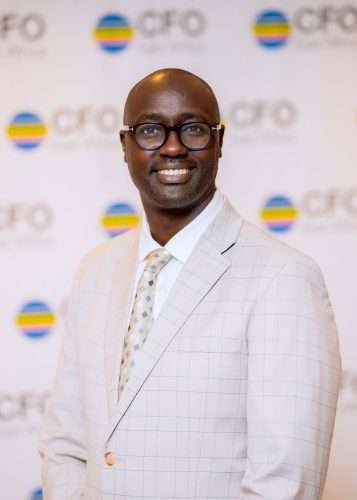
Sage regional VP for medium business Gerhard Hartman explains why East Africa’s finance leaders must become tech-savvy advisers who guide both compliance and transformation.
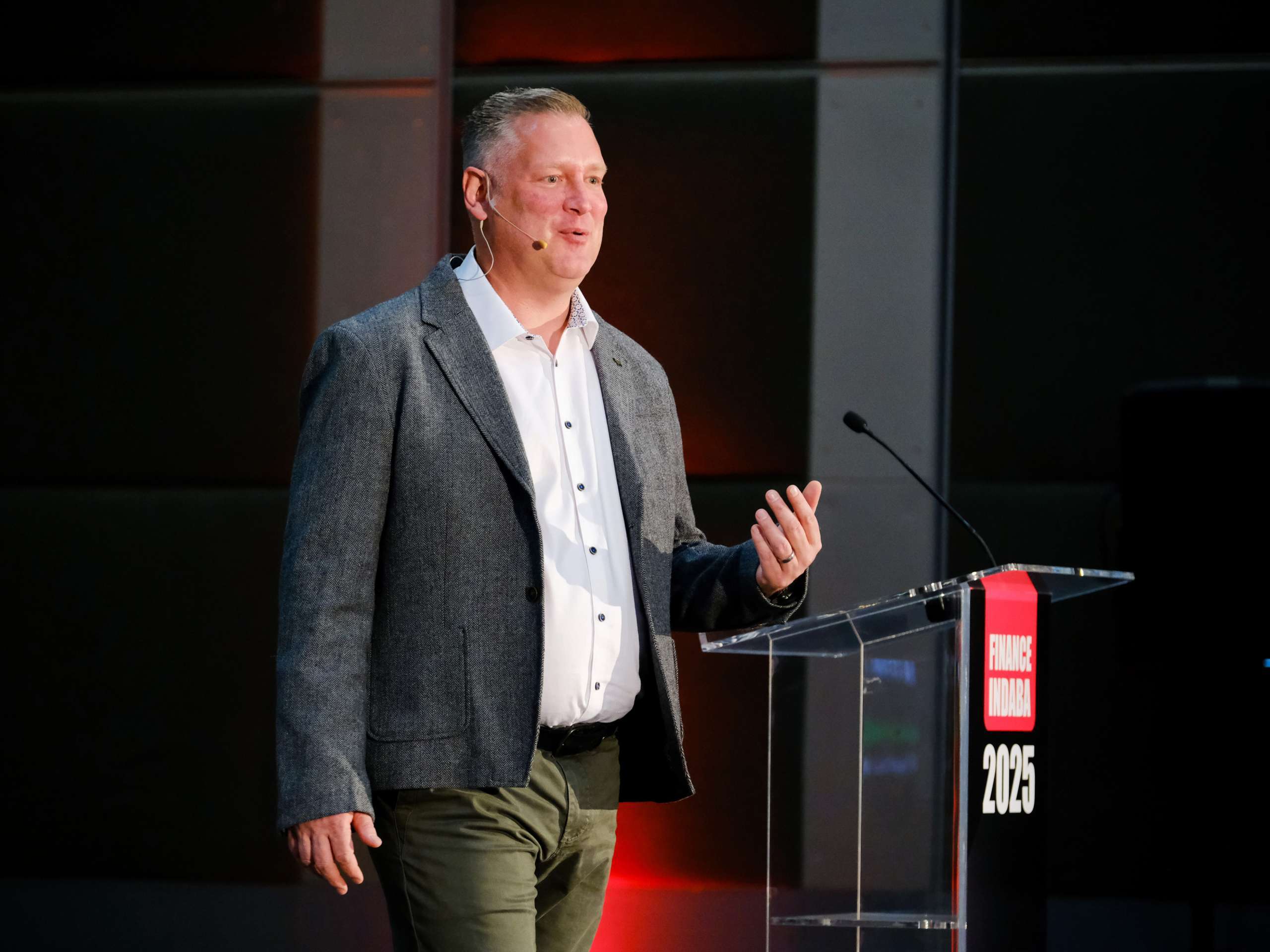
The role of the CFO has changed more in the past five years than in the previous two decades. Gerhard Hartman, who is the vice president for Sage’s medium business segment across Africa and the Middle East, says the change has been driven by one clear force: technology. In his view, the modern CFO must now lead digital transformation across the organisation.
“The CFO needs to start evolving themselves to say, How do I reposition myself in my organisation to become the tech-savvy adviser to the C-suite, giving the direction of where it needs to go? For me, that represents the true shift – the CFO partnering with the rest of the C-suite, including the information officer and even the chief people officer, to take a step back and ask, ‘where can we automate’, ‘where can we improve’, and ‘how can we do things smarter’?” he says.
According to a report by Sage titled The CFO Growth Code, one in five small and medium businesses plan to adopt some form of artificial intelligence soon, and more than half of CFOs intend to make technology investments within a year. Seventy-two percent admit they are not using AI to its full potential, while an overwhelming 96 percent of finance leaders already use AI tools in some capacity. Gerhard sees this as a sign that finance leaders have become catalysts of progress.
“There are significant barriers when it comes to people being used to doing things in a certain way. I want to use the concept of the three pillars. The CFO wants to start the journey of technology transformation by implementing new systems and driving operational improvements, but must still convince fellow C-suite leaders of the need to fundamentally change how the business operates. There is a technology conversation, a people conversation and then the impact conversation,” he explains.
Success builds confidence
Gerhard believes the CFO’s challenge is to turn those obstacles into successes, starting small and showing results early. A simple example might be automating the distribution of financial and HR reports across the company, so that leadership teams gain faster access to real-time information. Each success builds the confidence needed for larger change.
“Technology is not there to take over your jobs. It is there to make sure that we enable you to do more, because we are going to start automating certain processes. The educational part is very important. I have seen it with multiple organisations, as soon as you take finance teams on the journey and show them the changes you are making, they start to embrace it,” he says.
Gerhard sees the rise of AI-driven tools in finance, especially the growing use of accounts payable (AP) automation, as a clear sign of how technology is reshaping the role of the finance function. By streamlining processes like invoice capture, matching and approval, AP automation reduces manual workloads and errors, allowing finance teams to focus on more strategic priorities such as forecasting, supplier relationships and cash flow management. This is a prime example of how AI isn’t just about speed, it’s about unlocking smarter, more value-driven decision-making across the business.
“The more information you feed it, the more it learns, and that is where automation takes place. That is just one example and there are many others one can look at. But the principle is the same, you start small and build on success,” he says.
Breaking down silos
The Sage report also found that 65 percent of CFOs already use process automation in some form, and 61 percent expect it to have a positive impact on their organisations. In most companies, finance, HR and operations work in isolation, with each holding bits of information that could be powerful if connected. Cloud-based systems now make it possible to unite these views into what Gerhard calls ‘one version of the truth’, creating a shared basis for decision making.
“The CFO is there to engage the C-suite and ask, how can we break down silos within the organisation to bring data together to make faster, sharper and strategic decisions? Whether it is finance data, HR data or operational data, it is very important to have a single view of the truth. That is where cloud-based systems come in, to give you that one view and then to have dashboards and reporting that are automated,” he explains.
The same principle applies to ESG reporting. Gerhard points to integrations between Sage’s accounting systems and external ESG platforms that allow companies to track sustainability metrics alongside financial data. He sees this as a natural extension of the CFO’s role.
“Integrations are so important for me. You bring an ERP or accounting platform into your organisation and need to have certain targets met from an ESG point of view. Having that technology on board and the two systems speaking to one another means you can track that performance as it goes along. At the end of the day, it is about having one single source of data in the organisation,” he says.
Technology has raised the bar for leadership. According to Gerhard, the most successful finance leaders are curious, adaptable and eager to learn. They are communicators who can bring together cross-functional teams and turn projects into shared experiments. In his view, the modern CFO must combine analytical skills with empathy and a willingness to experiment.
“The CFO is in an ideal position to always stay relevant. They are curious, adaptable and they want to collaborate with the rest of the organisation. They need to understand data, analytics and what technology they can bring in. The more the different functions collaborate on what they want to change, the better for the organisation's long-term sustainability,” he says.
Start now and keep improving
As Gerhard notes, each new tool offers an opportunity to test and improve. He encourages finance teams to think of digital initiatives as ongoing experiments that reveal either success or valuable lessons.
“It begins with a clear goal to automate a process within the organisation. A team is assembled and the experiment begins. The outcome isn’t defined by success or failure, but by learning. Each experiment provides valuable insight; the real failure is not learning from the experience,” he says.
As systems become more interconnected, CFOs are called upon to ensure that data is used responsibly. Sage reports that nine in 10 finance leaders view compliance as a top priority, while 74 percent say their organisations still struggle to manage it effectively. Gerhard points to Kenya’s early adoption of e-invoicing as evidence that East Africa can lead the way in digital regulation and transparency.
“It needs to be 100 percent trusted by the people who use it. Automating processes and having audit trails in place are mechanisms that add to compliance. I think a country like Kenya is always cutting-edge. If you take what happened with e-invoicing, Kenya was one of the first countries that launched it, and there are quite a number of others following,” he says.
Gerhard believes the biggest advantage lies in how quickly organisations learn from technology. He sees CFOs as the natural leaders of that learning process. His advice to finance leaders is to start now and keep improving.
“If a company or finance leader has not started yet, it is never too late. Companies embracing technology and real-time data are becoming leaders. The others are lagging behind. Look at technology that will make a difference, put a team together to lead the change and measure the success. Evolve and never stop learning,” he says.