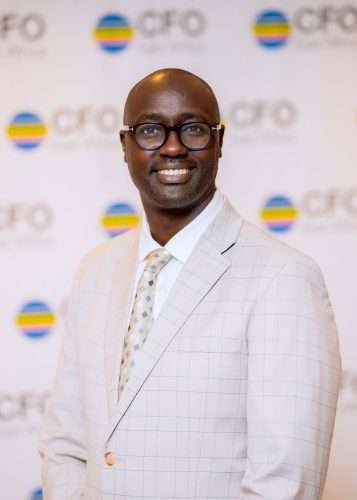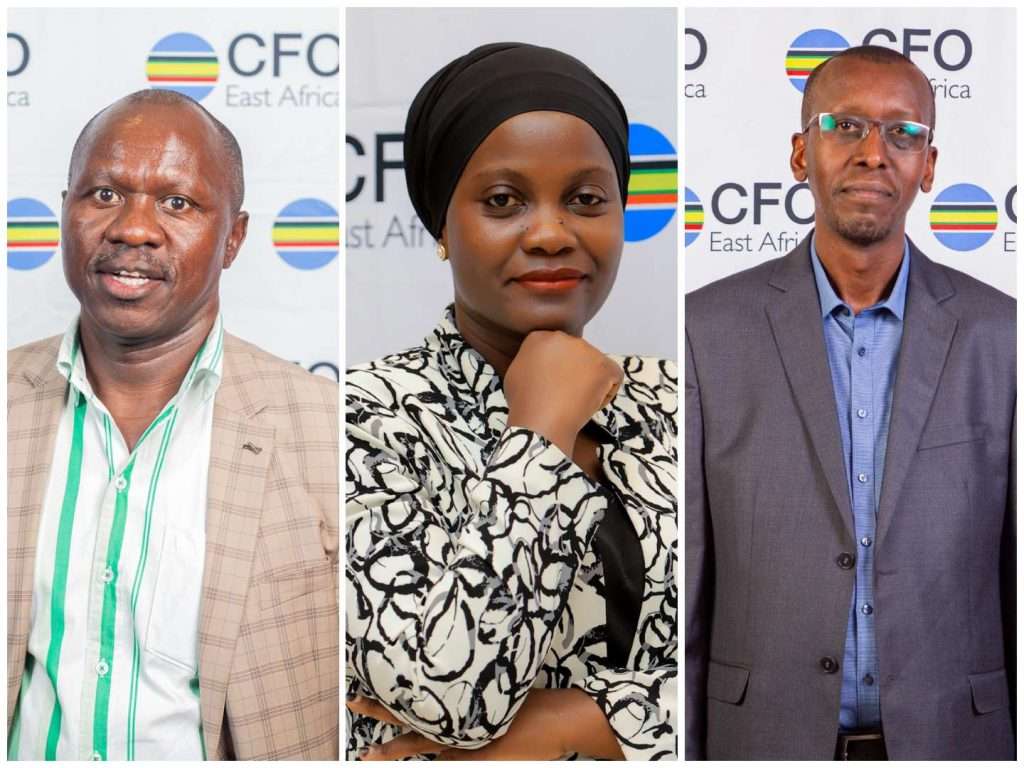
Finance leaders are watching closely as technological disruption and other changes redefine how organisations operate across the region. Weetabix East Africa CFO Dr Sebastian Nthama, Tropical Bank CFO Aminah Galenda and PharmAccess director of finance Charles Gachuhi reveal the shifts they believe will shape the future of business in East Africa.
Dr Sebastian Nthama has watched articificial intelligence change how work gets done in real time. He believes finance leaders who ignore it risk falling behind. At Weetabix East Africa, he has seen automation eliminate overnight manual processes that once required multiple staff members.
“We’ve actually brought in some young guys who are talking about automation. We have given them sales order processing to just test how it works. And when I talk to the people, they say it is working very well. So customers send their orders through an email to a box and then these guys are able to pick those orders from the box and things just happen overnight,” he says.
Sebastian sees AI as an obligation for CFOs still in the workforce. The question for him is not whether AI will reshape finance, but whether leaders will deploy it themselves or leave the task to successors who may face steeper learning curves.
“One has to be at home with all these technological advancements, plan to do it because it is going to happen anyway. And because we are already in these jobs, I think we need to do them before we leave so that we will also have learned how to deploy AI in the business before it expands to look very different in the next couple of years because I think it is still evolving,” he explains.
The evolving role of the CFO
Aminah Galenda views the shift from a different angle. She argues that the CFO role itself is being redefined, moving beyond technical expertise toward strategic leadership. In many organisations, the CFO now sits just below the managing director, functioning as a de facto business leader rather than simply a guardian of numbers.
"If you look at some organisations, the CFO is becoming the default number two in companies. So that means as a CFO, you need business acumen, the technical expertise you came through with from your CPA, and now your technology knowledge, because if you're making a decision on business, you need to know the technology that is there," she says.
The executive sees AI as a tool to eliminate routine work and free up capacity for higher-value decisions. The modern CFO, in her view, must combine business acumen with technical fluency and the ability to make strategic calls about which systems to deploy and when.
“That CFO should be able to focus on using AI with a mind of mitigating risk in their processes, standardising them, creating more time for their executives to think in a futuristic way,” she explains.
The funding reckoning
Charles Gachuhi has seen a different kind of disruption. In the NGO sector, funding models that sustained organisations for decades are collapsing. The US government’s funding cuts triggered a chain reaction across donor governments, forcing European nations to redirect development aid toward their own defense budgets. For Charles, the lesson is clear: diversification is no longer optional.
“There is a need to be proactive, look at innovative ways to continuously again improve as an organisation, be more efficient, be more forward-looking, be open to new ideas not just new ideas of programmes but different ideas of funding,” he says.
At PharmAccess, Charles has pushed beyond traditional grant funding. The organisation now lends to hospitals for quality improvements and generates revenue from services that were once donor-funded. He describes it as a necessary evolution, one that keeps programmes within strategic boundaries while building financial resilience.
The shift toward self-sustainability, Charles warns, should have started years ago. Organisations that rely too heavily on single donors now face existential threats.
“People got comfortable and basically adopted an attitude of this is how we’ve always done it. It will always be like that. How it is today will not be that way tomorrow,” he reflects.