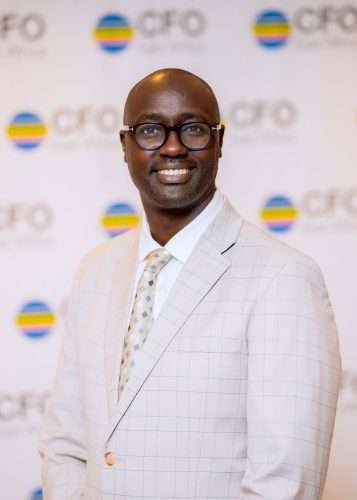
For many finance leaders, sustainable performance comes from the routines that help them stay grounded. Pathcare Kenya CFO Stephen Kimani, ICEA Lion Life Assurance CFO Kevin Nyakeri and Inyange Industries finance director Paul Tuyizere reveal the practices that help them stay focused.
Paul Tuyizere oversees a fast-paced finance function with teams that include people older than him. To manage them, he relies on deliberate planning. This helps him avoid being pulled in too many directions. Allocating time for specific tasks also allows him to maintain focus and keeps stress from building up. It ensures he has the clarity needed to respond to both operational issues and strategic work. Before joining Inyange Industries, Paul audited a number of manufacturing companies, which gave him insight into the sector and taught him to handle high pressure situations.
“When you allocate time appropriately to administrative tasks such as reviewing and signing documents, it allows you to execute expeditiously without interruptions, which then frees you up to attend to other duties with your full attention. Doing too many things at the same time means you will not get much done,” he says.
Alongside his executive role, Paul teaches accounting at the University of Rwanda and is pursuing the chartered financial analyst (CFA) qualification to strengthen his analytical skills. He believes that staying sharp academically improves his performance at work, as it expands the tools he brings to decision making. The routine of studying and teaching keeps him in a mindset of discipline and growth.
“My position requires strategic thinking and analysis, which I believe I can enhance through CFA studies. The lessons have been useful in my current role. For example, I have gathered tools on how to assess lead times for inventory so as to effectively manage working capital,” he explains.
Starting strong
Pathcare Kenya CFO Stephen Kimani cycles 16 kilometres to and from the office at least three times a week. He uses the ride as his primary form of exercise and mental reset. The early morning routine clears his mind before the day’s responsibilities start to build. It invigorates him and prepares him to handle tasks that require sharp focus.
“I have a hybrid bike. Because my job keeps me so busy, I do not have time to go to the gym, so this is the best way to have work-life integration. Cycling keeps me fit and I also arrive at work feeling fresh and energised,” he reveals.
Stephen believes how he handles pressure is also crucial to his performance. At work, problems often demand quick thinking and careful communication. He approaches these moments with deliberate planning. The clarity he gets from cycling helps him remain steady when stakeholders look to him for solutions.
“When cash flow is not optimum, you will find everyone is looking to you as the CFO to fix the problem. It is at this point that you need to have great communication and negotiation skills. You also need to employ proper planning to ensure that the problem does not recur,” he explains.
Discipline and curiosity
Early in Kevin Nyakeri’s career, he made what he calls a 'black cat mistake'. He had introduced a new idea in the boardroom without speaking to board members about it beforehand.
“That’s when I realised that significant discussions should happen outside the boardroom. By socialising with board members beforehand, things would have been different. By the time we enter the boardroom, it’s about dissecting the issue and making decisions, rather than presenting new information for the first time,” he advises.
Kevin also views productivity as the discipline to interrogate his own assumptions. He has learned that effective decision making depends on asking whether numbers reflect real progress. This habit has made him more deliberate in how he engages with colleagues.
“A year into my role, I proudly reported that we were below budget, explaining that it was because we hadn't opened the new branches we had planned. It turned out to be a blunder, as I realised I was celebrating the wrong thing and was out of sync with the strategic reality. That experience taught me to shift my perspective. Now, when people come to me with spending requests, I see it as an investment opportunity and focus on how we can generate returns,” he says.