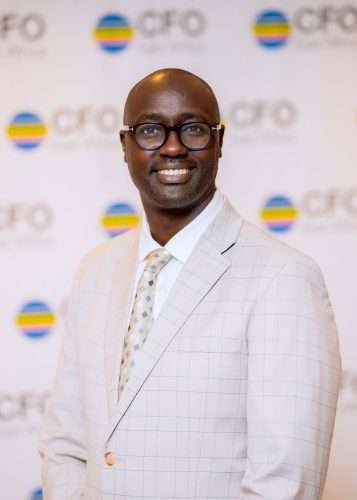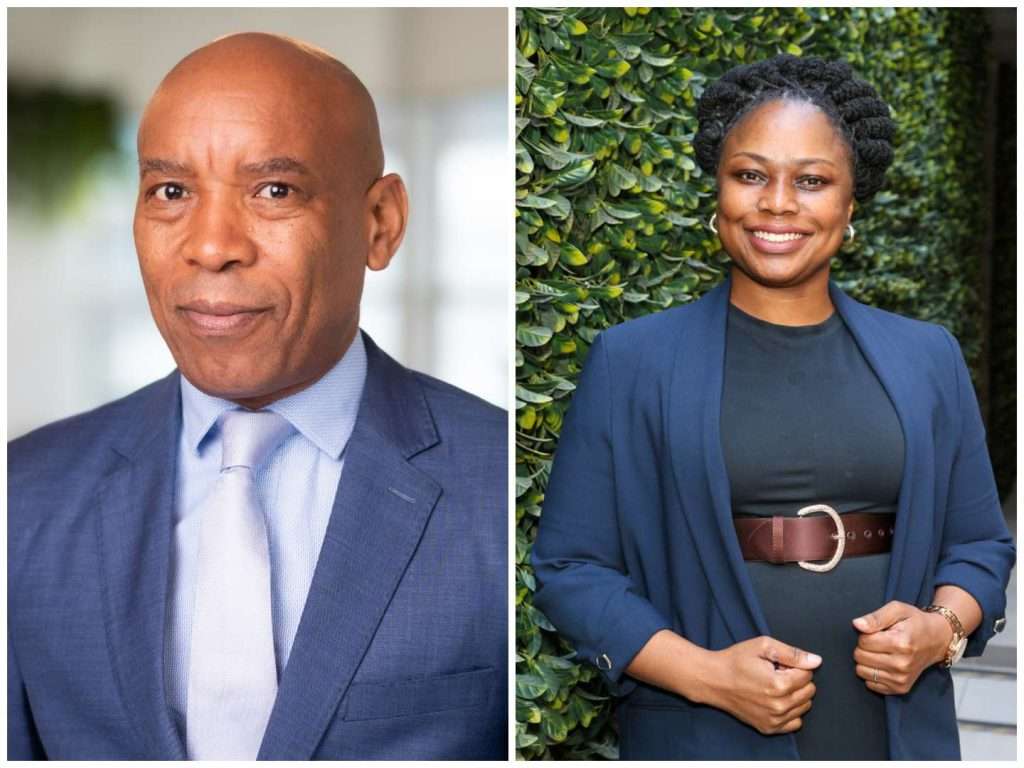
Alfred Ramosedi, FCMA, CGMA, president at The Chartered Institute of Management Accountants (CIMA) and co-chair of the Association of International Certified Professional Accountants, who is based predominantly in Africa, and Tariro Mutizwa, FCMA, CGMA, vice president – Africa at CIMA, agree that AI will change what finance professionals do, but not who leads. They speak to CFO East Africa about the shifts changing the profession across the continent.
Finance professionals across Africa are being asked to master the same technology curve as their peers in London or Singapore, only without the luxury of stable currencies or predictable regulation. But this double burden has become the continent's defining advantage.
"The conversation is no longer about where talent comes from, but about the quality of that talent. As businesses compete for skills globally, Africa is producing professionals whose expertise and leadership are being recognised on the world stage. That shift reflects the growing confidence in the continent's ability to develop world-class talent," Alfred Ramosedi, CIMA President and Association Co-Chair says.
Alfred is the 93rd President of CIMA and 11th Co-Chair of the Association, second volunteer president to come out of Africa. While he sees his election as reflecting growing international recognition of the depth of finance talent emerging from the continent, he emphasises that it also demonstrates the increasingly global nature of the profession.
"African finance professionals are accustomed to doing more with less and finding innovative workarounds. Because we aren't always tied down by heavy legacy infrastructure, we often can leapfrog directly into new technologies, such as mobile-first financial solutions and cloud-based operating models," Vice president Tariro Mutizwa explains.
As Alfred reveals, he has watched this argument play out before, first with the calculator and now with accounting software. Each time, the technology was expected to shrink finance departments, but it never did.
"Every time what I have noticed in all of that pattern is it enabled us, if you are intentional in getting this technology in, it enabled you to do a few things better. One, to do more with less errors. Two, it enabled me to do other things that would add more value," he says.
The human dimension
With this history in mind, both leaders reframe the current anxiety around AI, describing it as a tool that only works when a human sets its direction.
"AI is brilliant at processing massive datasets, identifying patterns and automating routine tasks. But AI cannot contextualise a business problem, negotiate with a difficult stakeholder or make nuanced ethical judgments," Tariro says.
Alfred, who is the CEO of Bayport Financial Services in South Africa, makes the same case using the language of accountability rather than skill. For him, the distinction sits between the person and the role they occupy.
"We need to divorce the role I play as Alfred, as a CEO, from Alfred Ramosedi the individual. We still require Alfred to make the decision about the strategy of Bayport, as informed by insights from AI, but AI will never make a decision for Bayport and AI will never take accountability for that decision," he goes on.
A delicate balance
This is the thinking behind the recent overhaul of CIMA’s CGMA professional qualification, which now includes new material on generative AI as well as sustainability and business partnering. Tariro says the update was designed to keep technical fluency from replacing judgement.
"We ensure that the human dimension is never lost by anchoring everything in the CGMA competency framework, which treats people skills and leadership skills with the exact same weight as technical and digital skills," she reveals.
Alfred traces that same balance back to his own training in the 1990s, when the then CGMA qualification already required more of him than technical calculation. He believes it is what separates an accountant from an adviser trusted in the boardroom.
"When we go further, we will say, tell me what you're going to do about it. So embedded in the CGMA qualification for quite some time is what's next. That's what CIMA produces. It puts you on the table not to just talk, but to also have a seat that gives people advice," he says.
His path to the presidency began on a farm without cars, an anecdote he points to when asked what his election means for the profession on the continent.
"I come from a very humble beginning. I think the first time I saw traffic I was 13 years old. Competence is competence, talent is talent, and contributing is contributing, no matter where you come from," Alfred says.
Investing in people
Both leaders are focused on the young professionals coming up behind them, aware that Africa's demographic weight gives the region a rare advantage if used well. In Tariro’s view, the task is converting raw ability into professional capability.
"Nurturing that talent well means bridging the gap between academic theory and practical, real-world business application. It means fostering a growth mindset where continuous learning becomes second nature," she explains.
As Alfred argues, global companies already have direct commercial reasons to invest in the continent's workforce. In making this observation, he points to the numbers behind that opportunity,
"Africa has the highest proportion of under-19-year-olds in the world. If you invest as a company with the business processing centre in Kenya, you will actually have a longer sustainable period, because if people work 20 years there, it's better to put it there versus putting it in markets with ageing populations,," he says.
Rather than treat that advantage as guaranteed, both Alfred and Tariro describe a generation of young professionals who are already acting on the opportunity rather than waiting to be handed it.
"My optimism stems from the sheer hunger, resilience and ingenuity I see in young African professionals every single day. They are not waiting for the future to happen to them. They are actively building it," Tariro says.
The finance profession's global reach is proof that African finance professionals are no longer working in isolation. Alfred’s own membership, he says, is what makes that reach tangible.
"The American Institute of Certified Public Accountants (AICPA) and CIMA have founded the Association of International Certified Professional Accountants, which means when you get into a profession like that, you get access to a network of over 570,000 professionals across the world, represented in close to 200 countries. So your problem is not your problem alone," he says.