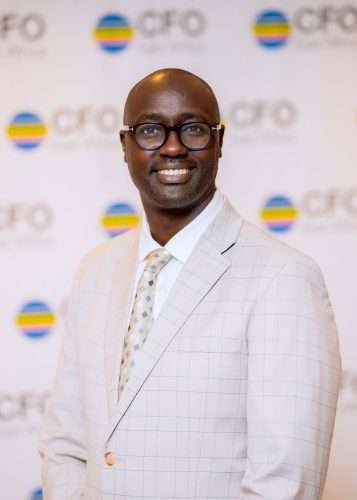
CFO and executive coach Jay Atara outlines the vital transition from a numbers-focused finance director to an influential strategic partner. Drawing on deep industry experience and the rise of AI, he delivers a roadmap for finance leaders ready to step off their technical island and lead with commercial foresight.
Twenty years in finance have taught me that the step from finance director to CFO is won away from numbers. You do not become a CFO by getting better at finance; the move requires a change in how you see and work inside the business. Storytelling, motivating teams, and owning decisions without spreadsheets are what test people. Finance chiefs rarely fail on technical ground, but on communication and relationships. Skill gets you the seat; it is seldom what loses it.
Finance departments often end up on an island, talking mostly to themselves. A finance director can run that department well and still be marooned, invisible. But a CFO cannot afford an inward-looking function. The job is to lead the team into operations, becoming accountable for the company. Many stall because they were promoted for running the island, whereas the CFO job asks them to lead the team off it.
A finance director’s defining question is whether numbers are right; the CFO’s is what to do about them. Finance directors answer questions; CFOs frame them so the executive team decides. Finance directors are paid for precision. CFOs are judged on foresight, capital allocation, and whether the business remains standing in three years. Part of the CFO’s job is reading the weather three years out, accepting that you will sometimes be wrong.
Early in my first CFO role, my CEO corrected me: he needed drivers underneath the P&L, in business language. The P&L tells you what happened, drivers tell you why, and business tells you what it means. A finance director stops at the first; a CFO must arrive with all three. Establish what the board knows and what decision they must reach. Build backwards from there. A CFO works out what the room needs and builds towards it. Simplifying is harder than analysis because it forces you to stand behind what actually matters.
While a finance director manages down, a CFO works sideways through influence. The clearest test is when the CEO designs new strategies: a CFO must be in the room while plans are being shaped, assessing risks early. An involved CFO can say, “not like this, but here’s how,” rather than vetoing at the approval gate. A five-year plan built alone lands with a thud. Share assumptions while forming and pull people in early. Coffee with the operations chief ensures that tough conversations go differently because you spent the prior year as a partner.
Leading sideways, building people
Finance directors often rise by fixing things, but as a CFO, this instinct becomes a ceiling. Step in to rescue work that should sit with the team and you end up overloaded while your people stay underdeveloped. The question must change from, “how do I fix this?” to “how do I build people who fix it without me?” It also takes nerve. CFOs eventually face decisions where every option carries risk – such as restructuring an underperforming report or backing a founder’s instinct. Waiting for certainty is itself a decision, and usually the most expensive one.

The risk register now includes sustainability, cyber, and AI, widening the gap between technical change and missing soft skills. The profession has reached for new titles like chief value architect or chief finance and value officer (introduced by Stanbic across several markets), demanding someone who designs how value is created. A value driver is a real force, not a cell on a spreadsheet. Diesel sits in a cost model until war in Ukraine reorders supply and costs spike. CFOs must see the cost coming and move the price before it arrives so margins hold. Yet, surveys show only a quarter of finance leaders lead discussions on these drivers.
Routine forecasts are moving off the CFO’s desk. Yet, while nearly nine in 10 finance chiefs call AI vital, usage sits in the low teens. AI supports judgement; it does not build trust or read a room. AICPA and CIMA’s Rise2040 initiative, surveying over 6,000 members across 25 countries, found that humans remain in the lead. Daniel Burrus noted there is no such thing as artificial wisdom. Wisdom is knowing when data misleads, when an answer is correct but ethically wrong, and when a business needs an insight it has not yet learnt to ask for.
The path from CFO to CEO is well worn: around one in five chief executives once ran finance. Regionally, Nelson Rwihula (UAP Insurance Tanzania), George Odenyo (American Tower’s Kenyan business), and Absa Bank Kenya’s CFO stepped up. Research into 1,000 transitions warns that former CFOs run companies profitably but lag on growth, with fewer than one in 10 reaching top-tier performance. Caution can hold back a CEO who never unlearns it.
If you are making this move, consider: do you explain the past or shape the future? Who outside finance trusts you as a partner? When did you last change a major decision through influence rather than authority? What are you still solving personally that your team should own? If AI produced every report, what would you do? The leaders who make this leap well stopped defending numbers and started explaining what they are for. It is about being the person others turn to when decisions are bigger than numbers. The machines will take the half of this job that can be written down. What is left is the half that was always the point – and it belongs to leaders willing to grow into it.