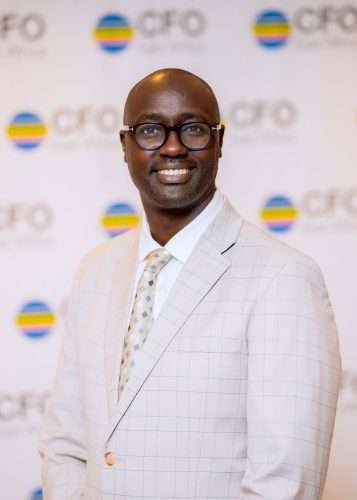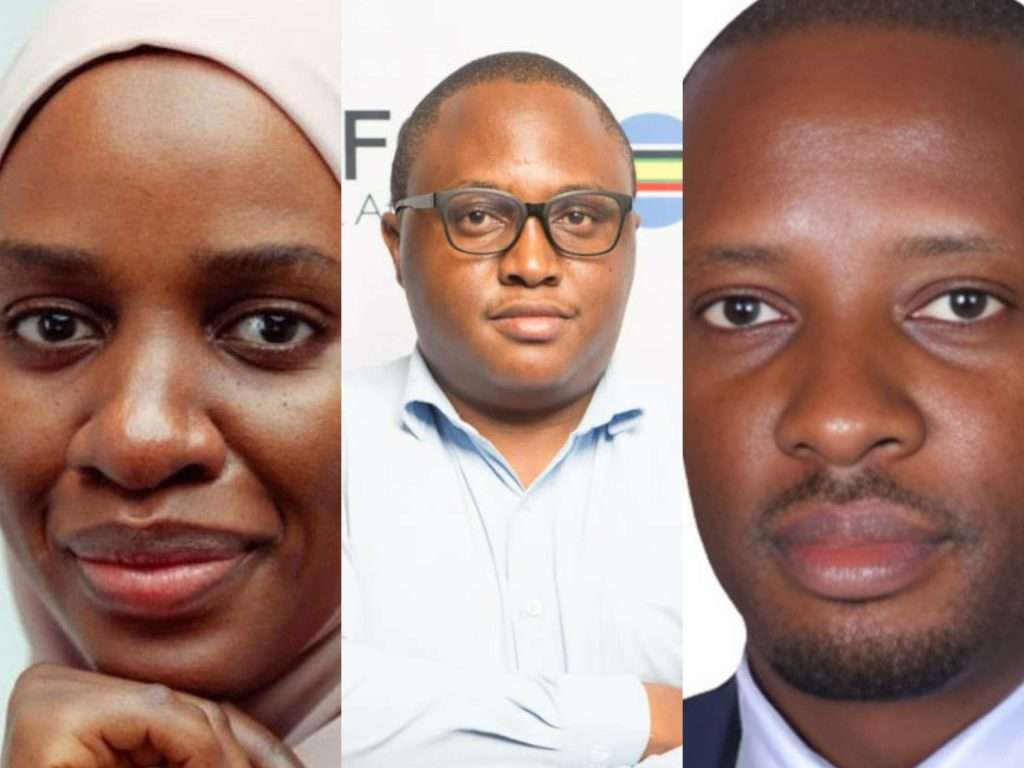
Artificial intelligence is reshaping the way business is done across the world, and finance is no exception. Kisima Farm CFO Francis Ngumbi, Liquid Intelligent Technologies CFO Shime Baligira, and Deposit Protection Fund Uganda finance director Dr Michael Lugemwa share their thoughts on the risks and benefits of generative AI.
According to EY's 2024 Global Corporate Reporting Survey, 57 percent of investors believe AI could prove very useful as a tool to assess the credibility and accuracy of financial and nonfinancial disclosures, while 52 percent think it could be used to assess alternative data. More than half (51 percent) believe it could help to spot discrepancies in company disclosures.
While some finance professionals remain cautious about adopting AI, many are already leveraging its capabilities in their day-to-day work. Liquid Intelligent Technologies CFO Shime Baligira is in the latter group. She reveals that AI has drastically cut the time she spends on demanding tasks, freeing her up for more strategic concerns.
“I don't have to make a budget for two weeks. I can make a budget in a day. I need a budget for next year. I'm able to use AI to help me do that quicker and faster. So, we will be making faster decisions and faster implementations. But I think it's how we use it,” she says.
Shime is grateful to her employer, who she says has provided training to improve staff’s AI literacy. She has also been taking free courses online to improve her prompt engineering. She advises those who are apprehensive about the fate of their jobs to learn to leverage AI for improved performance. Shime also cautions finance leaders against being complacent, saying they should anticipate the different ways AI could disrupt their industries and prepare for this.
“I know there are some ethical issues with it in some cases and confidentiality issues. But there's always good in it. It's how you use it. Even scientists make bombs and also make medicine. We've been dealing with a lot of heavy processes that are still so manual that, for me, I look at it as a blessing. If it's going to take away the time that I would take to do mundane tasks, or if I'm able to automate my invoice processing, it's not that I'm going to let go of the accounts payable person. I want to use them to do something else. We'll still need to be involved because it's still data-driven. We need to learn before it outpaces us,” she explains.
While Kisima Farms CFO Francis Ngumbi shares some of Shime’s optimism, he is of a more cautious view.
“I remember at some point in one of the CFO East Africa summits, we had a huge conversation around AI, and different discussions were brought up. I think my view was more refined during that process. Now, my view is we should be cautious. We should have the controls framework to protect our data as any business against sharing of information across. We have not implemented AI in our businesses as of now. However, I'm sure in the future we will,” he explains.
Francis predicts that certain areas of finance will be fully automated in the near future, completely recasting the CFO role. In his estimation, CFOs will fully pivot to value addition, a function he believes will remain the preserve of humans.
“Understanding what we call supply finance is something that no computer will ever do. Understanding issues about tax is something you cannot have a conversation with a machine about. So, you have to have that interaction. I think AI assists, but then, as a business, you need to have a very clear policy and control framework before you roll out. Be very clear, first of all, about what we cannot automate,” Francis explains.
The United Nations has flagged the confidentiality and security risks posed by generative AI, noting its potential for spreading misinformation, violating privacy, and enabling cyberattacks. The UN has called for stronger safeguards to protect data and human rights. Deposit Protection Fund Uganda finance director Dr Michael Lugemwa believes AI users should be aware of these risks and take measures to ensure ethical use.
“For example, if you go to ChatGPT and ask it to give you something, you're aware that it can be wrong. So, it means you also have to quality-assure what you get from ChatGPT or any other AI platform. Also, it is important for awareness sessions to be given to staff within an organisation to appreciate some of these challenges with AI. Because if you know that you're dealing with a sensitive document, then you might not subject it to AI or ChatGPT. Once you're aware that you're dealing with a sensitive report, then you'll know how to deal with it and the risks of exposing such a document on an AI platform. Let people know the benefits of AI, and also let all staff know the drawbacks of AI. Once you're aware, then it's easier to deal with them,” he says.
AI has become a large part of Michael’s daily routine, as he often uses it to develop reports and presentations. He has also taken it upon himself to make others aware of its capabilities.
“Recently, I was with someone on Saturday, and he wanted us to sit and draft a letter. Of course, he had no idea about Copilot, but I had used it, and I use it often. So, I told him, ‘We are not going to draft the letter from scratch. We're going to go to Copilot.’ We put in the parameters we would want in the letter. I told him they won’t be proper sentences, but once we put the command to draft the letter, it will draft it in the proper way,” Michael explains.
He adds: "So, we took time putting in lines like, ‘The letter will be addressed to this, copied to this one, the letter is about this,’ so the content we were expecting to be in the letter, we tried to put them in the AI. Then, I clicked submit, and when we read the letter, my friend was so surprised. The thing had written the letter and had incorporated all our ideas in proper sentences. You have a Word document, and you tell Copilot to create a PowerPoint for you, and it will pick up the key issues in your Word document and create slides. I use it to take notes, and it can transcribe. So, anyone should be able to embrace AI because it will simplify your work."