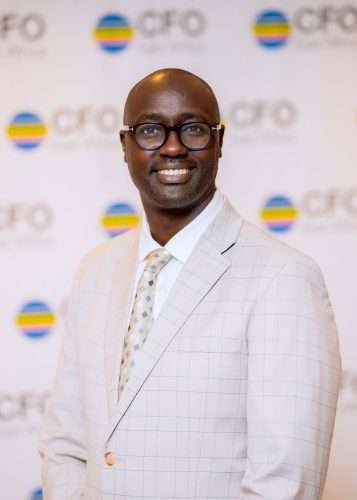
Standard Chartered head of wealth products for Kenya and East Africa Ouma Orero shares insights on how CFOs can structure cross-border wealth in an era of global volatility.
Ouma addresses key considerations including currency management and tax complexity.
CFOs in East Africa are increasingly overseeing operations across multiple jurisdictions. What key considerations should they bear in mind when structuring cross-border wealth to balance compliance and asset protection?
Because CFOs in East Africa increasingly manage operations across jurisdictions, it is crucial to structure their cross-border wealth cautiously.
2025 underscored that reliance on a single strategic direction amidst an increase in global volatility, which CFOs were at the epicentre of, presented considerable risks. This lesson extends to personal wealth, where concentrating assets in one jurisdiction or investment vehicle exposes individuals to heightened vulnerability.
As a global wealth manager, what we have seen invaluable in the wealth journey is that clients benefit significantly when they adopt a global investment framework: Planning for today, tomorrow and forever, a time-tested approach that gives a broader look at the investment priorities and can be introduced at any point of the conversation.
How are recent shifts in tax regimes shaping cross-border wealth management for senior executives in East Africa?
The East African tax landscape presents opportunities and complexities for CFOs seeking to invest across borders. While each East African country maintains its own progressive income tax regime, it is important for investors to understand the tax implications. The East African tax landscape offers a dynamic investment opportunity. Capital gains tax and withholding tax are great to consider. Importantly, financial partners can collaborate with external tax experts to help navigate intricate tax challenges for executives in East Africa.
Currency volatility is a persistent challenge in East Africa. What strategies can CFOs adopt to manage personal and family wealth across currencies while mitigating risk?
Currency swings can chip away at both asset values and purchasing power, so diversification across currencies and asset classes is the first line of defence. Above all, proactive monitoring with experienced advisors allows a family to rebalance quickly as market conditions evolve, turning volatility into an opportunity rather than a threat.
We recommend starting with a stable, diversified core portfolio tailored to one’s goals. It helps navigate market ups and downs, reduce emotional decisions, and smartly accumulate returns while managing risk.
Many finance executives are first-generation wealth creators. How can cross-border structures like trusts support long-term goals such as succession planning and intergenerational wealth transfer?
For first-generation wealth creators, trust is key to building a lasting legacy. It starts with clear long-term goals (philanthropy, funding education and family governance), choosing a stable jurisdiction with strong legal protections and regular reviews to ensure the trust adapts and complies, protecting your intent across borders. In conjunction with our partners, we help clients navigate legacy planning to protect and transfer wealth across generations, recognising this as an emerging need.
In protecting clients, current and future wealth is key. A solid protection plan safeguards against uncertainty, covers their loved ones, and preserves their legacy by shielding both their assets and future earnings. It ensures their financial goals stay on track and helps them leave a meaningful legacy.
With regional integration through the EAC and AfCFTA advancing, what opportunities do CFOs have to leverage cross-border investment platforms and banking networks to grow and diversify wealth?
The march toward regional integration is expanding opportunities for investors. Beyond traditional diversification, CFOs have network and cross-border investment platforms to reach broader capital markets and sector opportunities.
With this, a financial institution with cross-border advantages such as trade and treasury capability, Africa-Middle East-Asia corridor coverage and digital trade platforms becomes key to CFOs with cross-border portfolios. Even more relevant, a partner with automated supply-chain finance, multicurrency liquidity pools, and seamless FX/settlement rails that allow them to move goods and capital across borders quickly and at scale.
Sustainability is high on the corporate agenda. How can personal cross-border portfolios be aligned with ESG principles, and what role do institutions like Standard Chartered play in facilitating this?
Aligning a portfolio with ESG values begins with identifying factors that matter most to the investor; environmental sustainability, social justice, or strong governance. From there, ESG analysis can be incorporated alongside traditional financial metrics, guiding both asset selection and performance measurement. Impact and thematic investing provide further opportunities to generate measurable change.
Standard Chartered brings market leadership, tailored ESG products, and global infrastructure that make it easier for individuals to put their principles to work across borders. A good example is our recent role as a joint lead arranger and placing agent in Safaricom's KSh 40 billion domestic medium-term notes (DMTN) programme, where we advised on the structuring of the programme and the distribution of the inaugural tranche – as well as the sustainability co-ordinator, where we assisted Safaricom in establishing its sustainable finance framework and green notes structuring.
What innovative channels or structures can CFOs use to access international markets while staying compliant with local regulations?
Accessing global markets while staying on the right side of local regulation requires creativity within the law. What we have confirmed to work for clients is availing a pool of global fund houses to help distribute mutual funds and bonds. Standard Chartered, for instance, partners with Black Rock, BNP Paribas Asset Management, Franklin Templeton Global Funds, Investec Asset Management Hong Kong, PIMCO Asset, JP Morgan Asset Management and Alliance Fund Distributors, among others.
How do you expect geopolitical shifts to impact the ability of East African CFOs to manage and grow wealth across borders?
Geopolitical currents can ripple quickly through East African markets. Upcoming elections in key economies, unrest in the Middle East, shifting U.S. trade and tariffs have had grave impact on economies. The best defence is a disciplined strategy grounded in diversification, liquidity, and regular portfolio reviews, supported by trusted advisors who can help pivot as global realities evolve.