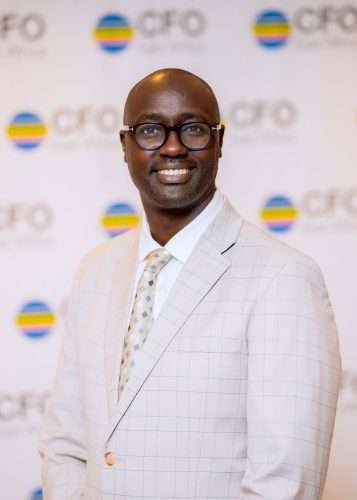
Kenya’s e-mobility landscape is growing in leaps and bounds, but players in the industry are still facing challenges in scaling up adoption. Watu Credit head of finance Steve Onyango, who is also the treasurer of the Electric Mobility Association of Kenya (EMAK), reveals what it would take to de-risk financing and create a friendly policy environment for the adoption of electric vehicles (EVs).
EVs have high upfront costs compared to internal combustion engine (ICE) vehicles. From a financing perspective, which models can make EV ownership viable for individual operators and SMEs?
When we started going into the EV landscape, the cost of EV compared to ICE was approximately 2X. As we speak today, the cost has gradually reduced to almost 1.2 X. Initially, the production cost of the battery was expensive, making the EV asset pricier. We've had a lot of technological advancements via robust research and development in battery manufacturing, which has drastically reduced the cost.
The biggest contributor to the reduced EV cost is the swap model as opposed to the self-charging model. This is where you can swap one battery as the other one charges. With that model, you don't own the battery - you ideally lease it. The cost of the EV will be maybe 20 percent more, because you're not buying the bike and the battery.
With fiscal incentives, locally assembled EVs would be cheaper than completely knocked down (CKDs) or fully built-up units (FBUs) imports. CKDs also would be more affordable than FBUs.
As an EMAK official, you actively engage policymakers. Which key government incentives are still lacking, and what policy changes would have the most immediate impact on accelerating e-mobility adoption?
We are currently working on a white paper. We collect the views of all our members and their pain points hindering growth, such as tax incentives and highlight them. This white paper is what we will use to engage the treasury and other relevant government authorities with the hope of lobbying for provisions in the Finance Bill 2025 before it turns into law.
Part of the lobbying justification includes doing a cost-benefit analysis. We can showcase what the advantages of EV adoption will be to the government agencies. Last year, we looked at four tax areas: excise duty, import duty, value-added tax, and corporate tax. We were pushing for zero-rating for most, if not all categories, including for charging infrastructure and batteries.
We also have situations where we engage government stakeholders and discuss subsidising charging infrastructure and encouraging the construction of battery swap stations. The government can also incentivise manufacturers by giving carbon credits for reduced carbon emissions.
Watu Credit finances a significant number of two and three wheelers. Which unique financial risks do you face in the EV sector, and how do you mitigate them?
Being a BNPL financier, Watu has been able to plug a gap that traditional commercial banks have been risk-averse to. We have done so by creating a financing model that de-risks the concerns of traditional banks.
We have a digital loan management system that integrates with a hybrid collection system to handle digital and cash payments including digital reminders that enable us to understand payment patterns and manage customer risk. We also have a strong on-ground repossession team with very clear procedures, practices, and processes that humanely reduces the repossession time. When you get a bike from us, we get insurance that acts as a safeguard for the insurer and the lender if it's stolen or damaged.
Specifically for EVs, we rely on telematics data to understand aspects like vehicle utilisation to assess rider income, identify vehicle location in case of default and evaluate battery health together with original equipment manufacturers (OEMs). We have a vibrant secondary marketplace where we obtain a high residual value for repossessed EVs via tie-ups with EV ecosystem actors. We also prioritise financing with OEMs that offer quality assurance through extension of warranties and strong after-sales service.
Government incentives aside, which role do private investors, lenders, and companies like Watu Credit play in building the necessary infrastructure to make e-mobility scalable?
Private investors play a big role. Most have huge investments in manufacturing plants and battery charging stations. They've also managed to partner with commercial banks and other financiers to provide capital. They need to partner more with the government through various fiscal incentives, like reduced taxes and subsidies on lease-hold land just to see them expand a bit faster.
Countries like Rwanda and Ethiopia are making big policy moves to push EV adoption. What lessons can we learn from other African markets to improve e-mobility financing and policy?
There are many lessons that especially the government can learn, and most border on the incentives given to private investors. For instance, Ethiopia has banned the importation of ICE vehicles, forcing drivers to switch to EV, Rwanda has several fiscal incentives that support both the manufacturing and financing of EVs.
There are huge incentives, ranging from VAT, import duty, excise duty and even corporate tax that can be introduced to support the EV industry.