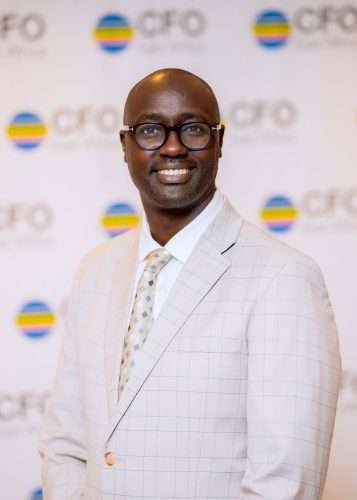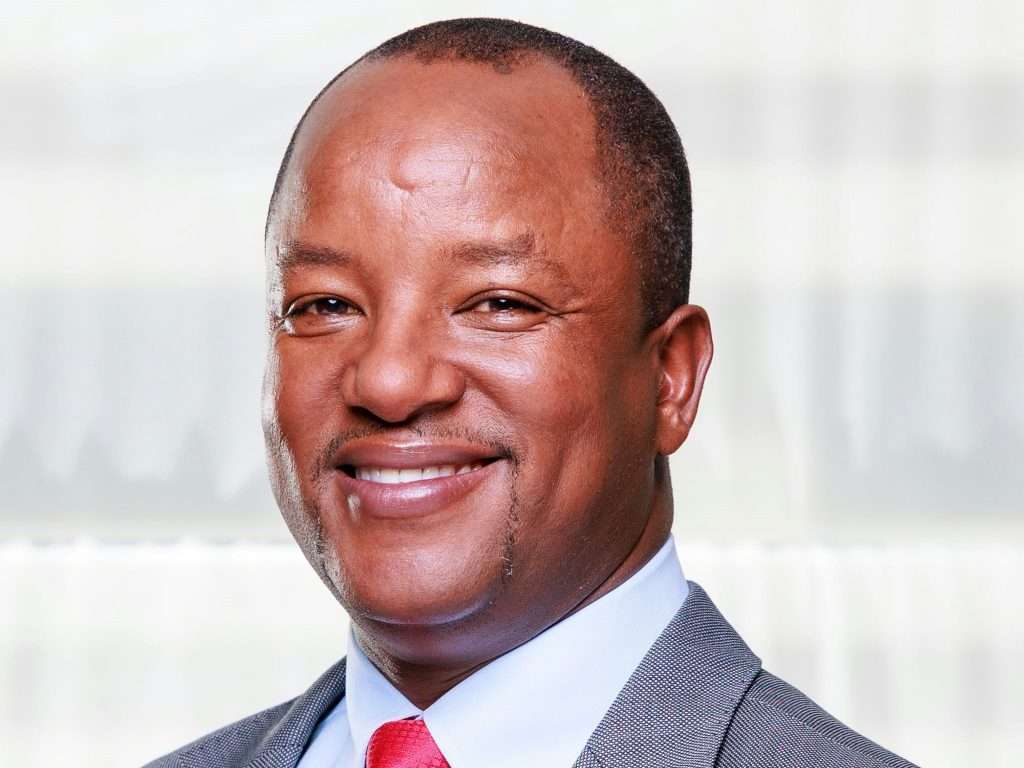
Absa CFO Yusuf Omari graduated from the University of Nairobi on a Friday and began working the following Monday. Since then, his career has been a series of strategic masterstrokes that paint a picture of a leader adept at navigating the complexities of his role while driving growth.
Yusuf Omari was in his fourth year at the University of Nairobi in 1998. He had one semester left, but he was already fielding offers from two of the Big Four audit firms.
“I was successful at PWC and KPMG. At that time, Africa Online was a big company, so they also gave me an offer. And I was telling myself these guys are giving me offers, but they don’t know what could happen in my last semester. I chose KPMG. There were quite a number of us. Nine gentlemen and nine ladies,” he said.
Although Africa Online had offered Yusuf twice as much as he would earn at KPMG, his career trajectory was the main concern at the time. At the firm, he found himself on a steep learning curve, working 17-hour days and handling audits for a variety of clients, including banks and manufacturing companies. But Yusuf was excited to be serving a range of clients from different sectors of the economy. Two years soon flew by, and a new challenge came calling.
“KPMG opened an office in Rwanda, and one of the managers went to start it. He would later become my best friend. His name is Patrick Nyaga, the MD of CIC Group now. So, he went to Rwanda and started the office. Six months down the line, he requested support. And no one wanted to go for it. Once you start at an audit firm, chances are you'll continue with the clients you start with for the next five years. No one wanted to go to Rwanda because you literally lost your clients. We went through the process and my name came up together with another lady. So, the two of us went to Rwanda for six months,” Yusuf remembered.
He spent the next six months counting down to the day he would return to Nairobi, certain he would make it in time for the interim audit. His job as Patrick’s second in command required him to recruit staff, write proposals to clients and conduct training, a far cry from his audit work in Nairobi. The team’s initial reluctance thawed, giving way to excitement. When the time came to return to Nairobi, the team decided to stay.
New horizons
“Because we got so many clients, we started getting people from Nairobi just to come and do a specific task or audit or consultancy. And all those guys who came from Nairobi would finish the task in a month and refuse to go back. I was in my third year at a big audit firm leading an audit of the biggest telco in Rwanda. None of my colleagues in Nairobi was doing anything close to that,” Yusuf explained.
When his boss Patrick took up a job at Absa (then Barclays Bank), Yusuf stepped into his shoes and began to lead KPMG Rwanda as manager until a position arose in the internal audit department at the bank. Yusuf described the decision to move as a “no brainer”, as he felt the firm had attained maturity. Six months after he joined the bank, Patrick left, and Yusuf applied to lead the audit department.
“I went and did an interview with my MD at that time as part of the process. He was meeting me for the first time and he asked me if I was married. I told him I wasn’t. He also wanted to know if I had any children and if I had been in a director role before. He told me he had already received recommendations to appoint me and would not stand in the way of that, but that I would be monitored for six months,” Yusuf recalled.
The board audit committee chair at the time, Rose Ogega, who is Yusuf’s mentor, informed him that he would be monitored for six months before a decision was made. Three months in, he was appointed as director of internal audit, with glowing recommendations from the bank’s leadership. After four years in the role, he was ready for a different task.
“I applied for the position of compliance director. My boss in London got to know about it when I had the offer. He asked me to stay and assured me of a promotion. And to sweeten it, he invited me to work in London for three years,” Yusuf said.
Sweeping changes
Yusuf checked into the Hilton London Canary Wharf on a dark, snowy evening in November 2008. At 7am the next day when he began his walk to the Barclays offices, it was still dark. By the time he arrived, he had made his decision, assuring his boss that he would find a suitable successor.
“So, I did compliance for one year. And then the vacancy for the finance director came up. I thoroughly knew the business. The element of who I am was not there anymore. The advice the MD gave me when I started was to punish myself for the next one or two years and invest a lot of my time in understanding the business and its key areas of focus. What are the key drivers? What do we measure, the KPAs we’re looking at? How are we linking these to our strategy? And I did exactly that. I punished myself for two years, doing crazy hours,” Yusuf said.
His appointment as chief finance officer at Absa was marked by significant changes to the department to align with the bank’s strategic priorities.
“I brought a lot of talent into finance. And that really defined my career since then. And I did the role very well, getting good ratings, getting good appraisals all through,” he said.
Two years ago, Yusuf was tasked with leading the bank as the acting managing director.
“One of the key success factors I'll always say for any CEO is managing your external stakeholders. Because managing internal stakeholders is easy. You're meeting people on a daily basis. But out there is where a CEO is needed,” he reveals.
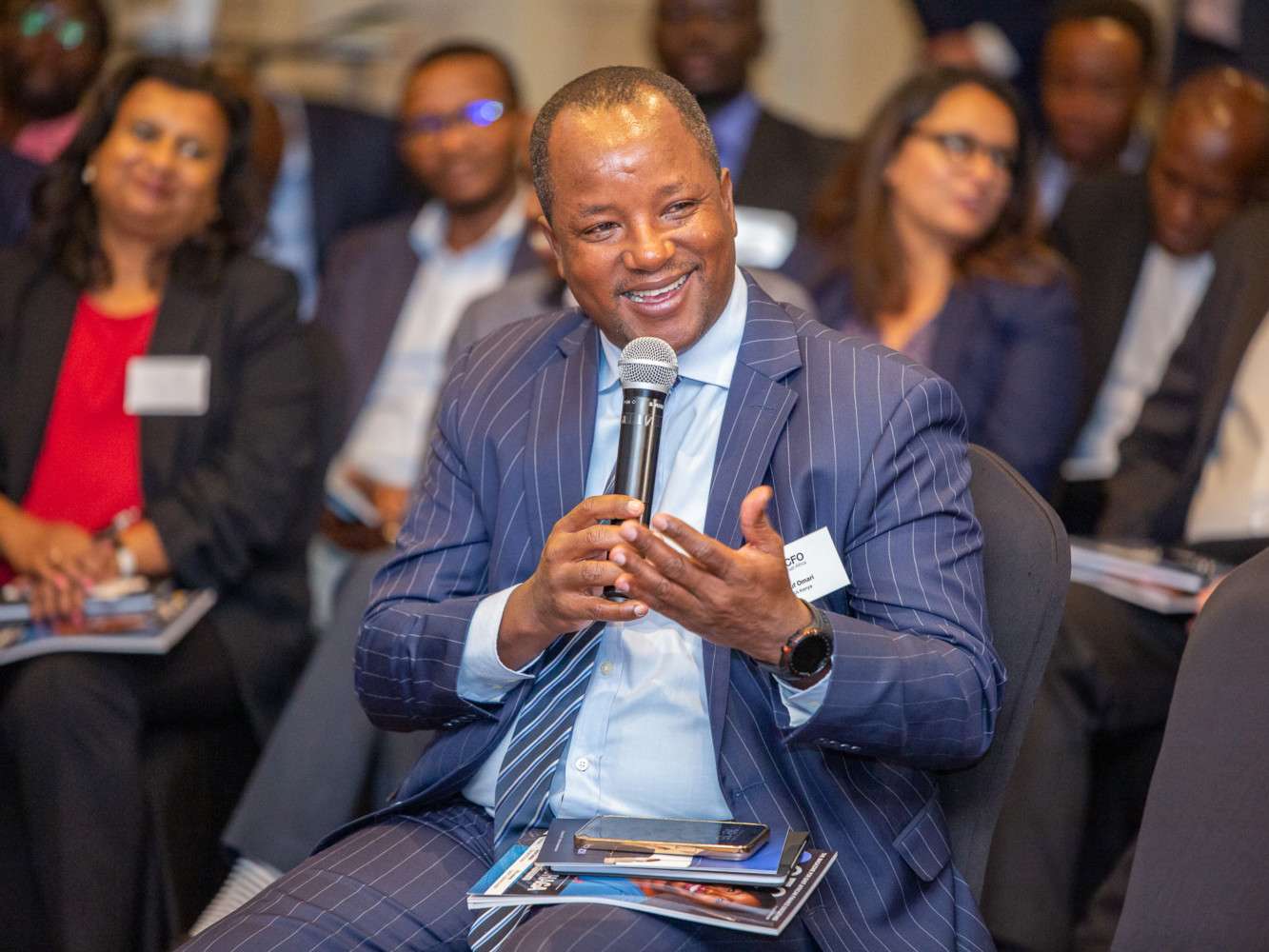
Soon after the appointment of Abdi Mohamed as the Absa managing director and CEO, Yusuf’s role was expanded to include sustainability, strategy, and transformation. In November 2025, he took home the Compliance & Governance Award at the 2025 CFO Awards for East Africa.
Strategic direction
Yusuf reveals that Absa is now keen to adapt to changing trends in the financial services industry by diversifying its product offerings and partnering with telcos and fintechs to leverage their large customer base and technology. To this end, the bank has shifted its traditional reliance on interest-based income to generating non-interest revenue streams such as bancassurance and digital finance. Emphasising collaboration with telcos and fintechs.
He believes that embracing digital transformation and offering embedded finance solutions like digital lending, savings and insurance has placed Absa ahead of the curve. The bank has also integrated sustainability into its strategy and has begun encouraging its clients to adopt ESG practices as an incentive for financing.
With his plate now full, Yusuf has been keen to empower his team and create a positive impact on them. He often brings his direct reports into meetings with the MD to accustom them to relating with the company’s senior leadership. The resulting confidence this has built in his team members is a point of pride for Yusuf and a large part of what he hopes will be his legacy.
“By the time I'm retiring, I want to be able to look back and say we were the pioneers of this bank, of the strategy of this bank. And so, when the bank is doing well, we're always saying we made the right call. Today, whenever we’re making any investment decisions, it’s not for the short term. It’s actually for the long term. So, the success of the company, for me, is one big area that I’m looking at,” he said.