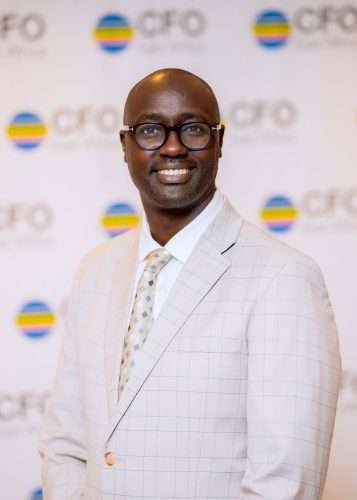
Absa Kenya announced its half-year 2025 results, reporting a nine percent rise in profit after tax to KSh 11.7 billion despite a drop in revenue. CFO Yusuf Omari highlighted how strategic repositioning is preparing the bank for a rebound in lending.
Absa Kenya’s half-year results reflect the sharp drop-in interest rates late last year and the subsequent adjustments. The company reported revenue of Ksh 31.5 billion, a one percent year-on-year decline, as lending fell by four percent to Ksh 305 billion and foreign currency trading income dropped by 14 percent.
Operating costs increased one percent to Ksh 12.3 billion, with efficiency gains bringing the cost-to-income ratio down to 36.4 percent. Loan impairments dropped 38 percent to Ksh 3.2 billion, cutting the loan loss ratio to 2.1 percent. Liquidity remained at 45.5 percent, while return on equity rose to 26.5 percent, well above the 18 percent cost of equity.
While announcing the results, CFO Yusuf Omari explained that the bank had changed how it raises funds to cushion the impact of lower interest rates. He projected that strong cash reserves and better loan quality would help the bank grow lending to businesses in the second half while keeping profits and credit standards above industry levels.
“We saw the six-month T-bill, for example, coming down from a high of 17 percent to around 8 to 8.5 percent, and this sharp drop happened within a short period. In line with the Absa base rate, we kept repricing as rates declined. We have also seen FX stability for over a year, with the rate hovering around 129. All these benefits have been passed on to our customers,” he said.
A clear shift
Yusuf pointed to a clear shift toward cheaper transactional deposits, which now make up almost two-thirds of the total, and a reduction in term deposits that carried higher costs. This change lowered funding expenses and left room for lending margins to recover in the second half. Although corporate lending remained steady, overall loans fell as households preferred short-term borrowing over longer-term commitments.
“Our focus is mainly on transactional deposits, so the proportion has gone up to 63 percent in this half compared to the previous half. On the lending side, corporate is one percent up but we have also seen preference for overdrafts, trade facilities, payroll loans and our Timiza products. It is a transition with the sharp drop in rates and issues to do with affordability. We expect in the second half to see this picking up,” he explained.
Because of weaker loan demand, Absa invested more in government securities, increasing its holdings by about 70 percent compared to 2024. The bank also boosted income from newer areas such as asset management and bancassurance. The company reported that assets under management doubled to over Ksh 30 billion, and it retained market leadership in bancassurance by profitability.
“The new revenue streams we have spoken about are picking up significantly. Our securities business has picked up very well with double digit growth rates. Revenues from bancassurance have also picked up significantly. The investments we have done in the past are now rallying up and cushioning the drop from the fall in interest rates,” he said.
The bank’s operating costs rose by one percent as it hired more customer-facing staff and invested Ksh 4 billion in technology and process automation. Yusuf credited this to gains from digitisation and reorganising teams to build more efficiency. This helped keep the cost-to-income ratio at 36.4 percent.
“From a headcount perspective the rebalancing I have mentioned is clear, with back-office numbers coming down. Renegotiation of contracts has also helped. Robotic process automation and automation of customer journeys are now coming to fruition. All this is showing in the ratio coming down over the years,” Yusuf said.
Careful execution
Absa’s loan losses fell sharply, with impairment charges down 38 percent. This was attributed to repayments, recoveries, and stable foreign exchange conditions. The loan loss ratio dropped from 3.3 percent to 2.1 percent, while the share of non-performing loans rose slightly to 13 percent, still higher than the industry’s 17.6 percent. The bank also set aside more provisions to cover potential losses, which Yusuf linked to active risk management and working closely with struggling customers.
“We have focused on recoveries especially on the corporate and business banking side. The FX stability for foreign-denominated facilities has been a benefit. Stage one has seen a lot of repayments coming through in this period. This has brought down our loan loss ratio to about 2.1 percent for this reporting period,” he explained.
Yusuf described the half-year as an exercise in careful execution in a tough environment. The bank executed landmark transactions, including being the lead advisor in a Ksh 2.5 billion rights issue and the dual listing of the Satrix MSCI World ETF. He revealed that focus for the rest of the year would be on increasing the bank’s lending to the private sector and keeping efficiency and loan quality ahead of the industry.
“Our focus will remain from a perspective of returns, which is why we have set targets to make sure our cost to income is low and our return on equity is at least five percent above the cost of equity. Sustainable balance sheet growth, diversification of revenue streams, efficiency and maintaining NPL ratios significantly below the industry will continue to be our focus. We are hoping that customers will now be able to embrace loans and advances in the second half,” he noted.