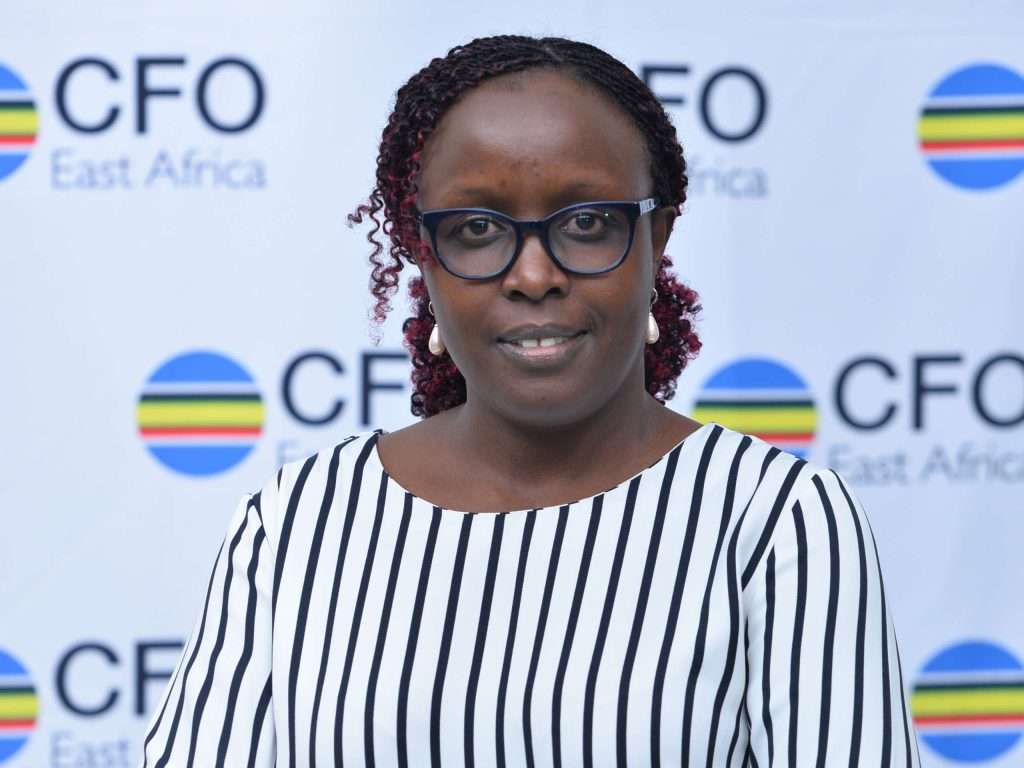
When Dorothy Kiprono took over as finance manager at Aerolink Uganda, she did not anticipate that one of her biggest challenges would be dealing with staff departures. She explains how she successfully managed a staff-turnover crisis and created a sound strategy for handling future exits.
In October 2021, when Dorothy Kiprono joined Aerolink Uganda, the airline was navigating a difficult transition, and there was growing speculation about its future. Consequently, staff began to leave in droves. At the same time, the business was heading into a high tourism season, and Dorothy, who describes herself as a “numbers person”, found herself suddenly responsible for holding the organisation together.
“People were leaving right and centre, and I wondered, ‘God, what am I doing? I don’t know where to start. If you tell me to sit down in finance, trust me, I’ll sit down and do the numbers. But here, an operations person was leaving, a pilot was going, an engineer was leaving,” she says.
The situation forced her to act fast and devise a plan to manage the exits in a way that would not disrupt the business. For Dorothy, this was a turning point. She developed a system that could absorb the shock of unplanned staff departures and began to see exit management as a proactive strategy.
“I had to have a plan. I had to be open to it and know that people could go at any given point. When you expect an exit, it rarely happens. So, if a pilot leaves, I need a plan B. Sometimes when you’re closed off, you don’t have a plan. But now, I have a strategy for managing exits,” she says.
In the process, she learnt to become more open-minded. She embraced being teachable and began refining her leadership approach. The lessons stuck with her, and changed the way she relates with her team. Today, exit planning is part and parcel of her management style.
Being prepared for exits
“In that period and the whole time after that, I think I’ve learnt a lot. So, I stand on two principles. Have an exit management plan and be willing to learn,” she says.
Kiprono’s approach to exit management is both practical and humane. She acknowledges the emotional toll that exits take on employers but believes it is better to prepare for them than to be blindsided.
“I always tell people, when people exit, it’s painful. As an employer, you feel pain. But as an exiting employee, you’re happy. You’re going for greener pastures, better places. But being an employer, you don’t want people to leave. Either way, all said and done, we have to be prepared and be ready and open that people will leave,” she says.
Dorothy’s views were shaped in part by an experience she had as an intern at Agricultural Finance Corporation (AFC). As a budding professional, she had hoped the three-month stint would turn into something permanent, but a conversation with her boss changed her perspective.
“The boss of the team told me, ‘I’ve been in this organisation for more than 30 years. I cannot tell you I have work experience. I have work history. Do you want to have work history or do you want to have experience?’ ” she says.
Room to grow
The conversation made Dorothy resolve to gain as much diverse experience as possible before settling into any one role. In the early days of her career, she adopted a ‘thousand-day rule’, spending three years in a company before moving on. Over time, her career took her beyond Kenya and into regional roles before she eventually joined Aerolink Uganda.
“It hit me, and I decided that if something comes up, I would take it. I have now been here for more than three years, because I have work experience. But before you settle, make sure you've sampled most industries,” she says.
Dorothy advises companies against assuming people will never leave, saying business leaders should prepare for such moments and ensure the organisation can weather the disruption.
“You have to change the culture that is in the organisation. You have to build a team that they want to stay with. It’s mostly on the leader. If the leader is not someone in sync with the employees, they will definitely leave. But if you’re working with them closely and they trust your leadership and guidance, you give them an opportunity,” she says.
These opportunities, Dorothy adds, should transcend job titles. In her experience, employees often exit because they lack room to grow. She advocates for creating an environment where they can try new things.
Succession planning
“You give someone a job and you lock them into that docket. If you’re doing payables, you just do payables. But these people want to grow. If you work with these people and you want to grow them internally, give them opportunities. Any opportunity that comes, let them have priority. Grow people internally. Let’s hire people externally unless you don’t have an option,” she says.
Part of Dorothy’s approach to exit management is succession planning, which she sees as a leadership responsibility. She works to ensure her team would be able to continue without disruption if she were unavailable for any reason. In her view, a well-run finance function must be able to function independently and as part of a larger, well-oiled machine.
“I always prepare my employees in the event that today I don’t wake up. Are there people who can take up from where I left off? Because I don’t want people to start sourcing from outside,” she says.
At Aerolink Uganda, Dorothy’s current focus is on building capacity within her team and ensuring that transitions do not put the business at risk. She believes this internal resilience will keep the organisation steady through seasons of change.
“I like starting from inside, unless I don’t have an option. That’s when I go outside. But I like building from within,” she says.