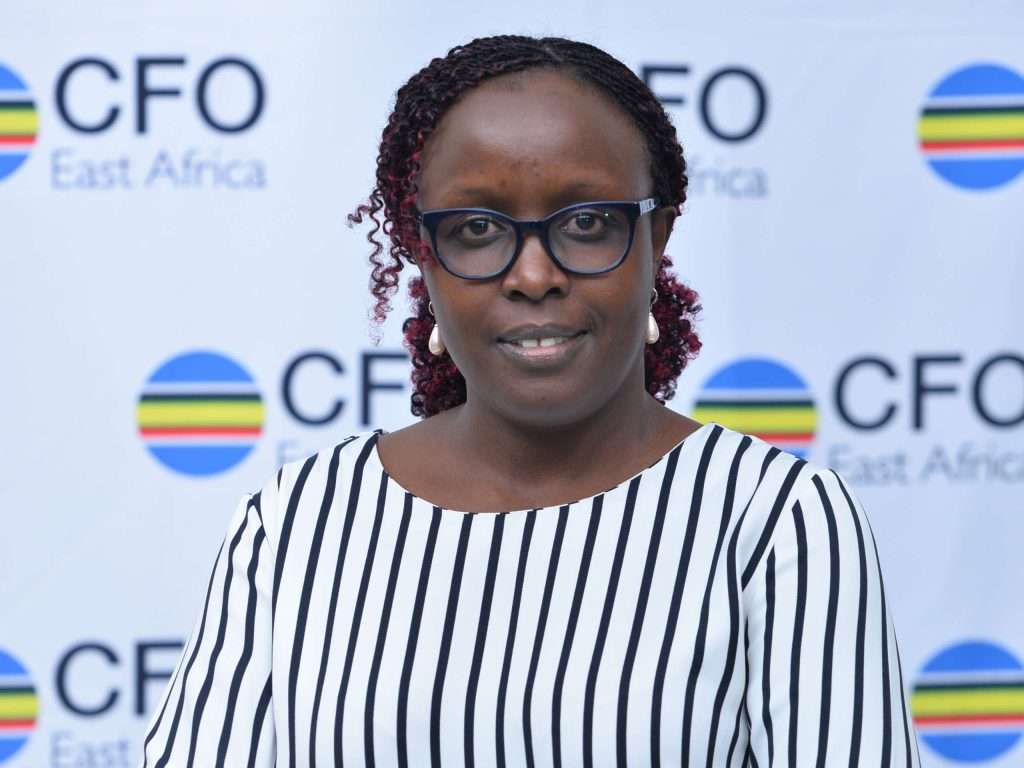
Aerolink Uganda head of finance Dorothy Kiprono’s journey exemplifies the power of adaptability. As a woman in a male-dominated industry, she is embracing every twist in her career with curiosity, while redefining what leadership looks like.
Dorothy Kiprono never imagined she would end up in finance. When she was a child, she thought she would study medicine. But hockey captured her imagination in high school, and her grades eventually slipped.
“I decided I would study accounting, but my dad did not want me to. He thought accountants were mean. He refused, but I stood my ground. I told him ‘I’m the one that’s going to have to live with my choice’. And that’s how I ended up studying accounting,” she says.
Dorothy took to accounting like a duck to water. Her natural affinity for numbers made it smooth sailing. But her day-to-day life as a finance leader in the aviation industry entails anything but numbers.
The industry’s volatility has demanded more from her than just a knack for accounting. As the de facto second in command at Aerolink Uganda, she has had to make a detour to business functions she was unfamiliar with in the beginning. But the shift has been exhilarating, as Dorothy thrives on the unpredictability.
“Lifting an aircraft is a cost on its own. Being a CFO now is more about operations than numbers. You give out the numbers, but you’re no longer the person who does them. You have to look at operations, maintenance and how everything runs. In aviation, maintenance is the worst cost after fuel. Spare parts are skyrocketing and sometimes you book something six months in advance and still don’t get it.”
After Covid-19, supply chains in the aviation industry were irreversibly disrupted. For Dorothy, this means anticipating Aerolink’s needs and making orders for aircraft parts months and sometimes even years in advance. It has also necessitated a pragmatic approach to employee turnover, which was her biggest challenge when she joined the Ugandan carrier. At the time, pilots, engineers and operations staff were leaving in droves, nearly throwing the company into disarray.
Passing on the torch
Every employer must have an exit management plan in place outlining a succession plan within the organisation. “People will leave, and every employer needs to learn more about it and be prepared. It shouldn’t be painful and employers should be ready to let them go, but offer some advice and be open. I learnt to have a plan B. If a pilot leaves, I need to know where to find another one quickly. It’s about fixing problems, not losing your cool,” she explains.
Part of Dorothy’s plan B centres on growing talent from within. She often gives her team members work she would previously have done herself. This way, they learn and take on new challenges, building trust in their own abilities. She also prefers to promote staff internally rather than hire externally.
With time, this has built loyalty among her team members, ensuring the company can run smoothly in Dorothy’s absence. Leadership, for her, is about leaving a legacy and building a team that can carry the torch when she is away.
“I don’t like doing most of the work myself. I have to leave people with something. I teach them so that when I leave, they have skills. I want to build a legacy. If I don’t wake up tomorrow, I want to know the team can take over. I prefer growing people internally unless there’s no other option,” she says.
In many ways, Dorothy is repaying what she has received in kind. She credits her boss for pushing her beyond finance and into operations, forcing her to adapt quickly. Through her mentor, G42 country general manager Rita Okuthe, she has also learnt to stay composed under pressure and fight for her voice in male-dominated spaces.
Proceeding with caution
“I never thought I’d be an operations person. I thought it would be all about numbers. But now, the people starting in finance should see themselves as more than just finance professionals. The role has changed, and you have to be ready for it. My mentor told me, ‘If you want to grow, you need to know how to handle people at the top’. She said men might dismiss your ideas just because you’re a woman. You have to be prepared for that battle,” she says.
Dorothy’s move from Air Kenya to Regional Air Services Tanzania in Arusha and eventually Aerolink Uganda in Entebbe required a fair amount of cultural manoeuvring. At the time, the finance manager position had just opened up, and her boss had asked her to go to Uganda on short notice to “salvage the situation”. She had to learn to navigate local customs with an open mind and respect differences while staying true to herself. This flexibility has made her a more effective leader.
“In Tanzania, there seems to be an undercurrent of tension between Kenyans and the locals. When my work permit expired, they gave me an hour to get to the border. But you have to live by the rules. In Uganda, women kneel when they greet their elders. It felt strange to me at first, but I got used to it,” she says.
Although Dorothy predicts that AI will revolutionalise the aviation industry, she remains cautiously optimistic about it. She is taking her time to understand it before wading in. For now, she prefers to watch from the sidelines as others test the waters, focusing instead on human-centred solutions.
“We’re the people who come in when it’s too late. AI will throw some of us out of business. If we embrace it too much, most of us will lose jobs. But humans will always be needed for implementation and review. For now, I’m watching from a distance. If it works for others, we’ll give it time,” she says.
Outside of navigating the turbulence of the airline industry, Dorothy recharges by sleeping and reading. She enjoys memoirs and biographies with former US president Barack Obama’s The Audacity of Hope topping her list. She also reads 48 laws of powers by Robert Greene religiously every year, finding new insights each time. Dorothy is also passionate about exploring new places.
“I loved Seychelles. It’s an island. I love nature and water. It’s green, and it’s not too populated. And you’re just somewhere there enjoying it,” she says.