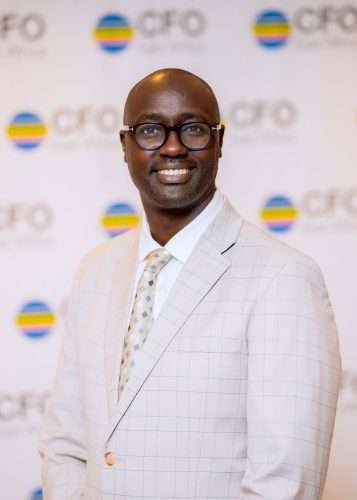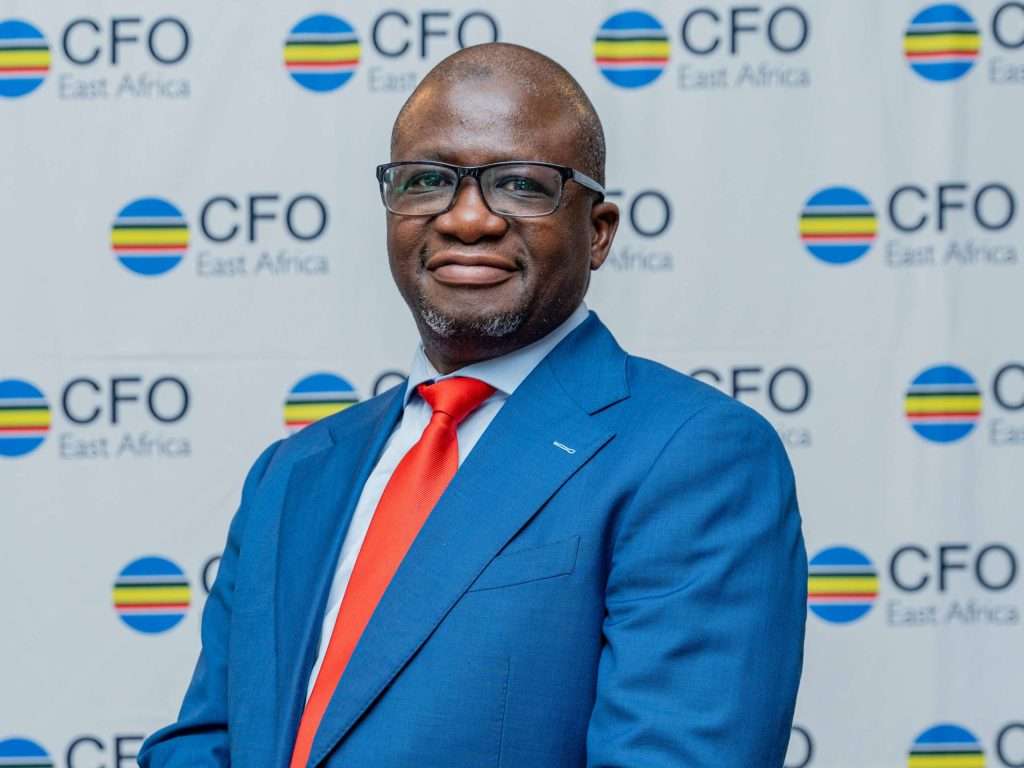
AGL Tanzania CFO Sekou Kaba reflects on a career that has taken him across Anglophone, Lusophone, and Francophone Africa. He reveals how he learnt to step back from doing everything himself and embrace leadership built on openness and trust.
Before Sekou Kaba joined the C-suite, he was fixated on results. As an accountant, he had been used to working alone. He often turned his work in early and was praised for his work ethic. But that approach fell flat when he became a leader.
“I was doing many things by myself. But my colleagues and subordinates thought I was not sharing enough. I was imposing things, not explaining. I was not able to communicate and share my passion for the numbers and processes,” he says.
Although that feedback was tough to receive, the experience marked a turning point for Sekou. He began to involve his team more, offering explanations instead of instructions. The impact of that shift became clear whenever it was time to transition.
“I decided to be more open, try to communicate with my team and even promote some of them. In all the locations I left, I was offered a lot of gifts and received a lot of recognition. It was heartbreaking and overwhelming. I still receive emails from previous colleagues today saying they miss me, that I was a great leader,” he says.
A Guinean national born in Gabon, Sekou is no stranger to transcending borders. His career took off when he joined Maersk Line after a client noticed his diligence at a small hotel where he worked. The company launched an Africanisation programme and gave him his first expatriate assignment in Liberia. He went on to work in Angola, Mauritania and Senegal, gaining a reputation for his internal controls and finance discipline.
“From there, I was supposed to return to Guinea, but they kept moving me to various countries. I didn’t go back to Guinea as planned,” he says.
Breaking language barriers
His fluency in French and English would open the next door. Bolloré Group approached him with a request: they needed a bilingual CFO in Gambia. From there, he was posted to the copper belt region of eastern DRC, where most economic players were Anglophone despite the country’s official language being French. It was a rare skill set and it made him a natural fit when an opening came up in Tanzania.
“The copper belt in DRC is more orientated towards the South Africa economic corridor, so most business is conducted in English. That’s why I moved there. They moved me to DRC, to Ivory Coast and then later to Tanzania. Being a bilingual CFO enlarged the opportunities to relocate easily in the different language zones,” he explains.
As he moved across these countries, Sekou began to unlearn the instinct to compare. He recalls his arrival in Lusophone Angola, where the language barrier made him feel as if everyone else was out of step with him. But over time, he realised the fault was in his perspective.
“You might not agree, but you cannot say that because it’s not part of your own culture, other people are wrong. There’s no right or wrong.. That distance allows you to understand and accept people the way they are. The first thing that you should keep in mind when you land in a different country is to learn and adapt,” he says.
Sekou finds comfort in the structure and clarity of finance, as the numbers have always been straightforward. But leadership tested that clarity. One painful experience involved a long-serving team member who committed fraud.
“Yes, we need to trust people, we need to empower people. But sometimes, you can be misled by a trusted employee. So, no matter your position, always maintain controls,” he warns.
Taking a step back
For Sekou, nurturing young professionals is the most satisfying part of work. He is quick to tell upcoming finance executives that his journey was fuelled by persistence, maintaining he had neither political ties nor a financial head start.
“Sometimes people feel that certain positions are only reserved for others because of their background or education. But we need to communicate that it is only due to hard work. That is what I try to show,” he says.
Two of Sekou’s former deputies are now CFOs themselves. Watching them grow has reinforced his belief in creating space for others to lead. He is keen to model what it means to be a good CFO, warning upcoming finance executives about getting trapped in technical details.
“A CFO should be able to differentiate between the operational business, the strategy and the internal control framework. He should guide his colleagues to achieve results while maintaining accounting standards. The added value I bring is advising the MD on how to achieve goals without compromising on compliance,” he says.
By his own admission, Sekou is a naturally anxious person. He tends to set impossibly high standards for himself and fixate on mistakes. But he has learnt to interrupt this cycle and step back when he is overwhelmed. The psychic distance allows him to approach problems with a fresh perspective.
“I just chill in a very cool and small atmosphere. No loud music. I talk with my peers about general things, but nothing specific to my work. I want to balance professional life and private life,” he says.