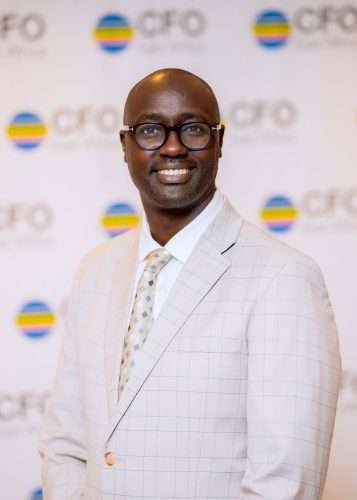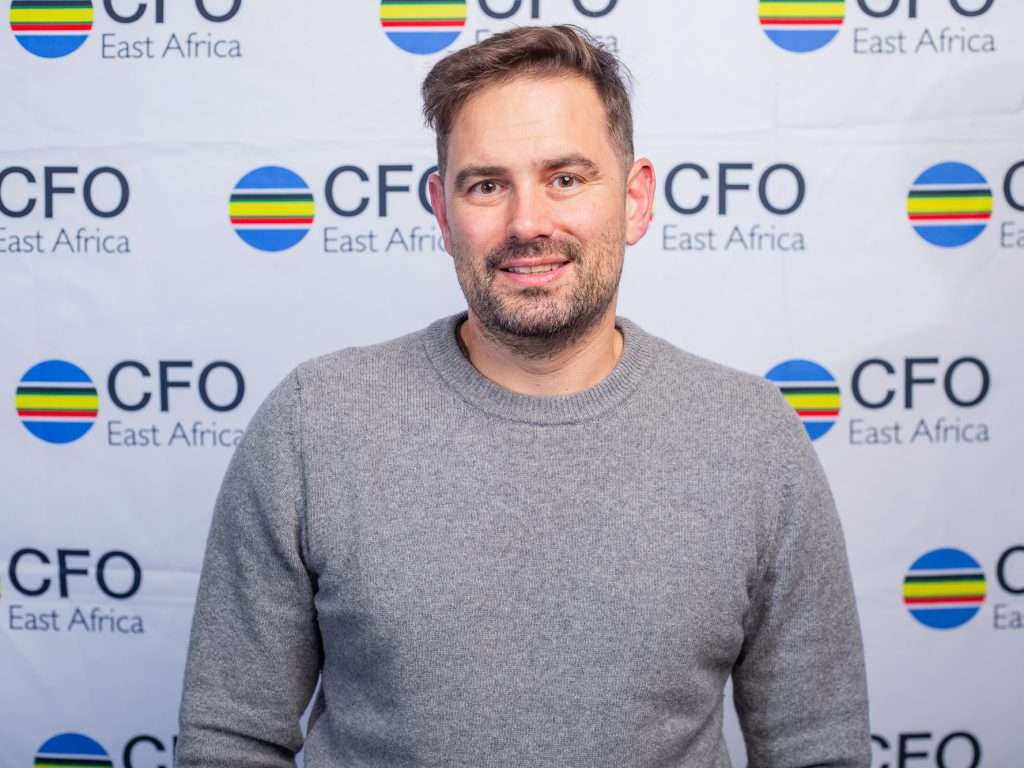
BasiGo CFO Jonathan Green is a man on a mission to transform Nairobi’s transport system. He explains how his desire to use finance and technology to drive social impact led him to create a start-up with an ambitious vision for e-mobility in Africa.
Jonathan Green wears many hats. Today, he is the CFO and co-founder of BasiGo, whose stated mission is to create a future of clean, electric public transport across Africa. He also leads the company’s ESG and HR functions. Although Jonathan cuts the figure of a man who shuns the limelight, BasiGo has been making headlines since its entry into the Kenyan market. Its electric buses, which now ply various routes across the city, are slowly changing the face of public transport in Nairobi, whose vibrant matatu industry has long been a cultural touchstone. Here, he feels entirely at home.
“In Kenya in particular, I love the fact that I can live and work in a city that is very metropolitan. I don't feel like I'm sacrificing anything compared to a lifestyle that I would have in London or New York. Yet at the same time, my work has an incredible impact and I get to work with incredibly enthusiastic, mission driven, and talented people. At the same time, I am so close to nature. We've got Mount Kenya and Mount Kilimanjaro, the two highest peaks on the continent just here, plus a beach holiday is just a 90-minute flight away. It's just the quality of life here. It's really enjoyable. I think it is now becoming a lot more like a cultural melting pot,” he says.
While he now has a clear-eyed vision for BasiGo, Jonathan’s path to where he is today was not cut and dried.
“I actually ended up randomly following a girl to work in Morocco for a couple of years. We started kind of a small business that renovated properties in the Fes Medina, which is one of the old towns there, turning wrecks of houses into little small guest houses that would probably now be on Airbnb or something. And mostly because my Arabic was bad and my French wasn't much better, I started doing a sustainable development Master's just to fill the time in the evenings. That’s when I got interested in climate change mitigation and then wanted to start a career where I could actually apply some of the skills I've learned in project management and finance in something that would actually have a bit more of a positive impact in the world versus just helping rich folks spend their money,” he says.
Switching gears
In 2010, Jonathan moved to Uganda and began working in the development sector, evaluating value chains related to technology adoption, such as small solar home systems, improved seeds and fertilisers for farmers, and cook stoves. He quickly realised that despite the clear environmental, social, and longer-term economic benefits of adopting new technologies, their uptake was often hamstrung by higher upfront acquisition costs, or the need for the end user to change their behaviour.
“So, I got excited about how to address these barriers. For example, you can use carbon finance to pay for some of the incentives required to adopt more sustainable farming practices. Similarly, solar home systems could be financed to match households' existing expenses on kerosene and candles. These insights led me to explore business models that could raise capital and scale these solutions,” Jonathan explains.
That was the genesis of BasiGo, which plans to replace internal combustion engine (ICE) buses with electric equivalents. To address the element of behaviour change, the company uses a pay-as-you-drive model or mileage-based lease that feels like the bus operator is paying for fuel. The leasing significantly reduces the cost of acquiring a bus, making it affordable for the end user.
“I feel generally that the approach should be ‘does my product or service have a positive impact on either the environment or social outcomes or ideally both?’ And the role of this is to then find the capital, either on your own balance sheet or through external investment, which can be aligned with meeting those development outcomes,” Jonathan says.

The company sources its buses from China and assembles them in Kenya. It has also built an in-house software platform that provides real time data about each bus, including its location, speed, and state of charge through a controlled area network (CAN). This gives owners insights into bus operations and allows the company to manage its e-bus assets on an individual and portfolio level. As the battery is the key component in the buses, the company must ensure its health remains intact throughout its expected lifespan. On the backend, BasiGo tracks outcomes such as kilometres driven and carbon emissions and manages its financial data and leases. The system allows Jonathan and his team to provide investors with impact metrics and data about financial performance.
“Balancing the trade-offs between investor expectations and fund-life for SSA start-up with building a profitable business is quite the tight-rope-walk. What I've seen here in East Africa and particularly in the B2C types of businesses is that they're small, their cash flows are incredibly limited, and they are very cash conscious. There's very limited access to credit and margins generally need to be very thin. And so, you really have to think about how you can bring your product or service to scale to achieve the impact you want. For asset intense business models like ours, this takes a lot of capital,” he adds.
The bigger picture
So far, the company has already expanded into Rwanda and is now looking beyond intra-city buses operating within the capital. According to Jonathan, one major selling point is that the electric buses can drive over 200 kilometres per day, lowering their operating costs and resulting total cost of ownership over its lifetime despite a higher purchase price. This promises a sufficient margin for financing and building the capital infrastructure required to operate the buses.
“There are several moving parts here. Think about the upfront cost of the bus itself. Then there are policies around importation and incentives for electric vehicles vis-à-vis ICE vehicles. And on the operations side, what about charging? Are there incentives for that? Especially when you compare it with the subsidies we see on diesel and petrol. So really, that total cost argument needs to work in each market and each kind of vehicle application,” Jonathan says.
In 2024, BasiGo secured $42 million in new capital, which comprises Series A equity funding and debt facilities from the British International Investment (BII) and the US Development Finance Corporation (DFC), with the goal of assembling 1,000 vehicles in three years.
As Jonathan notes, investment in green technology dropped by 14 percent in 2024. Although the 2024 Climate Tech Investment Trends report shows that this is much less than 2023’s 24 percent drop, BasiGo is keen to demonstrate profitability as quickly as possible with fewer buses on the road to ensure continued impact.
Jonathan is also spearheading the diversification of the company’s revenue streams and financing.
“Right now, we're very VC focused in terms of our equity and very DFI focused in terms of our debt. So, we’re thinking about how to get more private sector involvement in our capital stack, as well currency diversification in terms of how we receive our revenues, or if we can be a bit more resilient by having more diverse revenue streams,” he explains.
While Jonathan has the finer points of the company’s growth plans at his fingertips, he has not lost sight of the bigger picture. At the heart of what he does is his desire to build a better world for future generations by championing sustainability.
“I am incredibly concerned about the impacts of climate change. And we've seen the frequency of adverse weather impacts, which are going to start affecting everything from not just fires and flooding, but food security as well. I want to be able to look my son in the face and say, ‘I tried to make the planet a better place for you’, versus continuing on with rampant consumerism. I think if we can all make such efforts, our kids will thank us for it,” he says.