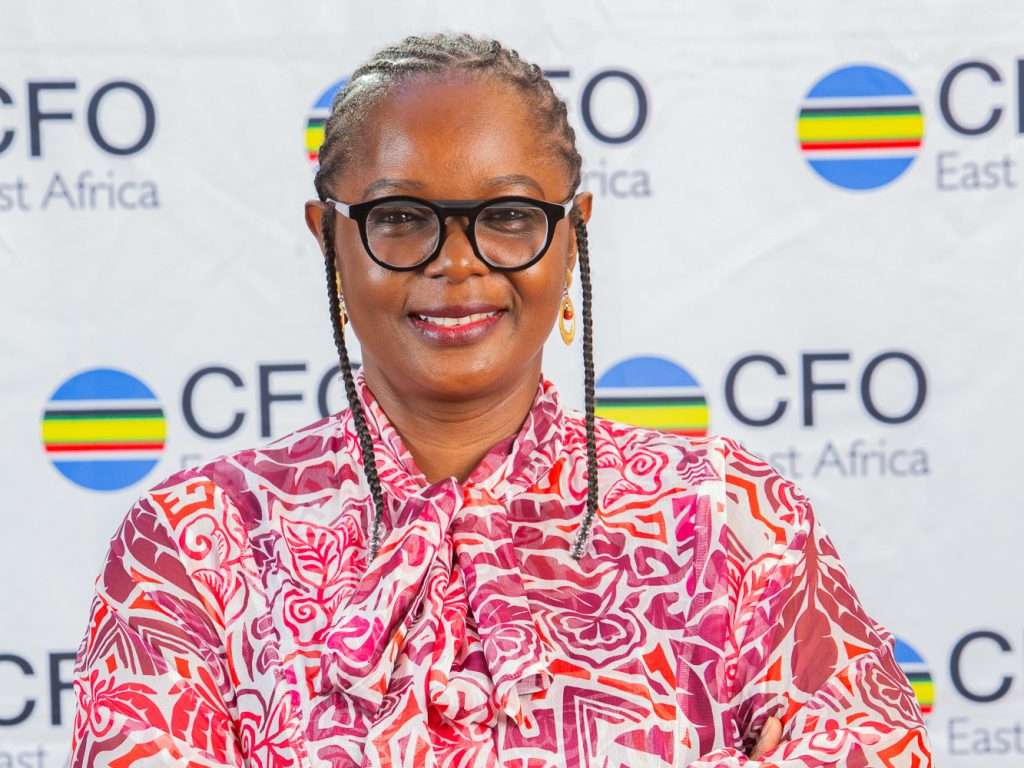
In October 2023, Funlola Pearce packed up her apartment into a container in preparation for her move to Kenya. During this busy time, she stopped exercising, caught up in the whirlwind of planning her relocation.
Funlola Pearce was carrying her bags through the airport, pleased with herself for running up the stairs as other travellers took the escalator. When she got to the landing, a sharp pain ripped across her chest.
“I thought I was dying. I was in the centre of the airport, and I screamed, ‘help me!’ And then people grabbed me, and I said, ‘I think it’s my pulse or my blood pressure’. And I had never had any of these issues. Then it was back and forth to doctors, checking all sorts of things, connecting all sorts of things to my chest. And then sometimes I would be at the kitchen sink washing dishes, and my pulse would be about 160. And I'm not really moving,” she says.
Sometimes she would be seated at work, and her watch would ping – “your heart rate is elevated, but you appear to be inactive”. The fear of not knowing what was happening worsened Funlola’s anxiety. After running several tests, the fourth cardiologist she saw told her there was nothing wrong with her heart. Shaken by the incident, she decided to get on a healthy fitness and eating plan.
“It dawned on me that you can have everything in this world, all the money to pay doctors. But if you do not have your health, it’s just nonsense. And no one will manage it for you. Nobody at work will say, ‘Go and sit down’. You need to take control of the narrative and say, ‘I don't feel very well, but I will ensure that balls are not dropped’ or even, ‘Balls may drop. Can we find some help from within the region? I need to look after myself’,” she says.
It has been more than a year since Funlola landed in Nairobi to take on the role of finance and IT director for Central, East and West Africa at Beiersdorf, but this isn’t her first rodeo. When she was working as category controller for EMEA markets at Mondelēz International, she attended a scheduled meeting in Dubai. In between sessions, the vice president of finance for Eastern Europe, the Middle East and Africa called.
An unexpected meeting
“She says to me, ‘Is the finance director for West Africa anywhere around you’? And I say, ‘No’. And she says, ‘If she walks past you to her office, let her know that I’m trying to find her’. So, I tell her I won’t be able to do that because I’m currently in Dubai attending a meeting. And she says, ‘And you didn’t come to my office to say hi’? I had never met her. We didn’t even exchange emails because she was four levels ahead of me. I’m African. We don’t jump over bosses. She asked me, ‘When do you leave Dubai’? And I told her ‘in two days’ and she told me to come to her office first thing in the morning the next day,” she says.
Funlola laughs as she recalls going through her financial statements the entire night. She prepared for the meeting as if it were an interview. But when they finally met, the VP asked her if she had considered working in another country. A month later, she accepted the role of finance business lead in Kenya. After three years, she decided to go into financial controls, an area she felt would be vital to her career progression.
“I wanted to fully understand the mechanical, ‘back office’ part of finance for a much larger entity, because the more senior I got, the more I would have to sign off on things that could expose the organisation. If I didn’t know what the accounting or internal audit guys were doing, I could potentially sign off on my life at some point in time. There was a role coming up in South Africa to lead financial controls for Southern Central and Eastern Africa. So, off I went to Johannesburg,” she says.
While she remains grateful to her mentors, sponsors, colleagues, and friends for their support, Funlola believes God’s grace with a sprinkle of luck to have played a big part in her career, guiding her through pivotal moments and opening doors at just the right time. This is how she ended up in finance despite having studied electrical engineering.
Switching lanes
After they had graduated from Nigeria’s Ahmadu Bello University in 2000, Funlola's classmates had begun applying to oil companies. One afternoon, she went to pick her sister up from work, as she had borrowed her car earlier that day. As she sat at the reception, she saw an advertisement by Arthur Andersen in one of the dailies.
“It said, ‘Come and join us. We have doctors, architects, and all of that’. It was that time where you would write a proper letter, handwritten - you’re not even typing. So, I did that and since I didn't have work, and I was borrowing my sister's car just driving around Lagos, I went to the gate and gave it to security and drove off. Two days after that, there was a letter from DHL inviting me for an aptitude test. So, I went there and gave it my best shot. And then three days after that, I was invited for an interview. Then two more interviews and then I had an offer letter,” she says.
Three years after her career change, Funlola joined Alliance Manchester Business School, where she graduated with an MBA in 2005. Whenever she sees an ingenious innovation, she often catches a glimpse of what could have been if she had pursued a career in engineering. But she is certain she is where she is supposed to be. Her life experiences have taught her to feel pain and release it, never clinging to regret.
“I got married to someone I went to high school with. We met after university and got married. But it just didn’t work, and we ultimately got divorced. When I think back, it was painful. But when I sat down to process it, I went, ‘Ok, did anybody force you to marry this person? No’. It wasn’t all bad. I can actually sit down with him at a school sports event and have a good laugh. There were some learnings. And I had a daughter from the marriage, right? And so, every time something happens, I look for some good in it,” she says.
Beyond tokenism
When she joins a new organisation, Funlola often holds one-on-one meetings with her team members where she asks them how they prefer to be managed. She prefers to give her people free rein, stepping in only when necessary. Throughout her career, she has observed that people of African descent often face higher expectations while being offered fewer opportunities for advancement. For this reason, she is keen to impress upon her team that a higher standard of work is required, an approach she says has paid off. Funlola often applies a moral test when making decisions that affect her team: will she be able to sleep at night?
“I also tell them that they must give me feedback because I need them to be my mirror. I won’t always see myself. I won’t always know when the way I’m speaking is hurtful. So, you need to tell me because the worst thing that can happen to me as a person is for me to carry on and have something happen at the end that could have been prevented. For me as a person, I love to course correct because I don’t think I’m perfect. I feel I could learn from anyone,” she says.
Funlola recalls being received genially when she joined Beiersdorf, an ethic she is keen to maintain in her interactions with colleagues and clients. Within a few months of her joining, she was nominated for a global female leadership in finance programme, where she is the only African. Through the conversations and workshops she has participated in, Funlola has realised a need for similar initiatives that move beyond tokenism and give African talent the tools to navigate their careers upwards.
“Our consumers and the communities in which we operate must trust us. My team should trust me. Trust is important in all we do. As human beings, we need to be courageous. We need to be able to take stands that are not necessarily the most popular, right? And as long as we believe in it, we go for it. And so, when I think about evolving, it’s how we do all these things better,” she explains.