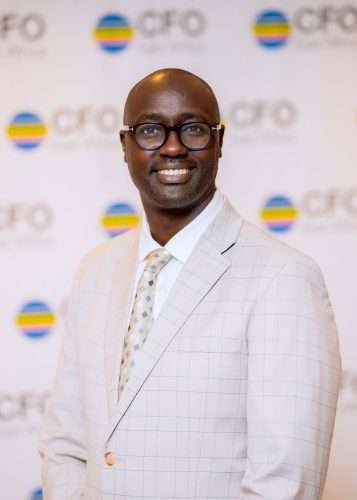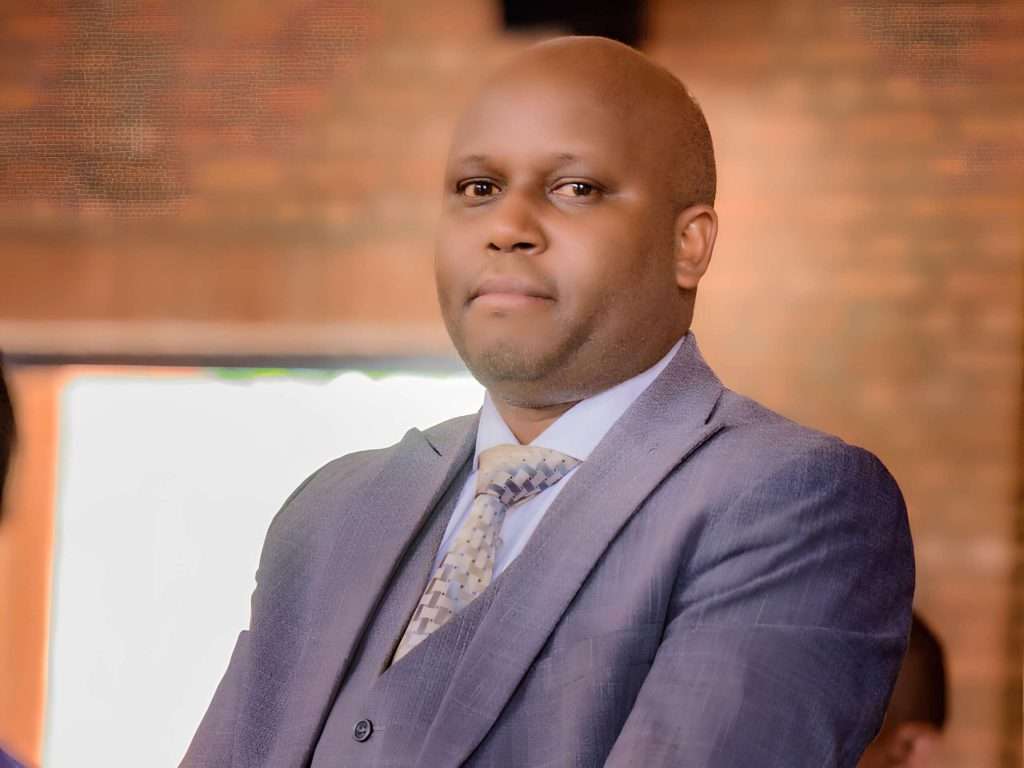
BK Group finance head Ange Ntiranyibagirwa retired his national soccer league jersey to build a high-flying career that spans banking, telecommunications, FMCG and infrastructure. He now leads finance at Rwanda’s largest financial services conglomerate while keeping his passion for the game alive.
Ange Ntiranyibagirwa’s first love is soccer. He was part of the squad that played in the national university league from 1999 to 2002. The National University of Rwanda had a team in the first division and Ange made the cut. He even considered playing professionally, but the thought of retiring in his 30s, as footballers often do, made him reluctant.
“When you define your future, you have to choose a career that can give you income even when you grow older. So, I could not actually choose it as my career. I was actually playing it as a hobby. I tell my kids to make it a hobby but not a profession. In Europe, you can make money from soccer, but not in Africa,” he says.
In 2017, Ange had a chance to play with Arsenal veterans at Emirates Stadium. Although he no longer supports the team, his love of the game hints at a quality that has defined his entire career.
“I enjoy being a team player. When I sit in the management team, I take that role as CFO seriously and make sure I play the key role that everyone expects me to,” he says.
As with football, Ange pursued finance out of a passion for numbers. When he was in secondary school he was on track to become a teacher. But one month into his third year, he balked.
“I just moved to accounting immediately. I loved accounting from day one. Initially I thought, is accounting mathematics? Because I’m not a fan of mathematics, but then I loved it down the road. From secondary school to campus I did accounting for my bachelor’s, then a master's in accounting, and then ACCA. I love it,” he says.
Risk and reward
Not long after graduating, Ange joined Banque Populaire du Rwanda (BPR) as a branch manager. Despite its popularity, the bank was struggling to increase lending in Rwanda’s rural areas, as many people were loan-averse.
“People were fearing that if they took a loan, we would come and sell their house tomorrow. So, I told them no, I helped them develop ideas which would support them to pay back that loan. I think I was the first to make it profitable. Although the profit was not that much, at least the people got to know what the bank does and what can actually help them achieve their goals, which is basically take the money, use it, pay back and move on,” he explains.
Although Ange enjoyed going out and telling people the BPR story, his move to British American Tobacco (BAT) Tanzania as finance manager cracked his world open. There, he travelled around the world and met people from different cultures. This cemented his decision to work in the private sector.
‘When I was in the bank I was a bit undecided about going to a private entity, the public sector, or NGOs, but I decided on the private sector because you experience new things and at the end of the day you want something to take back home. There’s a bigger risk you take, but there’s a bigger reward,” he says.
A game changer
In 2009, Tigo was the second player to enter Rwanda’s telco market, and Ange made another leap. At the time, MTN held more than 90 percent of the market share. The Tigo team was new and brimming with energy, eager to stand toe-to-toe with the telco giant. As the company’s first financial controller, Ange’s task was to ensure a high-performing accounting team was recruited, trained and deployed without wasting any time.
“Sometimes, you would not sleep, trying to think. What can we do? Compete on price or compete on market share? That's where I started defining myself not as the traditional accountant we knew, but as a partner to the business. Some decisions come fast and you have to analyse the benefit of the decision. Does it make sense financially? What are you trying to achieve? You have to position yourself to define what you are doing now, in the first year, the second year, etc. That was a game changer for me,” he reveals.
When he moved to StrawTec as finance and HR manager in 2015, he found himself in a company that looked promising but had deep structural challenges. The business, which set out to build prefab houses using rice straw, was held back by unreliable suppliers and disorganised teams. Ange set out to find the right people and address operation and supply chain challenges.
“I went to Nyagatare myself, and I saw they were not even producing. The guys were just sitting idle. I asked what happened, and they said the supplier did not deliver materials. We had orders pending and we lost that time. It was then I realised how critical it is for finance to monitor operations and supply chain too,” he says.
Armed with fresh insights, Ange joined IHS Towers, where he deliberately moved from finance into the commercial department as deputy commercial director. He wanted to understand what sales and business development teams faced and prepare himself for eventual leadership at CEO level. That decision saw him look after major clients such as telcos and government agencies and lead strategic discussions while drawing on his finance background. It cemented his belief that CFOs need a rounded view of the business to truly shape its future.
“What I wanted was to see how to lead the team from the commercial side, getting things done and engaging. Coming from the finance side, leading discussions at board meetings was simple because I knew the impact of every commercial decision on the entity’s profitability. It was interesting and helped me define another side of myself, not being an accountant but being part of the business team,” he explains.
High-powered role
Now at Bank of Kigali, Ange describes his role as both challenging and exciting. While the bank commands more than 90 percent of the group’s activities, Ange also oversees insurance, capital markets, and technology subsidiaries.
“At my level, I meet shareholders and other high-profile people at board committees. That defines you, how you look at things and how you need to approach them. Most of the time you have to be prepared and proactive because questions will come on the economy and the future of the business. It really shapes your mind and defines you. That is what has shaped me at BK, being part of a higher organisation with high ranking people,” he says.
Ange insists on grooming at least one successor wherever he works, as he believes leadership is about legacy. He often challenges his team members to step outside spreadsheets and engage with the business directly. In his view, a CFO’s mandate is to build capacity beyond technical expertise.
“I want the team to succeed with or without me. I have done that in my past career and some of them have come back to say thank you. I make sure that I build you in a way that if I recommend you anywhere, I know you will perform 100 percent professionally,” he says.
Even with his extensive responsibilities, Ange still finds time for football. He plays regularly in local clubs and even served as vice president of a Kiyovu Sports Club between 2020 and 2022.
“Football is my passion. I lead one of the local clubs where we play every Sunday with people of our age. I really enjoy soccer and when I speak, I speak soccer. My dream now is to see Real Madrid at the Bernabéu in the next two years,” he says.