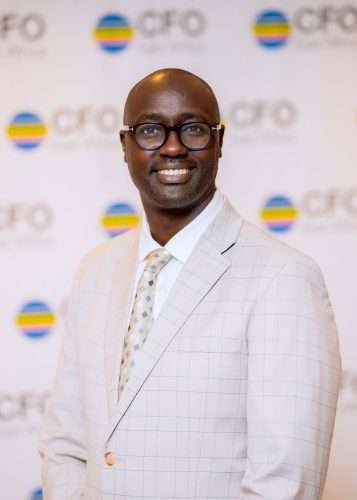
Across many organisations, the chief financial officer is still viewed through a narrow lens. Jubilee Insurance Tanzania CFO Nickson Motta and Tres Rwanda CFO Gordon Mugabi dispel common misconceptions about the role and explore how it has changed.
The CFO role is often reduced to budget control, as many assume the focus is purely on restricting costs and keeping accounts in order. This perception ignores the scope of responsibilities that now come with the role, which include shaping strategy and driving growth. As the business environment becomes more complex, the CFO’s influence has expanded well beyond traditional finance.
According to Nickson Motta, CFO of Jubilee Insurance Tanzania, one common misconception is rooted in the financial discipline itself. He believes the perception of a CFO as a cautious gatekeeper overlooks the need to balance business objectives with empathy for people. He sees budget oversight and cost efficiency as only part of the picture, saying strategic priorities must also account for the human dimension.
“I think it’s the perspective that CFOs are stingy. This comes from understanding that you are the person who monitors and controls the budget. So you are giving indicators of where people are, where they are expected to be and you are looking at how you can achieve efficiency and savings on the cost,” he says.
As Tres Rwanda CFO Gordon Mugabi points out, some finance leaders still reinforce outdated ideas from within the profession. Many continue to define the role narrowly as preparing reports and managing accounts. This, in his view, fails to recognise the strategic potential of the position. He argues that CFOs must interpret financial data in ways that create value for both shareholders and society.
“You should interpret numbers to give value to your shareholders, to give value to the community and also to give insights to your executive management on how business should be run. So it’s an evolving role and I really foresee this in the future to perhaps become chief finance and operational officer and other additional roles,” he explains.
Driving value
Nickson describes how the role has shifted towards becoming a driver of value across the organisation. In his experience, the CFO should lead strategy and shape the direction of the business. This requires agility in responding to shifting conditions and a border vision.
“Currently the CFO is actually seen as a chief value officer. It depends mostly on what value you are bringing to the business and not necessarily the finance part. So driving the strategy, driving the business overall. This is how the CFO role has been transforming. However, I think the one key number issue that all the CFOs should have is having a strategic mindset,” he says.
For Gordon, this means CFOS must play an active role in sustainability. He believes finance leaders must make decisions that will keep the organisation competitive for years to come. This means aligning financial planning with commercial and social priorities.
“In the current business environment, finance is no longer about bookkeeping. It’s about strategy. It’s about business partnership. It’s about scaling up business,” he says.
Essential skills
Nickson considers strategic thinking the most important skill for today’s CFO. He has found that it can be developed through discipline as well as career experience. In his view, this skill enables leaders and their organisations to chart a course from the present to the future they desire.
“A strategic mindset is able to give you a 360-degree view of what is happening around you. Even in your personal life it helps you to leverage opportunities. That is part of succeeding in business and life,” he says.
Gordon, on the other hand, names communication and negotiation as equally vital skills. He believes they can help secure resources and build consensus across teams. While they are often seen as the preserve of sales or commercial roles, he says they are critical to finance and can be as decisive as technical expertise.
“If you know how to talk to people and convince them, there’s nothing you can’t do. So you’ve got to really leverage on communication skills. You’ve got to leverage on negotiation. If I was to go back to school again, I would definitely leverage on those two,” he explains.
Nickson and Gordon advocate for shedding outdated stereotypes and embracing a wider view of the finance role. They advise their peers to blend technical expertise with strategic foresight. This, they believe, is the key to making decisions that support profitability and long-term value.
“It’s about starting a business that is going to create a lasting impact on society. It’s about making a kill out of it, not in the short-term but rather the longest term. You’ve got to know that and balance the interests of shareholders and the community. That is what will sustain the business into the future,” he says.