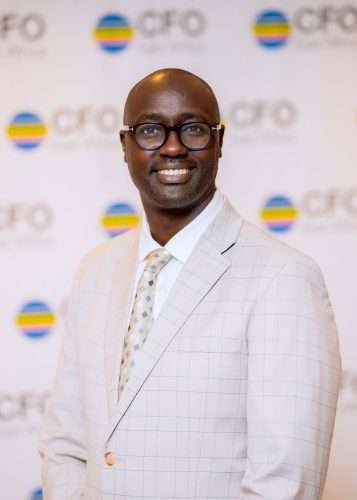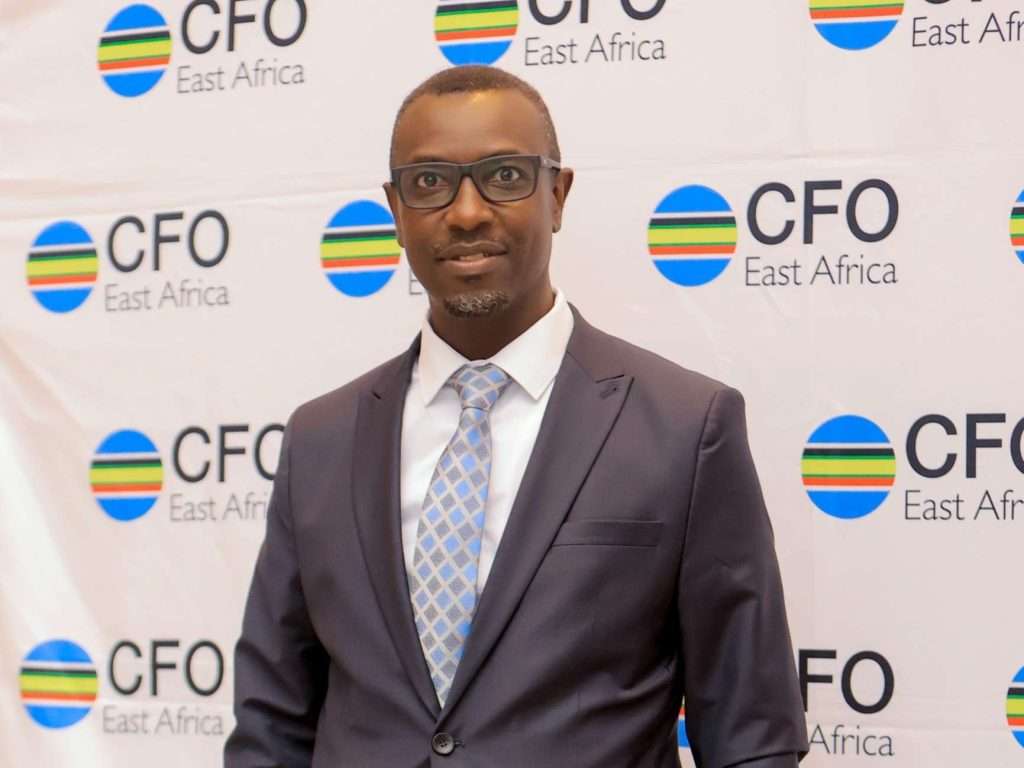
Stanbic Bank Uganda CFO Ronald Makata argues that while technology continues to transform finance, an organisation’s true competitive advantage lies in how leaders develop and empower their people.
Three years ago, Ronald Makata made a decision that baffled his colleagues. Despite his comfort and stability in finance, he opted to move into unfamiliar territory: a newly created client solutions department.
Most advised against it, warning he was diverting from his growth path and taking a substantial career risk. But he considers it one of the most rewarding decisions of his career.
“I looked at it a little bit differently. I felt it was an opportunity to stretch me, broaden my thinking and impact on the organisation, but also to give me a different angle of business that I typically don’t see when I’m sitting in finance,” he says.
The experience exposed him to fresh perspectives on commercialising ideas and engaging with strategic partners. This shift now informs how he leads as the chief finance and value management officer (CFVMO).
“Today, I sit here with the confidence of understanding the challenges of our business. I am not only able to support from a CFO perspective but also able to challenge colleagues to improve whatever ideas they bring on the table,” he reveals.
The finance function itself has evolved dramatically since Ronald first entered the profession. Before, finance departments simply provided the truth, serving as the source of analysis. But today, finance leaders are expected to provide strategic direction.
“In the past, you would focus a lot on the outcomes, but now, the people have become very instrumental, crucial to your decision-making and how you show up in an organisation,” Ronald says.
The environment has shifted from local to global, requiring leaders to understand how international events impact an organisation and providing clear direction to remain competitive.
People over technology
Recently, Ronald began reading The Ultimate Competitive Advantage by Sean Moon. The central premise resonates deeply: while technology, products, and services can all be replicated, the people element remains difficult for organisations to copy. Ronald therefore focuses his energy on experiential learning, exposing his team to high-level meetings.
“Whenever I visit the regulators, I don’t move alone. I carry somebody and give them an opportunity to say something. That experience alone makes them come back different,” he explains.
Ronald’s people-first philosophy does not preclude bold financial decisions. About three years ago, he proposed what appeared to be a radical move the organisation had never attempted before, significantly increasing the payout to investors and shareholders.
Once he achieved the necessary comfort through detailed analysis of best and worst-case scenarios, he faced the task of bringing all stakeholders on board.
Reflecting on the outcome, Ronald considers it a significant win that sent a strong message to the market about the institution’s strength.
“When you make a bold decision of that nature, you’ve got to be very careful. Everyone is looking at the CFO and nobody else,” he says.
Tech and talent
In the present moment, Ronald identifies two critical challenges. The first is rapid technological advancement, particularly artificial intelligence. He views AI pragmatically, noting it can turn finance into a near real-time decision engine.
“Imagine that you can press a button, and you can see the forecast every single day. It’s like having a CCTV camera, and you are seeing the exact decision you are making on the screen,” he says.
The second challenge is the intensifying fight for talent across East Africa. Ronald also challenges the tendency to delay financial planning until a business achieves wealth.
“Financial planning is about intentionally using the few resources you hold today to build the future you want. Stop waiting for a substantial amount of money to come. Always plan and be ready,” he says.
Although he cuts an outsize figure among his peers, Ronald is largely quiet, spending most of his free time with family. He also enjoys morning runs, which serve as quiet spaces for reflection where many of his key decisions take shape.
“As I do my road runs, I think about so many things. It calms me down. Some of the key decisions I have made, I picked them up during that moment of reflection,” he says.