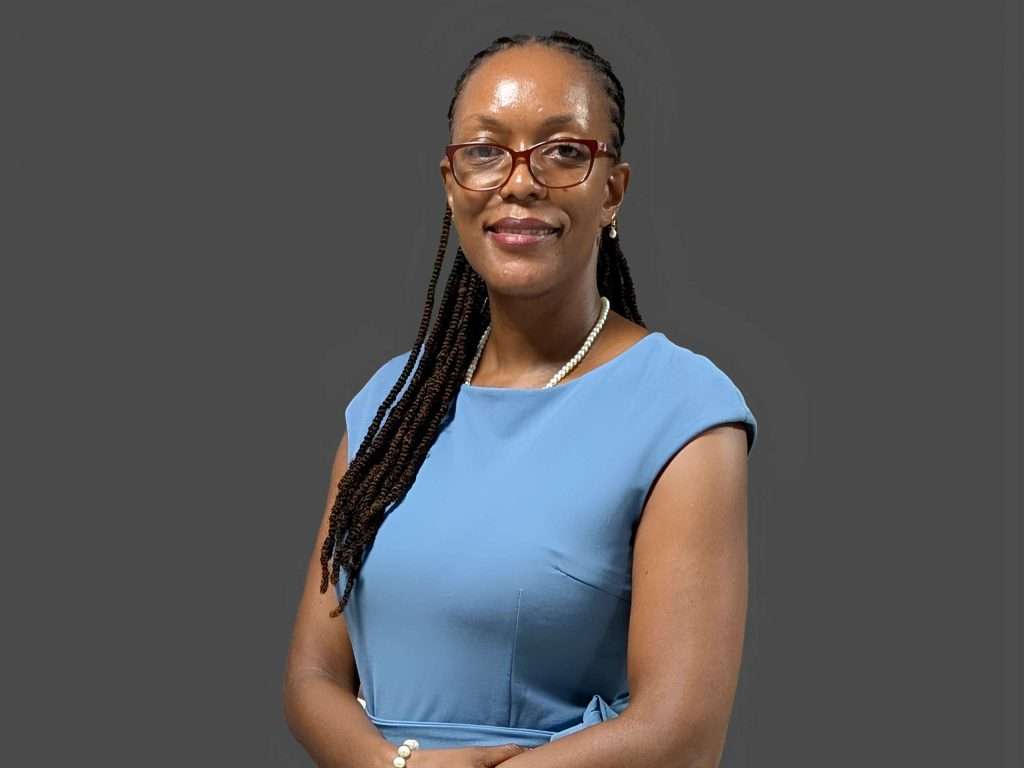
Relief Mtenga believes empathy is a necessity for every good leader. At Deloitte Consulting Tanzania, she leads her team with an intuitive understanding of what responsible finance truly means.
Relief Mtenga has always been good with numbers. But in her eyes, the numbers are not abstract. She sees every dollar as a decision about life or death. At Deloitte Consulting, she oversees the finances of a large donor-funded HIV project that affects the lives of thousands. She often reminds her team that their procurement choices can have real consequences for mothers and children across Tanzania.
“I always tell my team members in procurement, if you cause delays or make decisions that lead to losses, even if it’s just ten percent, just know that you have killed a child. Or you have killed a pregnant mother because that money was actually designed to save these people. So before you do anything, just think of the added value this amount will do to a person,” she says.
Since she graduated from the University of Dar es Salaam, Relief has worked across several sectors including banking, telecommunications, and non-profit. When she was posted to Zanzibar, she quickly learnt that perception mattered as much as performance. Her role as a salesperson required her to dress in ways that would not offend the conservative local culture, even when that meant abandoning personal comfort.
“I remember I went out and bought a hijab and came back and did my sales pitch. That by itself was a challenge. So many in the office were Muslims, and all the girls were wearing hijab, so I had to adjust to that,” she reveals.
But a bigger test would come later. When she was on maternity leave, a new male supervisor joined her department and began to push for restructuring, citing the number of women in the finance team. Although there were only eight women in a work force numbering over two hundred, Relief was singled out as the finance head. To keep her team members from being pushed out, she accepted her termination and began to consult on a freelance basis.
“I remember I told my team I will go home and you will stay. I knew this was specific to me. I knew that when he said he wanted a ‘senior finance manager’, he meant a man. So I went home and started freelancing and got into forex trading,” she says.
Changing lives
A breakthrough came soon after. Relief pivoted and joined the NGO sector, quickly catching on to the power of responsible financing. Her greatest lesson so far has been humility, learnt from both hardship early in life and the impact of her work. The HIV project she leads today touches children, caregivers and vulnerable families, and its gravity is not lost on her.
“Being able to see how much 10,000 can change somebody’s life, an amount that you use for lunch and it might even not be enough, but that amount can save somebody’s life. A caregiver or a child. I normally tell my subordinates the positions we have are not permanent. This is just temporary. The projects will end. You will get a job somewhere else, so do not sit anywhere thinking it is permanent and think you can step on people. Just learn to be humble,” she says.
Her passion for impact was tested when USAid froze all funding following a US presidential directive in early 2025. The project was suspended, with no clarity on whether that amounted to a termination. Relief led her team through a delicate transition, asking some staff to go on unpaid leave while preparing for any outcome. When the project was unexpectedly resumed, she helped redefine her team members’ roles and rebuild momentum.
“So in the middle of that you start working on terminal benefits for everyone, start planning for the closeout, going around the fields. That involved continuous communication with staff and stakeholders. Government engagement. Just communicating that we were stopping work for now until further guidance,” she says.
Inspiring the next generation
Relief credits her late mother with shaping her values. Despite having no formal education, her mother had near-native proficiency in English. She earned a living by tutoring school-going children and writing letters, as people in Swahili-speaking Tanzania were awed by her mastery of the language. Relief remembers her mother’s constant refrain: share the little you have.
“Truth be told. I know what poverty is. I don’t come from a rich family. My late mom was raised in a certain English mission. She was a brilliant speaker. And even when she had very little, she would share,” she explains.
At Deloitte, Relief leads her biggest team yet, with procurement, HR, finance and grants now under her portfolio. While she describes her direct reports as smart and capable, they are also young and headstrong. Relief enjoys coaching them one-on-one to help them grow into responsible leaders. In her quest to make sure the team can run smoothly even in her absence, she encourages them to seek exposure to other company functions.
“I normally tell my finance manager, ‘When I go on leave, I hand over my stuff to you and I do not want you to call me because you already know.’ I know there may be issues of managerial perspective that one may want to consult on, and those I will understand. But the rest of the things, you already know,” she says.
One of Relief’s proudest moments was seeing a financial accountant from her team become a financial controller at a microfinance company after a year of coaching. And while she enjoys growing her team members, Relief is also keen to seek out mentorship for herself. In 2023, she cold-emailed a Tanzanian ambassador she had long admired on LinkedIn, asking him to mentor her in emotional intelligence.
“I actually told him that I wanted him to be my mentor, and he asked me in which area. I said emotional intelligence, because it seems that he is emotionally intelligent. The way he writes things shows that empathy. So he has been sharing that with me over time, for the past two years,” she says.
Lifelong passion
Although her time in Zanzibar was challenging, the island gave her space to explore her lifelong passion for music. Whenever she found the time, she would play the piano and sing at a local hangout every Thursday night. Her hobby once got her into trouble when a client spotted her performing with a band.
“I have a piano at home and I normally sing. I do my best to do this and that, just to stay energetic. I walk in the evening if I get home early, and I try to sleep at least around 9pm so that I can wake up early and keep on working,” she says.