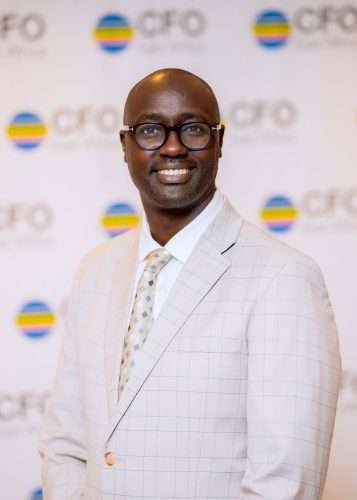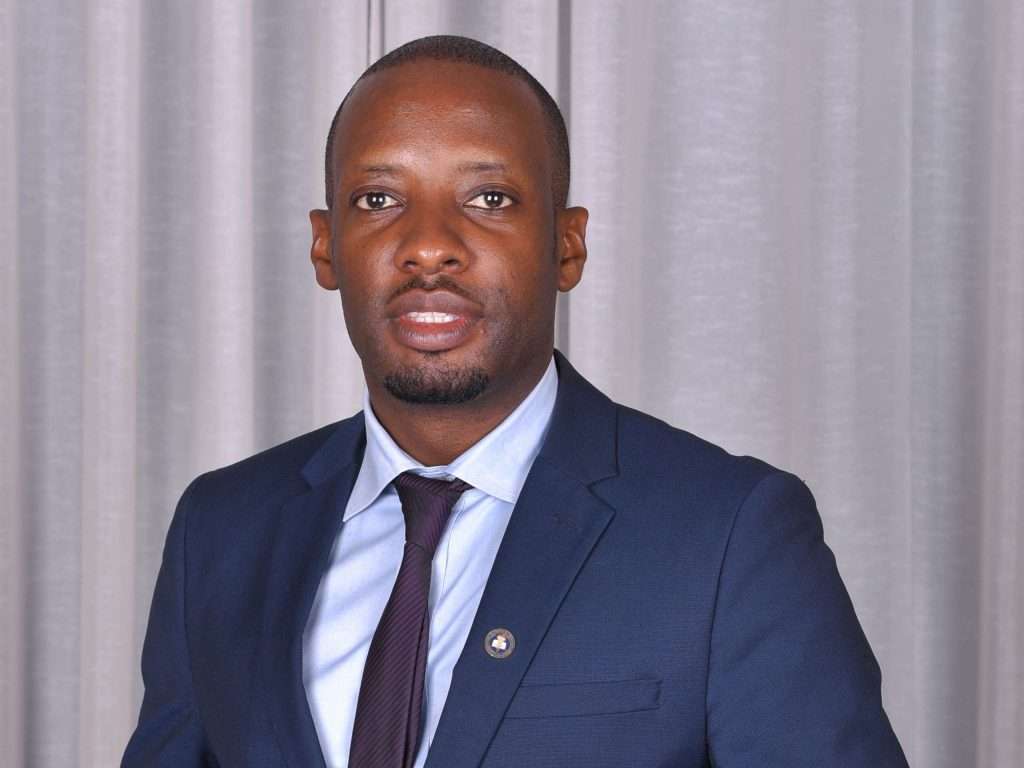
Dr Michael Lugemwa, who is the finance and operations director at Deposit Protection Fund (DPF) Uganda, does not seek the spotlight. But his steady resolve and leadership have made a clear impact at the fund.
People are often stunned to learn that Michael Lugemwa has a PhD. While he uses the title of ‘doctor’ when signing documents, he does not introduce himself as “Dr Michael Lugemwa”.
“They look at my age and are surprised. I'm not the kind of person who puts it in people’s faces. Even in meetings, I introduce myself as Michael. Sometimes, people find out later and say, ‘Oh, he’s a doctor’. It’s usually a surprise,” he says.
In 2018, while he worked at Uganda National Roads Authority, Michael completed a PhD in accountancy at Northwest University of South Africa. Despite having a full-time job in Uganda, he had been enrolled as a full-time student, placing heavy demands on his time and attention. During that time, he would travel to South Africa three to four times a year, staying for a week each time.
“My supervisor said I could remain in Uganda as long as I produced output equivalent to a full-time student. It was very challenging and hectic. I needed to produce results equivalent to a full-time student, and along the way, they gave me a condition: I had to submit my thesis in two years from when I was admitted. It was very demanding, but fortunately, I was able to continue delivering on the job and submitted my thesis in two years. That was a hectic period for me, but I managed to complete it,” he reveals.
Michael’s PhD is the natural result of his love for learning, which he rediscovered when he was moved from finance to head the internal audit department at Deposit Protection Fund (DPF) Uganda. While he had been an external auditor, he had no experience in internal audit. The move was a tall order, requiring him to gain working knowledge of the role within weeks.
A different direction
“I came from accounting and finance, so I was familiar with accounting standards, but I needed to quickly understand internal auditing standards. In a few months, I became very knowledgeable about internal auditing and what is required. This experience increased my perspective of reading a lot. I ended up subscribing to a lot of internal auditing literature on LinkedIn,” he says.
After two years leading the internal audit department, he was reassigned to his current role as the head of the finance and operations department.
“I follow a lot of internal auditing, accounting and leadership content on LinkedIn, which keeps enriching me in terms of how I look at things, workplaces, and environments. I’ve also developed an interest in leadership and management, especially micromanagement,” he says.
This has shaped the way Michael approaches leadership. Through continuous learning, he keeps a pulse on his progress as a leader, constantly evaluating himself to make sure he is on the right track.
“I believe in empowering and delegating. I don’t like micromanaging. I have weekly meetings with my managers to get updates on what is going on in their divisions, what they plan to do, and the status of what has been done in the previous week. This allows me to engage them and ensure they can do what I expect with autonomy, knowing they’ll have to give me feedback at the end of the week. This approach has worked well, and I’m able to get the results I need from my team,” he says.
For Michael, the joy of the work lies in the aspect of control. Knowing that his insights directly impact key business decisions gives him a sense of purpose and satisfaction.
“When you are in finance, almost everything has to go through you. You typically play a very big role in advising the CEO on financial matters, and the CEO will definitely respect what the head of finance is saying when it comes to financial issues. Having the ability to control, influence, and provide advice is something that is quite interesting. To advise, it also requires you to update your knowledge and do research. When you advise from an informed perspective, it becomes hard for people to challenge your advice because you’ve researched and are sure that what you're providing is the right solution,” he explains.
Beyond the numbers
Michael’s innate curiosity and penchant for asking insightful questions led to a discovery that saved DPF Uganda billions of shillings. When he joined the fund, he quickly noted that the law exempted it from paying withholding tax on interest income generated from treasury bills and bonds. But over a period of two years, the Central Bank of Uganda had continued to deduct the tax contrary to the law, bringing the amount owed to the fund close to Ush 17 billion.
“Initially, colleagues were uncomfortable pursuing this with the revenue body, fearing that if we demanded the money, the revenue body might audit us and discover other issues. I argued that the money we would get would be more than any potential tax liability. We pursued it, had meetings with the tax body, and they were positive. The law was very clear, and within one year, the tax body paid us the full amount as a tax refund,” he reveals.
Over time, Michael has come to believe that leadership is about being a strategic thinker. When he took on the role of director of finance and operations, he was entrusted with shaping the organisation’s strategic direction, a task that required more than just financial expertise.
“I needed to develop a strategic plan for the next five years and implement the balanced scorecard within the organisation. The board was surprised to find an accountant who knew about strategy, the balanced scorecard, and risk management. It takes continuous updating of knowledge. Don’t stick only to accounting standards. You need to continuously update your knowledge, understand risk management, strategy, emerging issues, and cybersecurity. These are things you’ll discuss in management,” he says.
For this reason, Michael encourages CFOs to have meaningful discussions with their peers and venture beyond traditional accounting.
Powering through
Although his career journey reads like a series of triumphs, Michael is no stranger to adversity. In 2022, while doing some yard work at home, he fell off a ladder and fractured his ankle. He went into surgery, where doctors inserted orthopaedic implants to stabilise the fracture. For over two years now, he has imagined how his foot would feel when they are finally out. This year, the wait comes to an end.
“They will be removed around July. I can’t imagine how my foot will feel when they're out. If the surface is flat, I move very well, but on a gentle slope or descent, it’s quite challenging because my ankle is not able to move as it should. I’m looking forward to having them removed,” he reveals.
Despite the injury, Michael remains a creature of routine, continuing his daily workouts at the gym just as he had before. This keeps him grounded and brings order to his world.
“Every morning, I wake up around 05:00. I take my kids to school, and if I can’t make it, the shuttle takes them. Then, I go straight to the gym in town. I prefer aerobics, so I do aerobics for about an hour. After aerobics, I do steam for 10 minutes, shower, and then I'm at work by around 08:15. This routine helps me to be fresh every morning. During the day, after lunch, I sometimes move around the premises or take a nap for 30 minutes, depending on how the day is going. That helps me recharge,” he says.