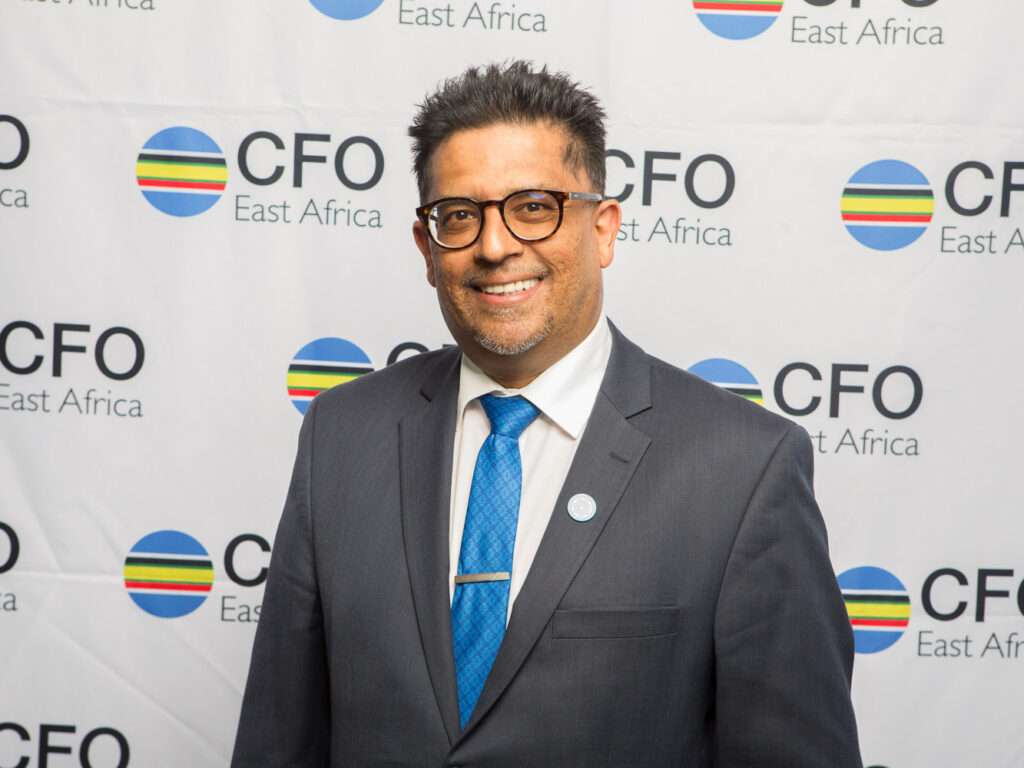
At the recent CFO East Africa ESG Summit, Alkarim Jiwa, finance and strategy director of banking group DTB, shared his thoughts on the subject of sustainability, explaining that it needs to resonate with the organisation’s purpose.
“Many organisations are great at crafting their purpose, value statements, mission and vision statements. We frame them and create all sorts of collateral and dish it out to everybody. But it has to go beyond that; an organisation needs to be authentic about living their purpose, and if that purpose is to do with people, the environment and community, then sustainability will naturally be embedded subsequently into strategies and plans,” he said.
Alkarim went on to explain that it is people who make up their organisations and it therefore up to them to live the purpose of the organisation in an authentic manner. In his view, this is the only way “ESG becomes BAU [business-as-usual]”. For this to happen, the tone has to be set at the top from a governance level. He explained that the tone at the top will be required for the entire organisation to adopt the right stance.
“ESG matters are not only about doing things which look right, it’s about doing the right things all the time. Speaking from DTB’s experience, being affiliated to the Aga Khan Development Network (AKDN) has helped both in terms of living our purpose, which is to improve the quality of life of all our stakeholders, but also setting that tone on the top. About two years ago, the AKDN put out a statement committing all the agencies to being net zero by 2030,” he explained.
“AKDN operates in many geographical areas, most of them in emerging markets, but that commitment was made on behalf of all agencies, including the one I represent, DTB. And that set the tone and the traction for us to ask: how do we develop plans to make sure that we achieve net zero status across scope one and two, which is pretty much in our control, and in some ways, more easily doable than scope three” he added.
As a bank, this means DTB makes sure that loans granted to customers reflect their net zero objectives. Across the value chain, they push vendors to be on the trajectory to achieving net zero. Alkarim noted that 2030 is less than six years away and some of the targets set are very ambitious given the limited timeframe.
“We have set up a masterplan which has been adopted across the DTB group in all the countries that we’re in, including Tanzania, Uganda and Burundi. The key challenge is not in coming up with programmes, it’s about implementation because the devil is always in the execution. We make sure it is truly integrated into your business strategy and that resources are made available,” he noted.
Strategic influence on sustainability
Although many of the targets are ambitious, Alkarim believes that the goals are achievable. He acknowledged that as they go through the journey, he expects the incline to get steeper and steeper and it will therefore be important to remain inspired and committed. As CFOs have strategic influence at executive committee level, he encouraged them to tilt the agenda towards sustainability.
“At DTB, the CEO has put sustainability under my docket. On paper, it sounds very good but if there is anyone who is going to hang for failure, it will be my pretty little neck on the line!” he joked.
“On a more serious note, I think it helps when you have sustainability strategy and finance integrated,” he continued. “In my experience, this gives propulsion and momentum towards not just developing the programmes targets, but implementation as well. Where CFOs are not in a position of influence, I would argue that we can start with small things. Before sustainability became a fad, we used to call it cost control, implementing such things as LED bulbs, which were cheaper than normal bulbs. At DTB, we had customer service week and recycling of paper which were all already aligned to ESG.”
Alkarim mentioned that CFOs can take small steps towards sustainability which can include installation of solar panels and planting trees.
“I was just talking to our head of sustainability and I said we have committed to [planting] half a million trees. We are in May and the better part of the rains we will face this season are behind us. She has told me not to worry but these are the things that are keeping me awake at night. At board level, we have said that we want credible partners when it comes to growing trees to make sure that we are not only planting them but that we are also part of their growth journey,” he concluded.